
Travel apps get difficult when the internet disappears.Sean Dinwiddie

A travel app has to work differently from most consumer products.
The moment a traveler actually needs their itinerary, booking details, or map may also be the moment they have the worst connectivity.
On one mobile travel platform I worked on, we built the product around that reality.
The platform combined:
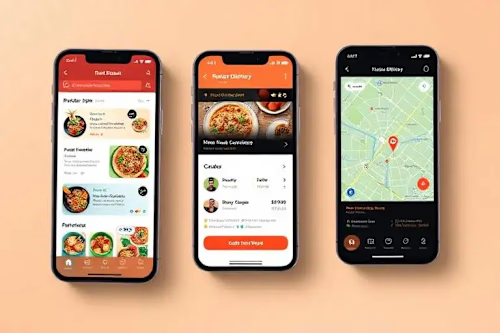
Flight and hotel search
Trip itinerary management
Price alerts
Offline maps and travel information
Booking integrations
Traveler community features
Multiple GDS APIs provided the booking inventory, while a price prediction system monitored fare behavior to help users decide when to book.
The other important piece was the offline-first architecture.
Travel information and documents remained available locally, with background synchronization restoring the latest data when connectivity returned.
The platform ultimately facilitated $8M+ in bookings, while predictive price alerts helped users save an average of 22% compared with direct booking.
Projects like this are a good reminder that the best mobile experience often depends on architecture the user never sees.
FAQs

Contact for pricing
Duration4 weeks
Tags
Android

iOS

Mobile App Development
Artificial Intelligence
Travel App
Web application
Service provided by
Sean Dinwiddie Klamath Falls, USA
- 5.00
- Rating
- 5
- Followers
Travel apps get difficult when the internet disappears.Sean Dinwiddie
Contact for pricing
Duration4 weeks
Tags
Android
iOS
Mobile App Development
Artificial Intelligence
Travel App
Web application
A travel app has to work differently from most consumer products.
The moment a traveler actually needs their itinerary, booking details, or map may also be the moment they have the worst connectivity.
On one mobile travel platform I worked on, we built the product around that reality.
The platform combined:
Flight and hotel search
Trip itinerary management
Price alerts
Offline maps and travel information
Booking integrations
Traveler community features
Multiple GDS APIs provided the booking inventory, while a price prediction system monitored fare behavior to help users decide when to book.
The other important piece was the offline-first architecture.
Travel information and documents remained available locally, with background synchronization restoring the latest data when connectivity returned.
The platform ultimately facilitated $8M+ in bookings, while predictive price alerts helped users save an average of 22% compared with direct booking.
Projects like this are a good reminder that the best mobile experience often depends on architecture the user never sees.
FAQs
Contact for pricing