
Project Management and ProcurementBongani Magagula
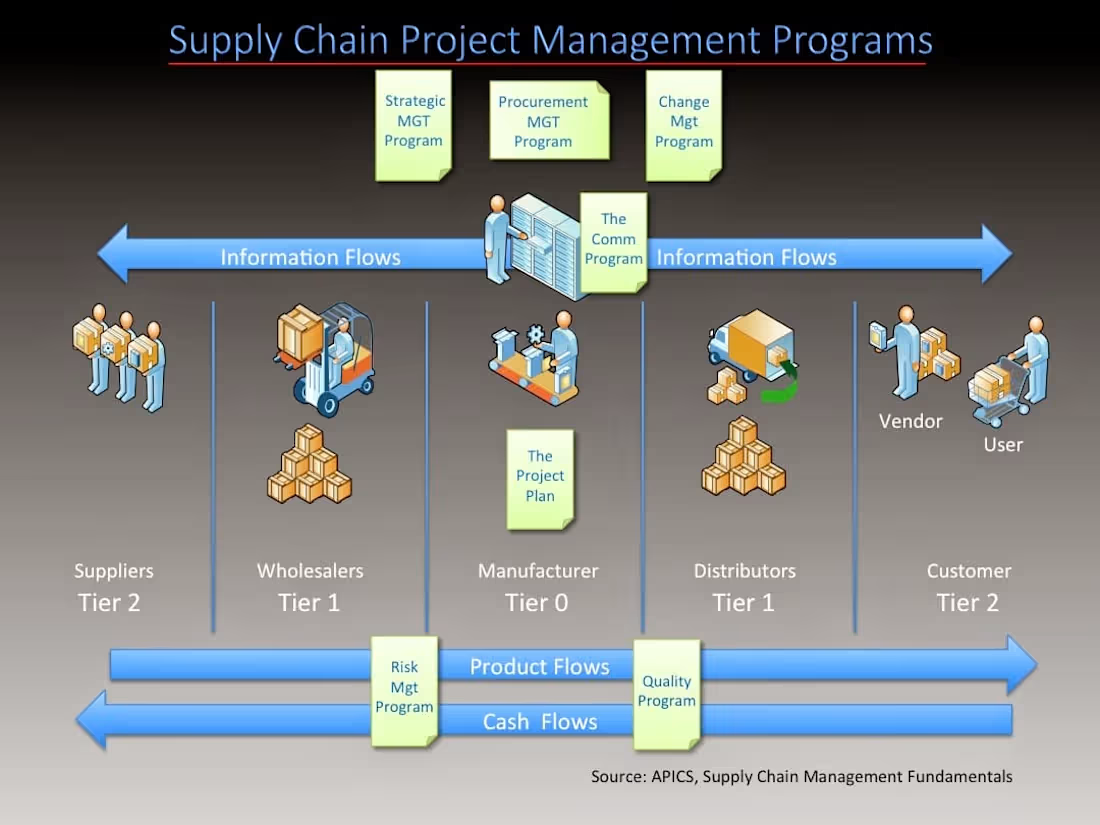
I provide tailored project management insights and solutions, ensuring that each step of your project is well-planned, executed, and delivered on time. What makes me unique is my ability to adapt to any project scope, offering strategic recommendations that align with your objectives while also streamlining processes and enhancing overall efficiency. My approach integrates flexibility with precision to drive successful outcomes.
What's included
Tangible or intangible outcomes
Project Charter:
A formal document that outlines the project’s objectives, scope, stakeholders, and overall goals. It serves as the foundation for the entire project.
2. Project Plan:
A detailed plan that includes timelines, milestones, resources, budgets, and risk management strategies. This document guides the project from start to finish.
3. Work Breakdown Structure (WBS):
A hierarchical decomposition of the project’s tasks and deliverables, breaking down large work packages into smaller, manageable components.
4. Status Reports:
Regular updates that track the project’s progress, identifying completed tasks, upcoming milestones, and potential issues or risks.
5. Resource Allocation Plan:
A document that defines the resources (human, financial, and physical) required for each task in the project, and how they will be allocated and monitored.
6. Risk Management Plan:
A detailed plan for identifying, assessing, and mitigating risks that may affect the project. This includes contingency strategies and risk response plans.
7. Change Management Plan:
A strategy for managing changes to the project scope, timeline, or resources, ensuring changes are handled smoothly without impacting project goals.
8. Project Deliverables:
Tangible outputs such as software products, architectural designs, or physical infrastructure that the client expects from the project. These should be completed and approved according to the project plan.
9. Quality Assurance and Testing Documentation:
Detailed documentation regarding quality standards, testing procedures, and results. It ensures that the deliverables meet the required specifications and quality benchmarks
Bongani's other services
Starting at$700
Duration4 weeks
Tags
Basecamp

Jira

monday.com

Slack

Trello

Product Manager
Program Manager
Project Manager
Service provided by
Bongani Magagula Middelburg, South Africa
Project Management and ProcurementBongani Magagula
Starting at$700
Duration4 weeks
Tags
Basecamp
Jira
monday.com
Slack
Trello
Product Manager
Program Manager
Project Manager
I provide tailored project management insights and solutions, ensuring that each step of your project is well-planned, executed, and delivered on time. What makes me unique is my ability to adapt to any project scope, offering strategic recommendations that align with your objectives while also streamlining processes and enhancing overall efficiency. My approach integrates flexibility with precision to drive successful outcomes.
What's included
Tangible or intangible outcomes
Project Charter:
A formal document that outlines the project’s objectives, scope, stakeholders, and overall goals. It serves as the foundation for the entire project.
2. Project Plan:
A detailed plan that includes timelines, milestones, resources, budgets, and risk management strategies. This document guides the project from start to finish.
3. Work Breakdown Structure (WBS):
A hierarchical decomposition of the project’s tasks and deliverables, breaking down large work packages into smaller, manageable components.
4. Status Reports:
Regular updates that track the project’s progress, identifying completed tasks, upcoming milestones, and potential issues or risks.
5. Resource Allocation Plan:
A document that defines the resources (human, financial, and physical) required for each task in the project, and how they will be allocated and monitored.
6. Risk Management Plan:
A detailed plan for identifying, assessing, and mitigating risks that may affect the project. This includes contingency strategies and risk response plans.
7. Change Management Plan:
A strategy for managing changes to the project scope, timeline, or resources, ensuring changes are handled smoothly without impacting project goals.
8. Project Deliverables:
Tangible outputs such as software products, architectural designs, or physical infrastructure that the client expects from the project. These should be completed and approved according to the project plan.
9. Quality Assurance and Testing Documentation:
Detailed documentation regarding quality standards, testing procedures, and results. It ensures that the deliverables meet the required specifications and quality benchmarks
Bongani's other services
$700