
Website Design & Landing Page DesignDaniel Adeeri
What you should expect 🔥
A proper and well-designed website should prioritize the needs of the user and create a seamless and enjoyable experience that encourages engagement, foster brand loyalty and meet its goal. While designing the website, the following characteristics will be met;
User-centred: The website will be designed with the user in mind, with a focus on meeting their needs and providing a positive user experience.
Easy to navigate: Have a clear and intuitive navigation system, with a logical layout and hierarchy of information that allows users to find what they're looking for quickly and easily.
Consistent branding: A consistent visual design and branding, with a clear and recognizable identity that reflects the values and personality of the brand.
Accessibility: The website will be accessible to all users, regardless of their abilities, with features such as alt tags for images, keyboard navigation, and clear and readable text.
Responsive: An optimized design that adapts to different screen sizes and orientations.
Engaging content: Engaging and informative content that is relevant to the user's needs, with a clear and concise writing style that is easy to read and understand.
Calls to action: Clear and prominent calls to action, encouraging users to take action.
Feedback mechanism: The design will have a feedback mechanism to allow users to report issues, provide feedback, or ask questions, with prompt responses from the website owners.
What's included
Goal identification
I'll work with you to determine what goals the website needs to fulfil. I.e., what its purpose is
Scope definition
Once we know the site's goals, we can define the scope of the project. I.e., what web pages and features the site requires to fulfil the goal.
Sitemap
It's an essential part of the process which is a diagrammatic representation of a hierarchical system. It helps give a clear idea of the website’s information architecture showing the relationships between the various pages and content elements.
Wireframe
The next step is to sketch out the wireframe. Wireframes provide a framework for storing the site’s visual design and content elements and can help identify potential challenges and gaps ahead of the final design
Content Creation
Once the website’s framework is in place, the contents for different pages and sections of the website will get to be created. Some things that would be considered here are contents that engage readers and drive them to take action when necessary also content that boosts a site’s visibility for search engines.
Design System
The design system is a collection of reusable design elements, components, guidelines, and standards that are organized and documented to ensure consistency and efficiency across boards.
Mockup
This is the wireframe with high-fidelity elements such as colors, contents, images and any other visuals that are aligned with the brand and design system. It is a static yet realistic rendering of the website with no interactivity.
High Fidelity Prototype
This is the stage where we bring the website to life and add motion, transitions and interactions.
Test
At this stage, we get to test the design in-house and with real users to get early feedback and learn from their experience. As a result of the test, improve on the design if need be.
Handoff
Design links/files will be shared with the stakeholders. Regular engagement with the stakeholders will be maintained from start to finish, to keep them informed about the design steps and facilitate a smooth development process.
FAQs
Example work
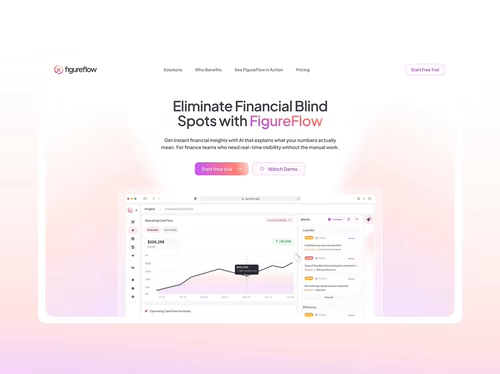

Starting at$1,499
Duration1 week
Tags
Figma

Framer

Notion

Rive

Framer Designer
UI Designer
Web Designer
Service provided by
Daniel Adeeri proLagos, Nigeria
- $50k+
- Earned
- 7
- Paid projects
- 5.00
- Rating
- 120
- Followers
Website Design & Landing Page DesignDaniel Adeeri
Starting at$1,499
Duration1 week
Tags
Figma
Framer
Notion
Rive
Framer Designer
UI Designer
Web Designer
What you should expect 🔥
A proper and well-designed website should prioritize the needs of the user and create a seamless and enjoyable experience that encourages engagement, foster brand loyalty and meet its goal. While designing the website, the following characteristics will be met;
User-centred: The website will be designed with the user in mind, with a focus on meeting their needs and providing a positive user experience.
Easy to navigate: Have a clear and intuitive navigation system, with a logical layout and hierarchy of information that allows users to find what they're looking for quickly and easily.
Consistent branding: A consistent visual design and branding, with a clear and recognizable identity that reflects the values and personality of the brand.
Accessibility: The website will be accessible to all users, regardless of their abilities, with features such as alt tags for images, keyboard navigation, and clear and readable text.
Responsive: An optimized design that adapts to different screen sizes and orientations.
Engaging content: Engaging and informative content that is relevant to the user's needs, with a clear and concise writing style that is easy to read and understand.
Calls to action: Clear and prominent calls to action, encouraging users to take action.
Feedback mechanism: The design will have a feedback mechanism to allow users to report issues, provide feedback, or ask questions, with prompt responses from the website owners.
What's included
Goal identification
I'll work with you to determine what goals the website needs to fulfil. I.e., what its purpose is
Scope definition
Once we know the site's goals, we can define the scope of the project. I.e., what web pages and features the site requires to fulfil the goal.
Sitemap
It's an essential part of the process which is a diagrammatic representation of a hierarchical system. It helps give a clear idea of the website’s information architecture showing the relationships between the various pages and content elements.
Wireframe
The next step is to sketch out the wireframe. Wireframes provide a framework for storing the site’s visual design and content elements and can help identify potential challenges and gaps ahead of the final design
Content Creation
Once the website’s framework is in place, the contents for different pages and sections of the website will get to be created. Some things that would be considered here are contents that engage readers and drive them to take action when necessary also content that boosts a site’s visibility for search engines.
Design System
The design system is a collection of reusable design elements, components, guidelines, and standards that are organized and documented to ensure consistency and efficiency across boards.
Mockup
This is the wireframe with high-fidelity elements such as colors, contents, images and any other visuals that are aligned with the brand and design system. It is a static yet realistic rendering of the website with no interactivity.
High Fidelity Prototype
This is the stage where we bring the website to life and add motion, transitions and interactions.
Test
At this stage, we get to test the design in-house and with real users to get early feedback and learn from their experience. As a result of the test, improve on the design if need be.
Handoff
Design links/files will be shared with the stakeholders. Regular engagement with the stakeholders will be maintained from start to finish, to keep them informed about the design steps and facilitate a smooth development process.
FAQs
Example work
$1,499