
Custom WordPress Development with ACF & BedrockKevine Nzapdi
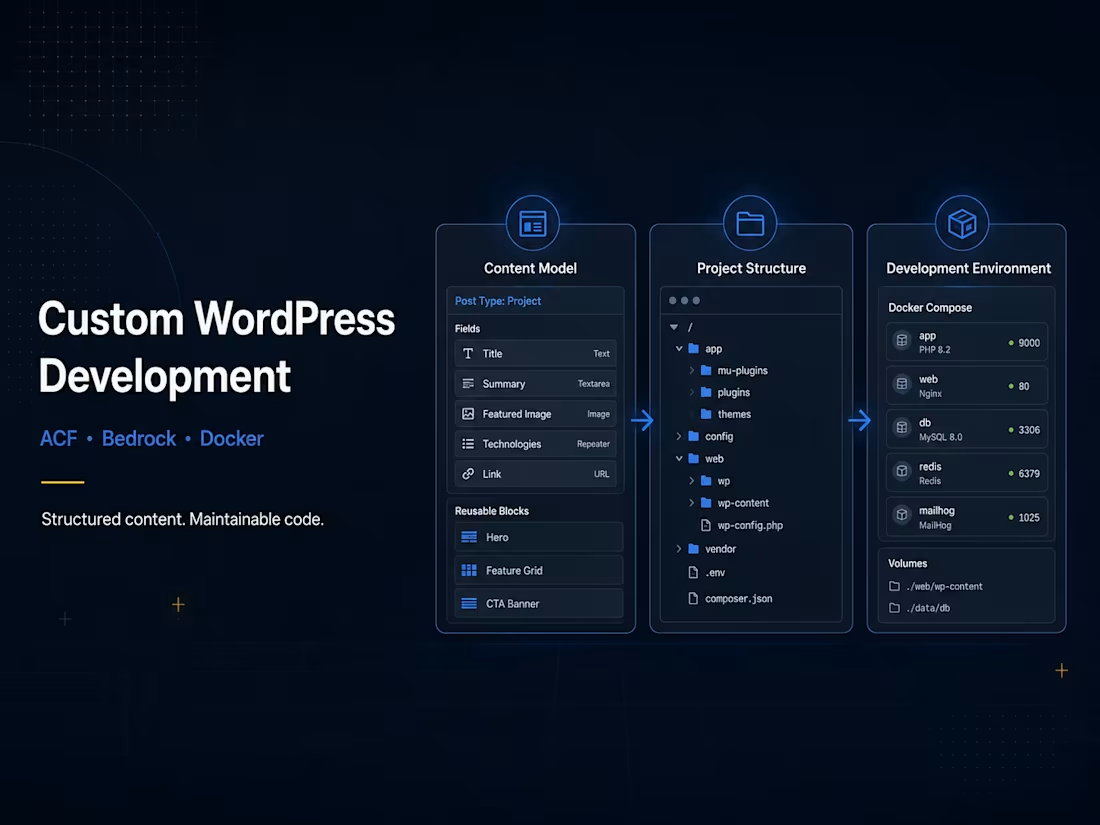
Page builders and off-the-shelf themes can help launch simple websites quickly. They can also become difficult to maintain when a business needs structured content, reusable components, custom workflows or reliable development environments.
I build custom WordPress websites using Advanced Custom Fields, Bedrock, Composer and modern development workflows.
The result is a structured, editor-friendly WordPress system built around your actual content and business requirements, without unnecessary dependence on a heavy visual page builder.
This service is suitable for companies that need more flexibility than a standard theme but still want the familiar WordPress editorial experience.
This service is useful when
I can help if:
Your existing WordPress theme is difficult to maintain
Your website relies on too many plugins
Editors cannot update content without developer assistance
A page builder is creating performance or consistency problems
Your team repeatedly recreates similar page layouts
You need reusable content sections with controlled design options
Your website contains several related content types
You need custom post types, fields or taxonomies
Your content structure has outgrown ordinary posts and pages
You have an approved Figma design that needs to be developed
Your agency needs a dependable WordPress implementation partner
Developers struggle to reproduce the project locally
Plugin and configuration changes are not tracked properly
Development, staging and production environments behave differently
Your team needs a Git and Composer-based WordPress workflow
An outdated custom theme needs to be rebuilt
Your website needs to integrate with an external API or business system
You need a maintainable CMS foundation for future content and SEO growth
Who this service is for
This service is particularly suitable for:
SaaS and technology companies
B2B organizations
Professional-service businesses
Agencies
Publishers and content-heavy websites
Membership organizations
Educational platforms
Healthcare organizations
Multilingual organizations
Marketing teams with recurring landing-page needs
Companies rebuilding an outdated WordPress website
Teams migrating away from rigid page builders
What I can build
Depending on the agreed scope, the project may include:
Custom WordPress themes
Websites developed from approved Figma designs
Corporate and marketing websites
SaaS marketing websites
Structured blogs and resource centres
Knowledge bases
Case-study libraries
Team and author directories
Service and location directories
Reusable landing-page systems
Event or publication websites
Custom post types
Custom taxonomies
ACF field groups
Reusable ACF content blocks
Custom WordPress templates
Search and filtering functionality
Contact and lead-generation forms
Third-party API integrations
Multilingual website foundations
Existing WordPress theme redevelopment
CMS migrations into WordPress
E-commerce, membership systems and other specialized functionality can be evaluated separately during scoping.
Core development capabilities
Custom WordPress theme development
I develop a theme around the agreed designs and content model rather than forcing your content into a generic multipurpose template.
The implementation may include:
Custom page templates
Archive and single-content templates
Reusable template components
Responsive layouts
WordPress navigation
Search templates
Form integration
Error and empty states
Accessible semantic markup
Theme configuration
Editor styles
Custom functionality agreed during scoping
Advanced Custom Fields
ACF can give editors structured control over content without exposing unnecessary design or code decisions.
The project may include:
Field-group architecture
Repeater and flexible-content fields
Relationship fields
Options pages
Global website settings
Structured page sections
Reusable content blocks
Conditional fields
Custom post-type fields
Validation and editorial instructions
Organized field naming and grouping
The goal is not to create hundreds of uncontrolled fields. The field model should reflect the content editors need to manage.
Custom post types and taxonomies
When ordinary pages and posts are insufficient, I can create structured content models for items such as:
Case studies
Products
Services
Team members
Resources
Events
Locations
Integrations
Documentation categories
Industry pages
Testimonials
This allows content to be reused, filtered and presented consistently.
Bedrock and Composer
For projects that benefit from a more structured WordPress setup, I can use Bedrock and Composer to improve dependency and configuration management.
This may include:
Composer-managed WordPress installation
Composer-managed plugins
Environment-specific configuration
Environment-variable management
Separation of application code and configuration
Improved project structure
Git-friendly dependency management
Documented setup procedures
Bedrock changes how the project is organized and deployed. It does not automatically make a website faster, more secure or more scalable without appropriate hosting and implementation.
Docker development environment
Where appropriate, I can provide a containerized local development environment to reduce differences between developer machines.
This may include:
WordPress or PHP service
Web server configuration
Database service
Environment variables
Persistent local volumes
Documented setup commands
Project-specific development configuration
Docker hosting or production container orchestration is not automatically included.
API and external-system integrations
Depending on the available API and project requirements, I can connect WordPress with external services such as:
CRM platforms
Email-marketing services
Form-processing systems
Analytics platforms
Search services
Internal business systems
Laravel applications
REST APIs
Authentication or membership providers
Other approved third-party services
The scope depends on API documentation, authentication requirements, rate limits and the functionality expected.
Editor experience
A custom website should be manageable by the people responsible for its content.
I focus on:
Clear field labels
Logical field organization
Contextual instructions
Controlled layout choices
Reusable content structures
Sensible defaults
Preview-friendly content
Reduced risk of accidental layout damage
Appropriate user roles and permissions
Written content-management guidance
Responsive development
The agreed templates are developed to work across relevant screen sizes.
Testing may include:
Desktop
Laptop
Tablet
Mobile
Current versions of agreed major browsers
Specific legacy browsers or devices must be identified during scoping.
Performance foundations
Depending on the project, development may include:
Appropriate image sizes
Responsive images
Lazy loading
Reduced unnecessary dependencies
Asset optimization
Caching compatibility
Efficient template queries
Limited plugin overhead
Semantic HTML
Core Web Vitals considerations
Final performance depends on hosting, third-party scripts, media, plugins and ongoing content practices. A specific performance score is not guaranteed unless explicitly included with measurable conditions.
Technical SEO foundations
The implementation can include technical foundations such as:
Semantic heading structure
Crawlable navigation
Clean template hierarchy
Canonical compatibility
XML sitemap compatibility
Metadata integration
Schema integration where scoped
Redirect support
Accessible internal links
Search-friendly content structures
Image-alt-field support
Indexation controls
Keyword research, content strategy and a comprehensive SEO audit remain separate services.
Security-conscious development
The project can follow relevant WordPress development practices, including:
Escaping output
Sanitizing and validating input
WordPress nonces
Appropriate permission checks
Controlled user roles
Maintained dependencies
Avoiding unnecessary plugins
Protecting sensitive configuration
Documenting update responsibilities
This is not a penetration test or security certification.
What you receive
Final deliverables depend on the agreed project scope and may include:
1. Custom WordPress implementation
A functional WordPress website developed according to the approved design, content model and technical requirements.
2. Custom theme
A project-specific theme without unnecessary dependence on a multipurpose theme or visual page builder.
3. Structured ACF content system
Custom fields, content blocks and editorial controls configured for the agreed content types.
4. Custom post types and taxonomies
Structured content models required for the website’s products, services, resources or other recurring information.
5. Bedrock project structure
A Composer-managed Bedrock configuration when included in the agreed architecture.
6. Docker development configuration
A reproducible container-based development environment when included in the scope.
7. Responsive templates
Templates developed for the agreed desktop, tablet and mobile requirements.
8. Integration implementation
Approved forms, APIs, analytics or external-service integrations.
9. Testing and issue resolution
Testing of agreed templates, content workflows, browsers, devices and integrations before handover.
10. Technical documentation
Setup, development, deployment and content-management instructions appropriate to the project.
11. Source-code handover
The agreed source code, configuration files and project documentation delivered through the approved repository or handover method.
12. Handover walkthrough
A call explaining the content-management workflow, relevant technical structure and ongoing responsibilities.
My development process
1. Discovery and requirements
We confirm:
Business objectives
Target users
Website functionality
Content types
Required templates
Editorial workflows
Integrations
Existing infrastructure
Hosting conditions
Design availability
Launch requirements
2. Technical and content architecture
I define the proposed:
WordPress structure
Content model
Custom post types
Taxonomies
ACF field groups
Reusable components
Plugin requirements
Integration approach
Environment structure
3. Scope and project plan
The proposal documents the included templates, functionality, integrations, deliverables, revision process and timeline.
4. Development setup
I prepare the agreed repository, Bedrock structure, Composer dependencies and Docker environment where applicable.
5. Theme and CMS development
I build the custom theme, templates, fields, content models and approved functionality.
6. Content integration
Client-provided content is added according to the quantity and migration scope defined in the proposal.
7. Testing and quality assurance
I test the agreed content workflows, responsive layouts, integrations and browser requirements.
8. Client review
You review the website in the agreed environment and provide consolidated feedback within the defined revision rounds.
9. Launch or handover
The project is deployed or delivered according to the agreed hosting and responsibility model.
10. Documentation and training
I provide the agreed technical documentation and content-management walkthrough.
What I need from you
Before development begins, please provide:
A description of the website and its goals
Target audience
Required pages and functionality
Approved Figma designs or design files, if available
Brand assets
Final or representative content
Existing WordPress access, if applicable
Hosting and domain information
Required integrations
API documentation and test credentials
Analytics requirements
SEO requirements
Examples of relevant websites
Stakeholder and approval process
Required launch date
Existing repository or source code, if applicable
Migration requirements
Legal pages and compliance requirements
Please provide controlled access through an appropriate credential-sharing method. Do not send production passwords through ordinary messages.
Scope, pricing and timeline
Every custom WordPress project differs in design readiness, number of templates, content complexity, functionality, integrations and migration requirements.
I provide a custom quote after reviewing the project requirements and available materials.
Pricing and delivery time may depend on:
Number of unique templates
Design availability and completeness
Number of custom post types
ACF field complexity
Required integrations
Custom PHP functionality
Content quantity
Migration requirements
Multilingual requirements
Browser and device coverage
Hosting and deployment complexity
Bedrock and Docker requirements
Testing requirements
Stakeholder and revision process
A focused custom website may take approximately four weeks after the required materials and access have been provided. Larger or more technically complex projects may require additional time.
The final proposal will define the included deliverables, milestones, timeline, responsibilities and revision limits.
What is not automatically included
Unless explicitly included in the proposal, this service does not cover:
Brand identity design
Logo design
Original UI/UX design
Copywriting for every page
Unlimited templates or pages
Unlimited revisions
Paid plugin or software licences
Hosting or domain fees
Ongoing maintenance
Complex WooCommerce development
Complete Laravel application development
Headless frontend development
Mobile application development
Penetration testing
Formal accessibility certification
Guaranteed SEO rankings
Unlimited content migration
Third-party service charges
Send me your existing website or Figma design, required functionality, approximate template list and preferred launch date. I will review the requirements and recommend an appropriate WordPress architecture before providing a custom quote.
FAQs
Example work
Kevine's other services
Contact for pricing
Duration4 weeks
Tags
Docker Compose

GitHub

MySQL

PHP

WordPress

ACF
Composer
Web Developer
WordPress Developer
Service provided by
Kevine Nzapdi Yaounde, Cameroon
Custom WordPress Development with ACF & BedrockKevine Nzapdi
Contact for pricing
Duration4 weeks
Tags
Docker Compose
GitHub
MySQL
PHP
WordPress
ACF
Composer
Web Developer
WordPress Developer
Page builders and off-the-shelf themes can help launch simple websites quickly. They can also become difficult to maintain when a business needs structured content, reusable components, custom workflows or reliable development environments.
I build custom WordPress websites using Advanced Custom Fields, Bedrock, Composer and modern development workflows.
The result is a structured, editor-friendly WordPress system built around your actual content and business requirements, without unnecessary dependence on a heavy visual page builder.
This service is suitable for companies that need more flexibility than a standard theme but still want the familiar WordPress editorial experience.
This service is useful when
I can help if:
Your existing WordPress theme is difficult to maintain
Your website relies on too many plugins
Editors cannot update content without developer assistance
A page builder is creating performance or consistency problems
Your team repeatedly recreates similar page layouts
You need reusable content sections with controlled design options
Your website contains several related content types
You need custom post types, fields or taxonomies
Your content structure has outgrown ordinary posts and pages
You have an approved Figma design that needs to be developed
Your agency needs a dependable WordPress implementation partner
Developers struggle to reproduce the project locally
Plugin and configuration changes are not tracked properly
Development, staging and production environments behave differently
Your team needs a Git and Composer-based WordPress workflow
An outdated custom theme needs to be rebuilt
Your website needs to integrate with an external API or business system
You need a maintainable CMS foundation for future content and SEO growth
Who this service is for
This service is particularly suitable for:
SaaS and technology companies
B2B organizations
Professional-service businesses
Agencies
Publishers and content-heavy websites
Membership organizations
Educational platforms
Healthcare organizations
Multilingual organizations
Marketing teams with recurring landing-page needs
Companies rebuilding an outdated WordPress website
Teams migrating away from rigid page builders
What I can build
Depending on the agreed scope, the project may include:
Custom WordPress themes
Websites developed from approved Figma designs
Corporate and marketing websites
SaaS marketing websites
Structured blogs and resource centres
Knowledge bases
Case-study libraries
Team and author directories
Service and location directories
Reusable landing-page systems
Event or publication websites
Custom post types
Custom taxonomies
ACF field groups
Reusable ACF content blocks
Custom WordPress templates
Search and filtering functionality
Contact and lead-generation forms
Third-party API integrations
Multilingual website foundations
Existing WordPress theme redevelopment
CMS migrations into WordPress
E-commerce, membership systems and other specialized functionality can be evaluated separately during scoping.
Core development capabilities
Custom WordPress theme development
I develop a theme around the agreed designs and content model rather than forcing your content into a generic multipurpose template.
The implementation may include:
Custom page templates
Archive and single-content templates
Reusable template components
Responsive layouts
WordPress navigation
Search templates
Form integration
Error and empty states
Accessible semantic markup
Theme configuration
Editor styles
Custom functionality agreed during scoping
Advanced Custom Fields
ACF can give editors structured control over content without exposing unnecessary design or code decisions.
The project may include:
Field-group architecture
Repeater and flexible-content fields
Relationship fields
Options pages
Global website settings
Structured page sections
Reusable content blocks
Conditional fields
Custom post-type fields
Validation and editorial instructions
Organized field naming and grouping
The goal is not to create hundreds of uncontrolled fields. The field model should reflect the content editors need to manage.
Custom post types and taxonomies
When ordinary pages and posts are insufficient, I can create structured content models for items such as:
Case studies
Products
Services
Team members
Resources
Events
Locations
Integrations
Documentation categories
Industry pages
Testimonials
This allows content to be reused, filtered and presented consistently.
Bedrock and Composer
For projects that benefit from a more structured WordPress setup, I can use Bedrock and Composer to improve dependency and configuration management.
This may include:
Composer-managed WordPress installation
Composer-managed plugins
Environment-specific configuration
Environment-variable management
Separation of application code and configuration
Improved project structure
Git-friendly dependency management
Documented setup procedures
Bedrock changes how the project is organized and deployed. It does not automatically make a website faster, more secure or more scalable without appropriate hosting and implementation.
Docker development environment
Where appropriate, I can provide a containerized local development environment to reduce differences between developer machines.
This may include:
WordPress or PHP service
Web server configuration
Database service
Environment variables
Persistent local volumes
Documented setup commands
Project-specific development configuration
Docker hosting or production container orchestration is not automatically included.
API and external-system integrations
Depending on the available API and project requirements, I can connect WordPress with external services such as:
CRM platforms
Email-marketing services
Form-processing systems
Analytics platforms
Search services
Internal business systems
Laravel applications
REST APIs
Authentication or membership providers
Other approved third-party services
The scope depends on API documentation, authentication requirements, rate limits and the functionality expected.
Editor experience
A custom website should be manageable by the people responsible for its content.
I focus on:
Clear field labels
Logical field organization
Contextual instructions
Controlled layout choices
Reusable content structures
Sensible defaults
Preview-friendly content
Reduced risk of accidental layout damage
Appropriate user roles and permissions
Written content-management guidance
Responsive development
The agreed templates are developed to work across relevant screen sizes.
Testing may include:
Desktop
Laptop
Tablet
Mobile
Current versions of agreed major browsers
Specific legacy browsers or devices must be identified during scoping.
Performance foundations
Depending on the project, development may include:
Appropriate image sizes
Responsive images
Lazy loading
Reduced unnecessary dependencies
Asset optimization
Caching compatibility
Efficient template queries
Limited plugin overhead
Semantic HTML
Core Web Vitals considerations
Final performance depends on hosting, third-party scripts, media, plugins and ongoing content practices. A specific performance score is not guaranteed unless explicitly included with measurable conditions.
Technical SEO foundations
The implementation can include technical foundations such as:
Semantic heading structure
Crawlable navigation
Clean template hierarchy
Canonical compatibility
XML sitemap compatibility
Metadata integration
Schema integration where scoped
Redirect support
Accessible internal links
Search-friendly content structures
Image-alt-field support
Indexation controls
Keyword research, content strategy and a comprehensive SEO audit remain separate services.
Security-conscious development
The project can follow relevant WordPress development practices, including:
Escaping output
Sanitizing and validating input
WordPress nonces
Appropriate permission checks
Controlled user roles
Maintained dependencies
Avoiding unnecessary plugins
Protecting sensitive configuration
Documenting update responsibilities
This is not a penetration test or security certification.
What you receive
Final deliverables depend on the agreed project scope and may include:
1. Custom WordPress implementation
A functional WordPress website developed according to the approved design, content model and technical requirements.
2. Custom theme
A project-specific theme without unnecessary dependence on a multipurpose theme or visual page builder.
3. Structured ACF content system
Custom fields, content blocks and editorial controls configured for the agreed content types.
4. Custom post types and taxonomies
Structured content models required for the website’s products, services, resources or other recurring information.
5. Bedrock project structure
A Composer-managed Bedrock configuration when included in the agreed architecture.
6. Docker development configuration
A reproducible container-based development environment when included in the scope.
7. Responsive templates
Templates developed for the agreed desktop, tablet and mobile requirements.
8. Integration implementation
Approved forms, APIs, analytics or external-service integrations.
9. Testing and issue resolution
Testing of agreed templates, content workflows, browsers, devices and integrations before handover.
10. Technical documentation
Setup, development, deployment and content-management instructions appropriate to the project.
11. Source-code handover
The agreed source code, configuration files and project documentation delivered through the approved repository or handover method.
12. Handover walkthrough
A call explaining the content-management workflow, relevant technical structure and ongoing responsibilities.
My development process
1. Discovery and requirements
We confirm:
Business objectives
Target users
Website functionality
Content types
Required templates
Editorial workflows
Integrations
Existing infrastructure
Hosting conditions
Design availability
Launch requirements
2. Technical and content architecture
I define the proposed:
WordPress structure
Content model
Custom post types
Taxonomies
ACF field groups
Reusable components
Plugin requirements
Integration approach
Environment structure
3. Scope and project plan
The proposal documents the included templates, functionality, integrations, deliverables, revision process and timeline.
4. Development setup
I prepare the agreed repository, Bedrock structure, Composer dependencies and Docker environment where applicable.
5. Theme and CMS development
I build the custom theme, templates, fields, content models and approved functionality.
6. Content integration
Client-provided content is added according to the quantity and migration scope defined in the proposal.
7. Testing and quality assurance
I test the agreed content workflows, responsive layouts, integrations and browser requirements.
8. Client review
You review the website in the agreed environment and provide consolidated feedback within the defined revision rounds.
9. Launch or handover
The project is deployed or delivered according to the agreed hosting and responsibility model.
10. Documentation and training
I provide the agreed technical documentation and content-management walkthrough.
What I need from you
Before development begins, please provide:
A description of the website and its goals
Target audience
Required pages and functionality
Approved Figma designs or design files, if available
Brand assets
Final or representative content
Existing WordPress access, if applicable
Hosting and domain information
Required integrations
API documentation and test credentials
Analytics requirements
SEO requirements
Examples of relevant websites
Stakeholder and approval process
Required launch date
Existing repository or source code, if applicable
Migration requirements
Legal pages and compliance requirements
Please provide controlled access through an appropriate credential-sharing method. Do not send production passwords through ordinary messages.
Scope, pricing and timeline
Every custom WordPress project differs in design readiness, number of templates, content complexity, functionality, integrations and migration requirements.
I provide a custom quote after reviewing the project requirements and available materials.
Pricing and delivery time may depend on:
Number of unique templates
Design availability and completeness
Number of custom post types
ACF field complexity
Required integrations
Custom PHP functionality
Content quantity
Migration requirements
Multilingual requirements
Browser and device coverage
Hosting and deployment complexity
Bedrock and Docker requirements
Testing requirements
Stakeholder and revision process
A focused custom website may take approximately four weeks after the required materials and access have been provided. Larger or more technically complex projects may require additional time.
The final proposal will define the included deliverables, milestones, timeline, responsibilities and revision limits.
What is not automatically included
Unless explicitly included in the proposal, this service does not cover:
Brand identity design
Logo design
Original UI/UX design
Copywriting for every page
Unlimited templates or pages
Unlimited revisions
Paid plugin or software licences
Hosting or domain fees
Ongoing maintenance
Complex WooCommerce development
Complete Laravel application development
Headless frontend development
Mobile application development
Penetration testing
Formal accessibility certification
Guaranteed SEO rankings
Unlimited content migration
Third-party service charges
Send me your existing website or Figma design, required functionality, approximate template list and preferred launch date. I will review the requirements and recommend an appropriate WordPress architecture before providing a custom quote.
FAQs
Example work
Kevine's other services
Contact for pricing