
AI-Driven Growth MarketingHachimi Yallaoui
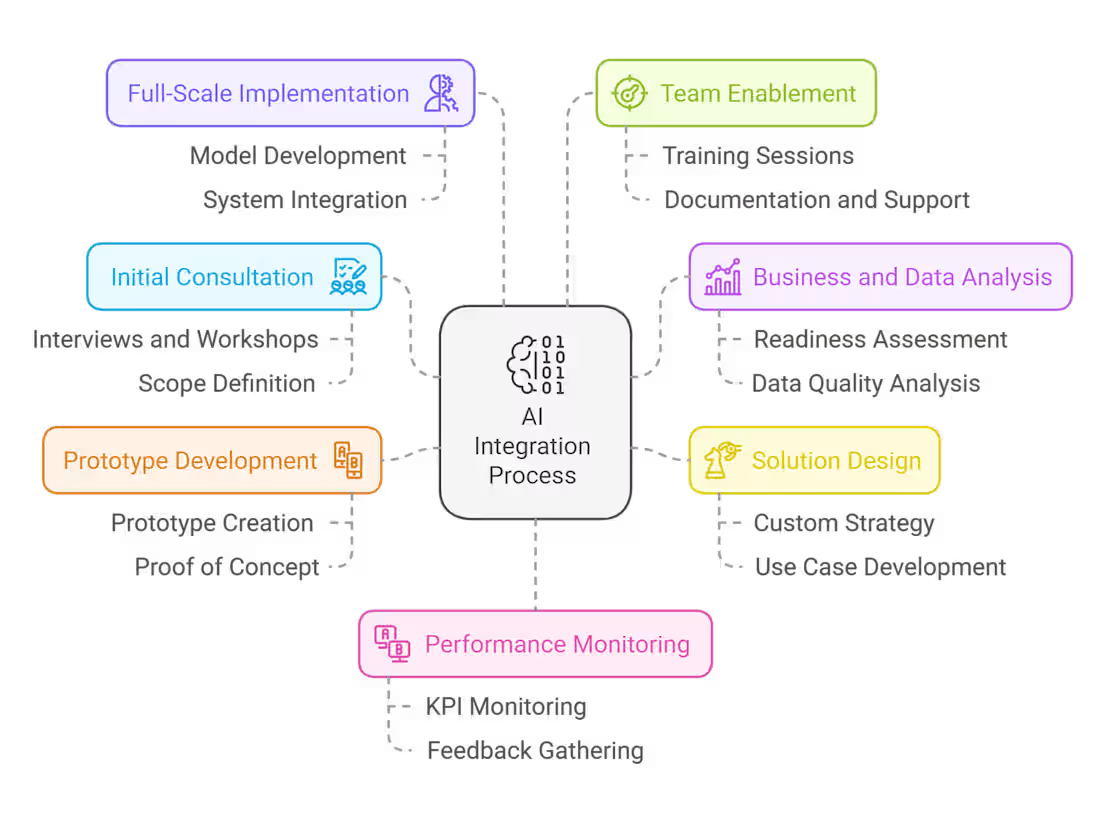
This service is built on the premise that AI is not just a tool but a transformative force for businesses. The approach is structured to ensure clients:
Identify the right opportunities for AI.
Achieve measurable improvements quickly through prototyping.
Build long-term capabilities for sustained innovation.
By focusing on feasibility, scalability, and user enablement, this service empowers businesses to remain competitive in an AI-driven future.
1. Initial Consultation and Discovery
Objective: Understand the client’s business model, challenges, and goals.
Process: Conduct interviews and workshops with stakeholders to gather insights.
Outcome: Define the scope of AI integration and identify specific pain points to address.
2. Business and Data Analysis
Objective: Assess the business’s current processes and data infrastructure.
Process: Conduct an AI readiness assessment, analyze data availability and quality, and identify gaps.
Outcome: Deliver an AI Readiness Assessment Report outlining key findings and recommendations.
3. Solution Design
Objective: Develop a strategic plan for integrating AI solutions.
Process: Create a Custom AI Implementation Strategy, including detailed use cases and an execution timeline.
Outcome: A roadmap tailored to the client’s objectives and capabilities.
4. Prototype Development
Objective: Test the feasibility of proposed AI solutions with a Proof of Concept.
Process: Develop prototypes or small-scale AI applications to demonstrate value and refine the approach.
Outcome: Deliver a working prototype or POC.
5. Full-Scale Implementation
Objective: Build and deploy AI solutions to transform business processes.
Process: Develop custom AI models, integrate them with existing systems, and ensure seamless deployment.
Outcome: Fully operational AI-driven workflows and tools.
6. Team Enablement
Objective: Ensure the client’s team is equipped to leverage AI tools effectively.
Process: Conduct training sessions, provide documentation, and offer hands-on support during the transition.
Outcome: Enhanced capability within the client’s team to use and manage AI solutions independently.
7. Performance Monitoring and Optimization
Objective: Measure the success of the AI implementation and optimize for ongoing improvements.
Process: Monitor KPIs, gather feedback, and iteratively enhance the AI systems based on real-world performance.
Outcome: Consistently improving results and ROI from AI solutions.
What's included
AI Readiness Assessment Report
Evaluate the current state of the business, identifying areas where AI can bring measurable improvements.
Highlight technical requirements and potential challenges.
Custom AI Implementation Strategy
Develop a detailed plan for incorporating AI solutions into the client's business processes.
Include use cases, workflows, and timelines.
Prototyping and Proof of Concept (POC)
Work on building a functional prototype or POC to demonstrate the feasibility and potential impact of the proposed AI solution.
Custom AI Model Training and Deployment
Build or customize AI models tailored to the client's business needs, ensuring effective deployment and integration with existing systems.
Comprehensive Training and Documentation
Provide training sessions for the client’s team to ensure smooth adoption of AI solutions.
Deliver a comprehensive user manual or technical documentation.
Performance Metrics and Optimization Plan
Establish KPIs to measure the success of AI implementation.
Create a roadmap for continuous monitoring and improvement.
Hachimi's other services
Contact for pricing
Tags
Azure

CoPilot

Make

Marketing Strategist
Service provided by
Hachimi Yallaoui Brooklyn, USA
AI-Driven Growth MarketingHachimi Yallaoui
This service is built on the premise that AI is not just a tool but a transformative force for businesses. The approach is structured to ensure clients:
Identify the right opportunities for AI.
Achieve measurable improvements quickly through prototyping.
Build long-term capabilities for sustained innovation.
By focusing on feasibility, scalability, and user enablement, this service empowers businesses to remain competitive in an AI-driven future.
1. Initial Consultation and Discovery
Objective: Understand the client’s business model, challenges, and goals.
Process: Conduct interviews and workshops with stakeholders to gather insights.
Outcome: Define the scope of AI integration and identify specific pain points to address.
2. Business and Data Analysis
Objective: Assess the business’s current processes and data infrastructure.
Process: Conduct an AI readiness assessment, analyze data availability and quality, and identify gaps.
Outcome: Deliver an AI Readiness Assessment Report outlining key findings and recommendations.
3. Solution Design
Objective: Develop a strategic plan for integrating AI solutions.
Process: Create a Custom AI Implementation Strategy, including detailed use cases and an execution timeline.
Outcome: A roadmap tailored to the client’s objectives and capabilities.
4. Prototype Development
Objective: Test the feasibility of proposed AI solutions with a Proof of Concept.
Process: Develop prototypes or small-scale AI applications to demonstrate value and refine the approach.
Outcome: Deliver a working prototype or POC.
5. Full-Scale Implementation
Objective: Build and deploy AI solutions to transform business processes.
Process: Develop custom AI models, integrate them with existing systems, and ensure seamless deployment.
Outcome: Fully operational AI-driven workflows and tools.
6. Team Enablement
Objective: Ensure the client’s team is equipped to leverage AI tools effectively.
Process: Conduct training sessions, provide documentation, and offer hands-on support during the transition.
Outcome: Enhanced capability within the client’s team to use and manage AI solutions independently.
7. Performance Monitoring and Optimization
Objective: Measure the success of the AI implementation and optimize for ongoing improvements.
Process: Monitor KPIs, gather feedback, and iteratively enhance the AI systems based on real-world performance.
Outcome: Consistently improving results and ROI from AI solutions.
What's included
AI Readiness Assessment Report
Evaluate the current state of the business, identifying areas where AI can bring measurable improvements.
Highlight technical requirements and potential challenges.
Custom AI Implementation Strategy
Develop a detailed plan for incorporating AI solutions into the client's business processes.
Include use cases, workflows, and timelines.
Prototyping and Proof of Concept (POC)
Work on building a functional prototype or POC to demonstrate the feasibility and potential impact of the proposed AI solution.
Custom AI Model Training and Deployment
Build or customize AI models tailored to the client's business needs, ensuring effective deployment and integration with existing systems.
Comprehensive Training and Documentation
Provide training sessions for the client’s team to ensure smooth adoption of AI solutions.
Deliver a comprehensive user manual or technical documentation.
Performance Metrics and Optimization Plan
Establish KPIs to measure the success of AI implementation.
Create a roadmap for continuous monitoring and improvement.
Hachimi's other services
Contact for pricing