
Evidence-Based UX Audit for SaaS & AI ProductsArif khan
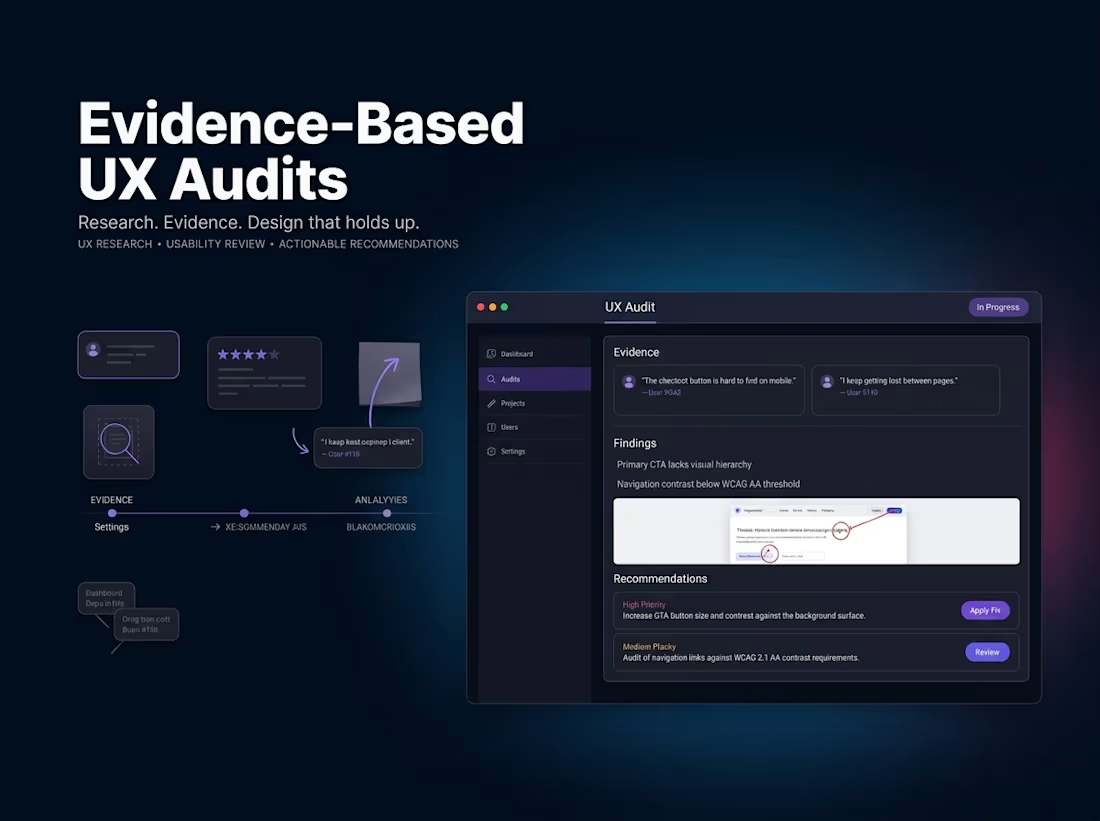
I turn scattered, real user complaints into evidence-backed UX
fixes — not redesigns based on guesswork or personal taste.
Most UX audits start from opinion: "this feels clunky," "this could
be cleaner." Mine start from documented evidence — reviews,
support-team replies, forum threads, and usage patterns that are
already public and verifiable. I trace every design decision back
to a specific, sourced problem, so the recommendations hold up when
someone on your team asks "how do we know this is actually an
issue?"
What you get:
→ A sourced problem audit — the friction points your users are
already reporting publicly, with links to every source
→ A scoped design proposal — 2-4 focused UX improvements, built to
fit your existing product (no unnecessary redesigns)
→ A written case-study document explaining the reasoning behind
every recommendation, ready to share internally
Best fit for: SaaS products, AI tools, and app-builder platforms
that already have public reviews (G2, Trustpilot, Reddit, app-store
reviews) to work from.
See a full example of this process in my "Closing Lovable's
Visibility Gap" project below.
FAQs
Arif's other services

Starting at$2,999
Duration1 week
Tags
Figma

Figma Make

UX Audit
Product Designer
UX Researcher
Case Study
SaaS
Service provided by
Arif khan Baroda, India
- 32
- Followers
Evidence-Based UX Audit for SaaS & AI ProductsArif khan
Starting at$2,999
Duration1 week
Tags
Figma
Figma Make
UX Audit
Product Designer
UX Researcher
Case Study
SaaS
I turn scattered, real user complaints into evidence-backed UX
fixes — not redesigns based on guesswork or personal taste.
Most UX audits start from opinion: "this feels clunky," "this could
be cleaner." Mine start from documented evidence — reviews,
support-team replies, forum threads, and usage patterns that are
already public and verifiable. I trace every design decision back
to a specific, sourced problem, so the recommendations hold up when
someone on your team asks "how do we know this is actually an
issue?"
What you get:
→ A sourced problem audit — the friction points your users are
already reporting publicly, with links to every source
→ A scoped design proposal — 2-4 focused UX improvements, built to
fit your existing product (no unnecessary redesigns)
→ A written case-study document explaining the reasoning behind
every recommendation, ready to share internally
Best fit for: SaaS products, AI tools, and app-builder platforms
that already have public reviews (G2, Trustpilot, Reddit, app-store
reviews) to work from.
See a full example of this process in my "Closing Lovable's
Visibility Gap" project below.
FAQs
Arif's other services
$2,999