
CAMS Speaking Assessment Implementation & Calibration PilotSuliman Abdelaty
If two teachers rate the same speaking performance differently, your team needs a way to examine the evidence, explain the decision and decide what to change.
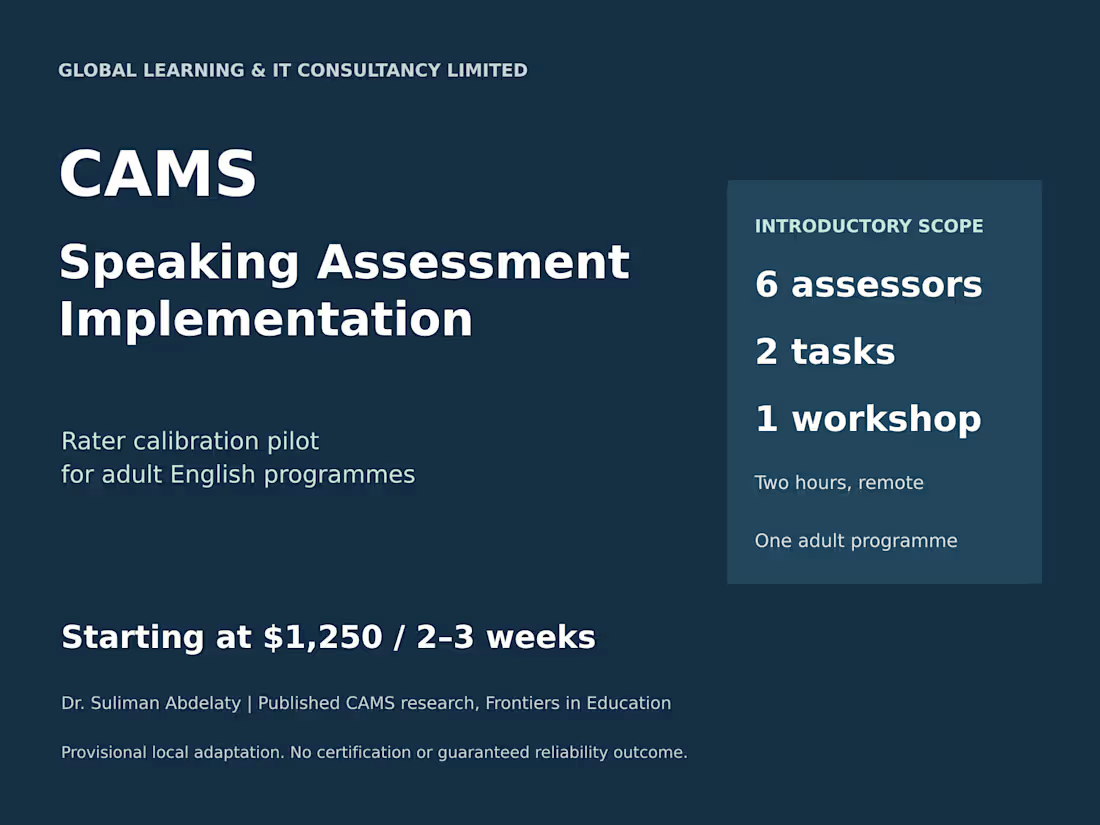
I help adult English programmes put a documented speaking-assessment routine into practice. This introductory pilot connects a usable rubric, human rater calibration, specific teacher feedback and learner monitoring. It is designed for online language schools, tutoring companies, corporate English providers, ESL coordinators and EdTech teams.
The pilot scope
• One adult programme and up to two adjacent intended CEFR levels.
• One existing assessment process and up to two short speaking tasks, revised or developed within that limit.
• Up to six named assessors and four consented client recordings, each no longer than six minutes.
• One 45-minute kickoff, one two-hour remote calibration workshop and one 30-minute handover.
• One consolidated revision round within the agreed scope.
What your team receives
1. A discovery brief, process review and evidence-linked issue register.
2. One adapted or newly developed provisional five-criterion speaking rubric on a 0–5 scale, with task and administration guidance.
3. A calibration workshop using independent scoring, evidence discussion and documented disagreement decisions. Original ratings remain available.
4. Two editable teacher-feedback formats and a four-session learner reflection routine.
5. A configured XLSX monitoring workbook for up to 50 learners and 200 assessment records, covering criterion ratings, missing evidence, assessment history, learning targets and follow-up.
6. A concise assessment quality report and a 30-day plan for collecting local reliability evidence.
7. Editable DOCX/XLSX files, PDF guidance and a handover consultation.
How we work
Days 1–3: confirm the brief, review the current process and identify scoring, feedback and workload issues.
Days 4–7: prepare the rubric, task guidance, feedback formats and assessor prework. You confirm the draft before training.
Days 8–10: run the workshop, inspect criterion-level disagreements and document the next steps.
Days 11–15: complete the report, monitoring workbook, consolidated revision and handover.
Price and timing
The starter pilot is USD 1,250. Allow 10–15 business days, approximately 2–3 weeks, from the agreed start date after the complete brief and materials are received. The schedule depends on assessor availability and client feedback within two business days. Any applicable taxes or platform charges are separate and confirmed before engagement. Additional scope requires an agreed quote.
What I need from you
One programme decision-maker, current tasks and rubrics, the learner profile, up to five de-identified feedback examples and the agreed recordings. Assessors complete independent prework before the workshop. Recording permissions, access controls and retention arrangements are agreed before transfer. Please send your programme summary through Contra first; do not attach learner recordings to an initial enquiry.
Research foundation
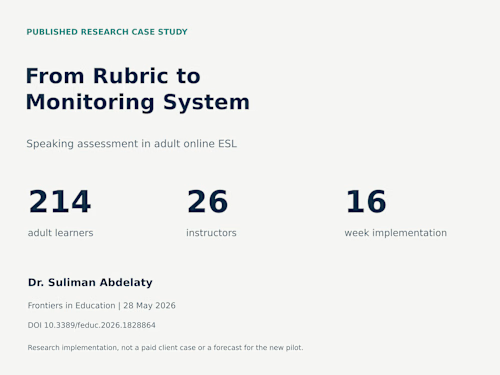
I am Dr. Suliman Abdelaty, an English educator, assessment designer and author of the peer-reviewed Frontiers in Education study From rubric to monitoring system: a CEFR-aligned approach to reliability and learning in online ESL speaking (2026).
https://doi.org/10.3389/feduc.2026.1828864
The published CAMS model combines a rubric, calibration, structured feedback and in-session learner review. Its findings concern a 16-week bundled implementation with a six-hour workshop. This two-hour pilot is a new consulting offer; it does not reproduce that study or promise its outcomes.
Use and scope limits
New descriptors and task mappings remain provisional until locally reviewed and trialled. Descriptive agreement counts are not ICCs or proof of assessment validity. This engagement does not certify CEFR levels, validate cut scores or independently support high-stakes decisions. Full rollout, psychometric studies, software integration, ongoing support and independently validated audio benchmarks are outside the starter scope.
Your organisation may edit and use the supplied implementation materials internally in the agreed programme, including with its enrolled learners. Resale or redistribution as a commercial product is excluded. Your source materials remain yours; pre-existing materials and third-party rights retain their respective terms. Client-specific work starts only after we agree a written scope and available start date.
To discuss fit, send your programme type, intended learner levels, assessor count and the main assessment issue through Contra.
FAQs
Starting at$1,250
Duration3 weeks
Tags
Quality Assurance
Language Assessment
Service provided by
Suliman Abdelaty proLondon, UK
- 15
- Followers
CAMS Speaking Assessment Implementation & Calibration PilotSuliman Abdelaty
Starting at$1,250
Duration3 weeks
Tags
Quality Assurance
Language Assessment
If two teachers rate the same speaking performance differently, your team needs a way to examine the evidence, explain the decision and decide what to change.
I help adult English programmes put a documented speaking-assessment routine into practice. This introductory pilot connects a usable rubric, human rater calibration, specific teacher feedback and learner monitoring. It is designed for online language schools, tutoring companies, corporate English providers, ESL coordinators and EdTech teams.
The pilot scope
• One adult programme and up to two adjacent intended CEFR levels.
• One existing assessment process and up to two short speaking tasks, revised or developed within that limit.
• Up to six named assessors and four consented client recordings, each no longer than six minutes.
• One 45-minute kickoff, one two-hour remote calibration workshop and one 30-minute handover.
• One consolidated revision round within the agreed scope.
What your team receives
1. A discovery brief, process review and evidence-linked issue register.
2. One adapted or newly developed provisional five-criterion speaking rubric on a 0–5 scale, with task and administration guidance.
3. A calibration workshop using independent scoring, evidence discussion and documented disagreement decisions. Original ratings remain available.
4. Two editable teacher-feedback formats and a four-session learner reflection routine.
5. A configured XLSX monitoring workbook for up to 50 learners and 200 assessment records, covering criterion ratings, missing evidence, assessment history, learning targets and follow-up.
6. A concise assessment quality report and a 30-day plan for collecting local reliability evidence.
7. Editable DOCX/XLSX files, PDF guidance and a handover consultation.
How we work
Days 1–3: confirm the brief, review the current process and identify scoring, feedback and workload issues.
Days 4–7: prepare the rubric, task guidance, feedback formats and assessor prework. You confirm the draft before training.
Days 8–10: run the workshop, inspect criterion-level disagreements and document the next steps.
Days 11–15: complete the report, monitoring workbook, consolidated revision and handover.
Price and timing
The starter pilot is USD 1,250. Allow 10–15 business days, approximately 2–3 weeks, from the agreed start date after the complete brief and materials are received. The schedule depends on assessor availability and client feedback within two business days. Any applicable taxes or platform charges are separate and confirmed before engagement. Additional scope requires an agreed quote.
What I need from you
One programme decision-maker, current tasks and rubrics, the learner profile, up to five de-identified feedback examples and the agreed recordings. Assessors complete independent prework before the workshop. Recording permissions, access controls and retention arrangements are agreed before transfer. Please send your programme summary through Contra first; do not attach learner recordings to an initial enquiry.
Research foundation
I am Dr. Suliman Abdelaty, an English educator, assessment designer and author of the peer-reviewed Frontiers in Education study From rubric to monitoring system: a CEFR-aligned approach to reliability and learning in online ESL speaking (2026).
https://doi.org/10.3389/feduc.2026.1828864
The published CAMS model combines a rubric, calibration, structured feedback and in-session learner review. Its findings concern a 16-week bundled implementation with a six-hour workshop. This two-hour pilot is a new consulting offer; it does not reproduce that study or promise its outcomes.
Use and scope limits
New descriptors and task mappings remain provisional until locally reviewed and trialled. Descriptive agreement counts are not ICCs or proof of assessment validity. This engagement does not certify CEFR levels, validate cut scores or independently support high-stakes decisions. Full rollout, psychometric studies, software integration, ongoing support and independently validated audio benchmarks are outside the starter scope.
Your organisation may edit and use the supplied implementation materials internally in the agreed programme, including with its enrolled learners. Resale or redistribution as a commercial product is excluded. Your source materials remain yours; pre-existing materials and third-party rights retain their respective terms. Client-specific work starts only after we agree a written scope and available start date.
To discuss fit, send your programme type, intended learner levels, assessor count and the main assessment issue through Contra.
FAQs
$1,250