
Frontend developerBishal Roy
Our frontend service includes designing and developing visually appealing, user-friendly interfaces with HTML, CSS, and JavaScript to enhance the user experience and ensure optimal website performance.
What's included
The client will receive a fully functional and visually appealing website or web application with responsive design.
HTML/CSS files: These files define the structure and style of the web pages.
JavaScript files: These files contain the frontend logic and interactivity of the website.
Responsive Design: The website will be optimized to adapt and display correctly on various devices and screen sizes.
Cross-browser compatibility: The website will be tested and optimized to work well on different web browsers.
User Interface (UI) components: Custom-designed and implemented UI elements like buttons, forms, menus, etc.
Images and multimedia: Any visuals or media assets required for the frontend, properly optimized for web use.
Documentation: Detailed instructions or documentation explaining how to use and maintain the frontend code.
Integration with backend: If applicable, the frontend code will be integrated with the backend systems or APIs.
Testing and bug fixes: The frontend code will be thoroughly tested for any issues or bugs and fixed accordingly.
Ongoing support: Assistance and support to address any issues or enhancements post-delivery.
It's important to note that the specific deliverables may vary based on the project requirements and the agreed-upon scope of work between the client and the frontend developer.
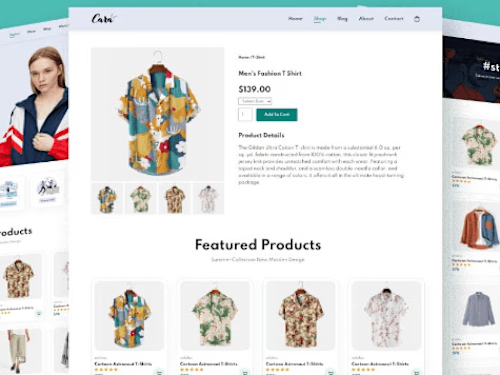
Example work

Bishal's other services

Starting at$50 /wk
Tags
CSS

HTML5

JavaScript

Node.js

React

Frontend Engineer
Web Designer
Web Developer
Service provided by
Bishal Roy India
Frontend developerBishal Roy
Starting at$50 /wk
Tags
CSS
HTML5
JavaScript
Node.js
React
Frontend Engineer
Web Designer
Web Developer
Our frontend service includes designing and developing visually appealing, user-friendly interfaces with HTML, CSS, and JavaScript to enhance the user experience and ensure optimal website performance.
What's included
The client will receive a fully functional and visually appealing website or web application with responsive design.
HTML/CSS files: These files define the structure and style of the web pages.
JavaScript files: These files contain the frontend logic and interactivity of the website.
Responsive Design: The website will be optimized to adapt and display correctly on various devices and screen sizes.
Cross-browser compatibility: The website will be tested and optimized to work well on different web browsers.
User Interface (UI) components: Custom-designed and implemented UI elements like buttons, forms, menus, etc.
Images and multimedia: Any visuals or media assets required for the frontend, properly optimized for web use.
Documentation: Detailed instructions or documentation explaining how to use and maintain the frontend code.
Integration with backend: If applicable, the frontend code will be integrated with the backend systems or APIs.
Testing and bug fixes: The frontend code will be thoroughly tested for any issues or bugs and fixed accordingly.
Ongoing support: Assistance and support to address any issues or enhancements post-delivery.
It's important to note that the specific deliverables may vary based on the project requirements and the agreed-upon scope of work between the client and the frontend developer.
Example work
Bishal's other services
$50 /wk