
Logo and Branding DesignMalak Bahaa
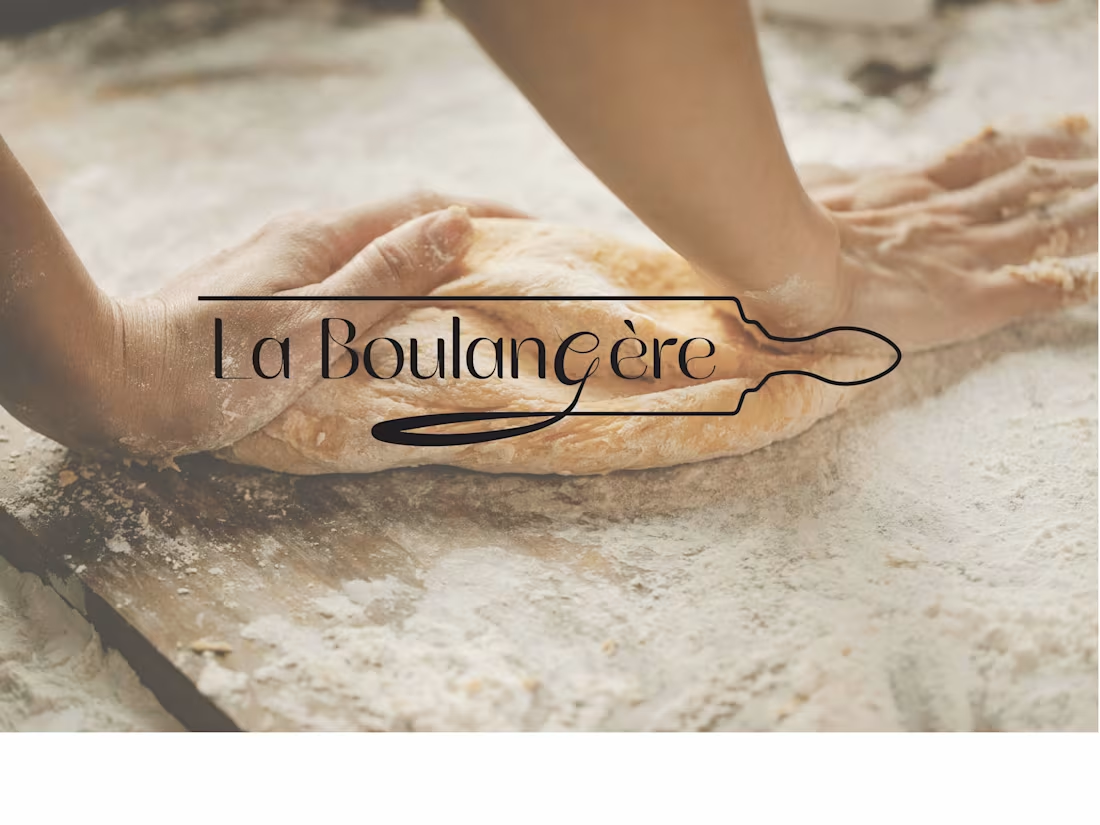
I specialize in creating logos and brand guidelines to help businesses establish a strong visual identity.
What's included
Logo and Brand Guideline
Logo Design
- Primary Logo: The main version of the logo in various formats (JPEG, PNG, SVG, EPS, PDF).
- Secondary Logo Variations: Different versions of the logo for different applications (e.g., stacked version, horizontal version).
- Monochrome and Reverse Logos: Black and white versions, as well as logos designed for dark backgrounds.
- Favicon: A simplified version of the logo for web use, typically 16x16 or 32x32 pixels.
Brand Guideline Document
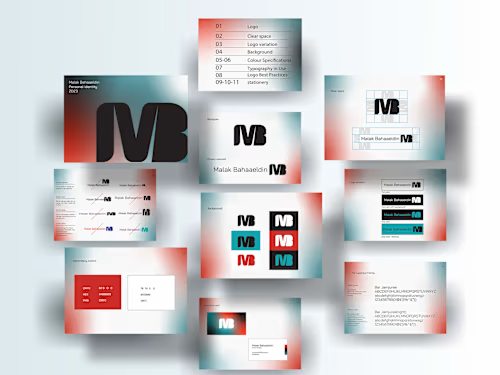
- Logo Usage Guidelines: Instructions on proper and improper usage of the logo, including minimum size, clear space, and alignment.
- Color Palette: Primary and secondary color schemes with specific color codes (Pantone, CMYK, RGB, HEX).
- Typography: Fonts used in the logo and brand materials, including hierarchy, sizes, and usage examples.
- Imagery Style: Guidelines on the style of photographs, illustrations, and icons that align with the brand.
- Brand Voice and Tone: Descriptions and examples of the brand’s personality, messaging, and tone for consistent communication.
- Stationery Design: Templates for business cards, letterheads, envelopes, and other stationery items.
- Digital and Print Applications: Mockups or examples of the logo and brand elements in various applications, such as social media profiles, website, marketing materials, and advertisements.
- Additional Elements: Any other brand assets like patterns, textures, or graphical elements that support the brand identity.
Files and Formats
- Editable Source Files: Original design files in formats such as Adobe Illustrator (.ai), Photoshop (.psd), or other relevant formats.
- Raster and Vector Files: High-resolution raster files (PNG, JPEG) and scalable vector files (SVG, EPS, PDF) for various uses.
- Font Files: If custom fonts are created, the client may receive the font files or links to purchase/licensing information for the fonts used.
Example work
Malak's other services
Starting at$100
Duration3 weeks
Tags
Adobe Illustrator
Adobe Photoshop
Brand Designer
Graphic Designer
Logo Designer
Service provided by
Malak Bahaa Cairo, Egypt
Logo and Branding DesignMalak Bahaa
Starting at$100
Duration3 weeks
Tags
Adobe Illustrator
Adobe Photoshop
Brand Designer
Graphic Designer
Logo Designer
I specialize in creating logos and brand guidelines to help businesses establish a strong visual identity.
What's included
Logo and Brand Guideline
Logo Design
- Primary Logo: The main version of the logo in various formats (JPEG, PNG, SVG, EPS, PDF).
- Secondary Logo Variations: Different versions of the logo for different applications (e.g., stacked version, horizontal version).
- Monochrome and Reverse Logos: Black and white versions, as well as logos designed for dark backgrounds.
- Favicon: A simplified version of the logo for web use, typically 16x16 or 32x32 pixels.
Brand Guideline Document
- Logo Usage Guidelines: Instructions on proper and improper usage of the logo, including minimum size, clear space, and alignment.
- Color Palette: Primary and secondary color schemes with specific color codes (Pantone, CMYK, RGB, HEX).
- Typography: Fonts used in the logo and brand materials, including hierarchy, sizes, and usage examples.
- Imagery Style: Guidelines on the style of photographs, illustrations, and icons that align with the brand.
- Brand Voice and Tone: Descriptions and examples of the brand’s personality, messaging, and tone for consistent communication.
- Stationery Design: Templates for business cards, letterheads, envelopes, and other stationery items.
- Digital and Print Applications: Mockups or examples of the logo and brand elements in various applications, such as social media profiles, website, marketing materials, and advertisements.
- Additional Elements: Any other brand assets like patterns, textures, or graphical elements that support the brand identity.
Files and Formats
- Editable Source Files: Original design files in formats such as Adobe Illustrator (.ai), Photoshop (.psd), or other relevant formats.
- Raster and Vector Files: High-resolution raster files (PNG, JPEG) and scalable vector files (SVG, EPS, PDF) for various uses.
- Font Files: If custom fonts are created, the client may receive the font files or links to purchase/licensing information for the fonts used.
Example work
Malak's other services
$100