
Video EditorKyth Darenze Aguilo
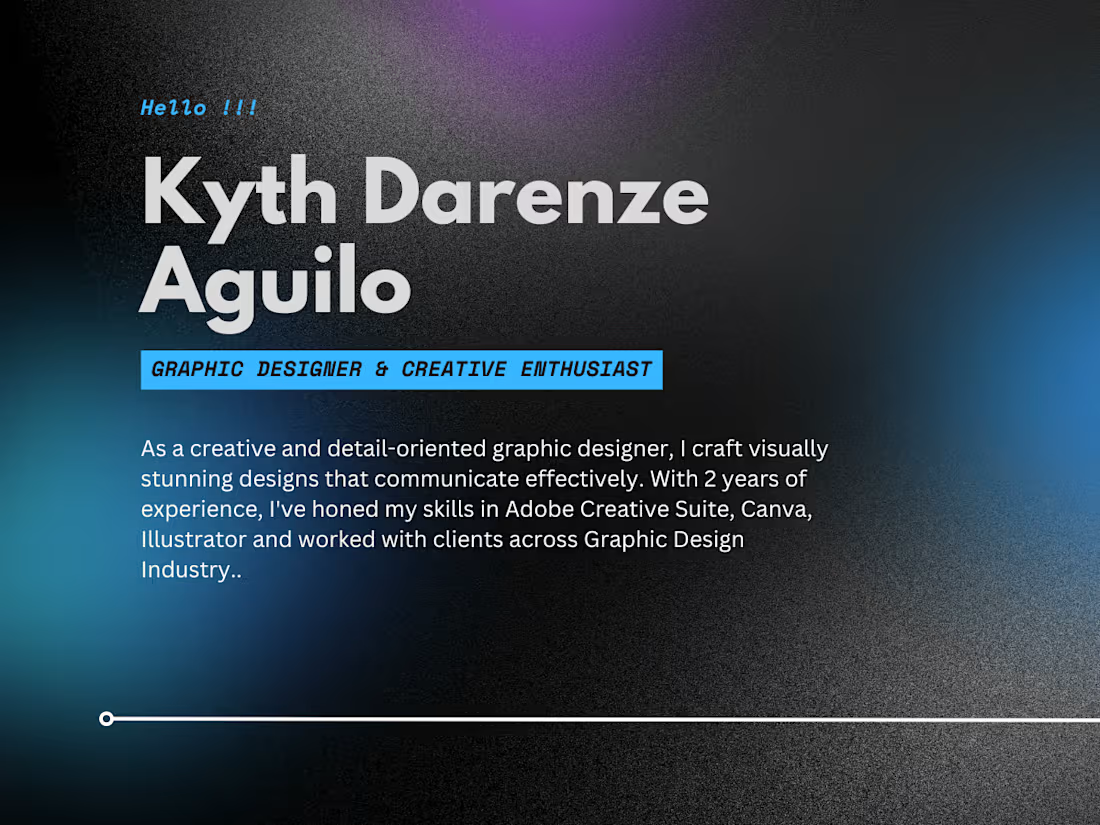
As a skilled video editor, I offer high-quality editing services to help clients bring their visual stories to life. What sets me apart is my attention to detail, creativity, and ability to craft engaging narratives that captivate audiences. With a keen eye for pacing, tone, and visual aesthetics, I deliver polished and professional video content that exceeds client expectations.
What's included
Video Editing
As a video editor, the deliverables may include:
1. **Final Cut**: The edited video file in the desired format (e.g. MP4, MOV, ProRes) and resolution (e.g. 1080p, 4K).
2. **Edited Master**: A high-quality, master version of the edited video with no watermarks or timecodes.
3. **Export Options**: Variations of the final cut in different formats and resolutions to accommodate different platforms or devices (e.g. YouTube, Instagram, TV broadcast).
4. **Color Grading and LUTs**: A color-graded version of the video with a specific Look-Up Table (LUT) applied, as well as the original ungraded footage.
5. **Sound Design and Mix**: A professionally mixed and sound-designed audio track, including music, sound effects, and dialogue.
6. **Subtitle Files**: Timed text files in a standard format (e.g. SRT, ASS) for captioning and subtitling.
7. **Motion Graphics Elements**: Custom-created motion graphics, animations, and titles designed specifically for the project.
8. **Visual Effects**: Any visual effects added to the video, such as green screen removal, chroma keying, or particle effects.
9. **Timing Sheet**: A detailed timing sheet outlining the video's start and end times for each scene or segment.
10. **Assembly Edit**: A rough cut or assembly edit of the video, showing the overall structure and pacing of the project.
11. **Storyboards or Animatics**: Visual representations of the video's sequence and timing, often created during the planning phase.
12. **Client-Friendly Files**: Files formatted for client review and feedback, including lower-resolution versions or web-friendly formats.
As a video editor, it's essential to clarify with clients what deliverables are expected and to ensure that all files are properly labeled and organized for easy distribution and use.
Kyth Darenze 's other services

Starting at$5 /hr
Tags
Adobe After Effects

Adobe Premiere Pro

CapCut

Final Cut Pro

Wondershare Filmora

Video Editor
Video Post-Production Editor
Video Producer
Service provided by
Kyth Darenze Aguilo Cebu City, Philippines
Video EditorKyth Darenze Aguilo
Starting at$5 /hr
Tags
Adobe After Effects
Adobe Premiere Pro
CapCut
Final Cut Pro
Wondershare Filmora
Video Editor
Video Post-Production Editor
Video Producer
As a skilled video editor, I offer high-quality editing services to help clients bring their visual stories to life. What sets me apart is my attention to detail, creativity, and ability to craft engaging narratives that captivate audiences. With a keen eye for pacing, tone, and visual aesthetics, I deliver polished and professional video content that exceeds client expectations.
What's included
Video Editing
As a video editor, the deliverables may include:
1. **Final Cut**: The edited video file in the desired format (e.g. MP4, MOV, ProRes) and resolution (e.g. 1080p, 4K).
2. **Edited Master**: A high-quality, master version of the edited video with no watermarks or timecodes.
3. **Export Options**: Variations of the final cut in different formats and resolutions to accommodate different platforms or devices (e.g. YouTube, Instagram, TV broadcast).
4. **Color Grading and LUTs**: A color-graded version of the video with a specific Look-Up Table (LUT) applied, as well as the original ungraded footage.
5. **Sound Design and Mix**: A professionally mixed and sound-designed audio track, including music, sound effects, and dialogue.
6. **Subtitle Files**: Timed text files in a standard format (e.g. SRT, ASS) for captioning and subtitling.
7. **Motion Graphics Elements**: Custom-created motion graphics, animations, and titles designed specifically for the project.
8. **Visual Effects**: Any visual effects added to the video, such as green screen removal, chroma keying, or particle effects.
9. **Timing Sheet**: A detailed timing sheet outlining the video's start and end times for each scene or segment.
10. **Assembly Edit**: A rough cut or assembly edit of the video, showing the overall structure and pacing of the project.
11. **Storyboards or Animatics**: Visual representations of the video's sequence and timing, often created during the planning phase.
12. **Client-Friendly Files**: Files formatted for client review and feedback, including lower-resolution versions or web-friendly formats.
As a video editor, it's essential to clarify with clients what deliverables are expected and to ensure that all files are properly labeled and organized for easy distribution and use.
Kyth Darenze 's other services
$5 /hr