
Custom Website & Web Application DevelopmentSunshine Digital Solutions
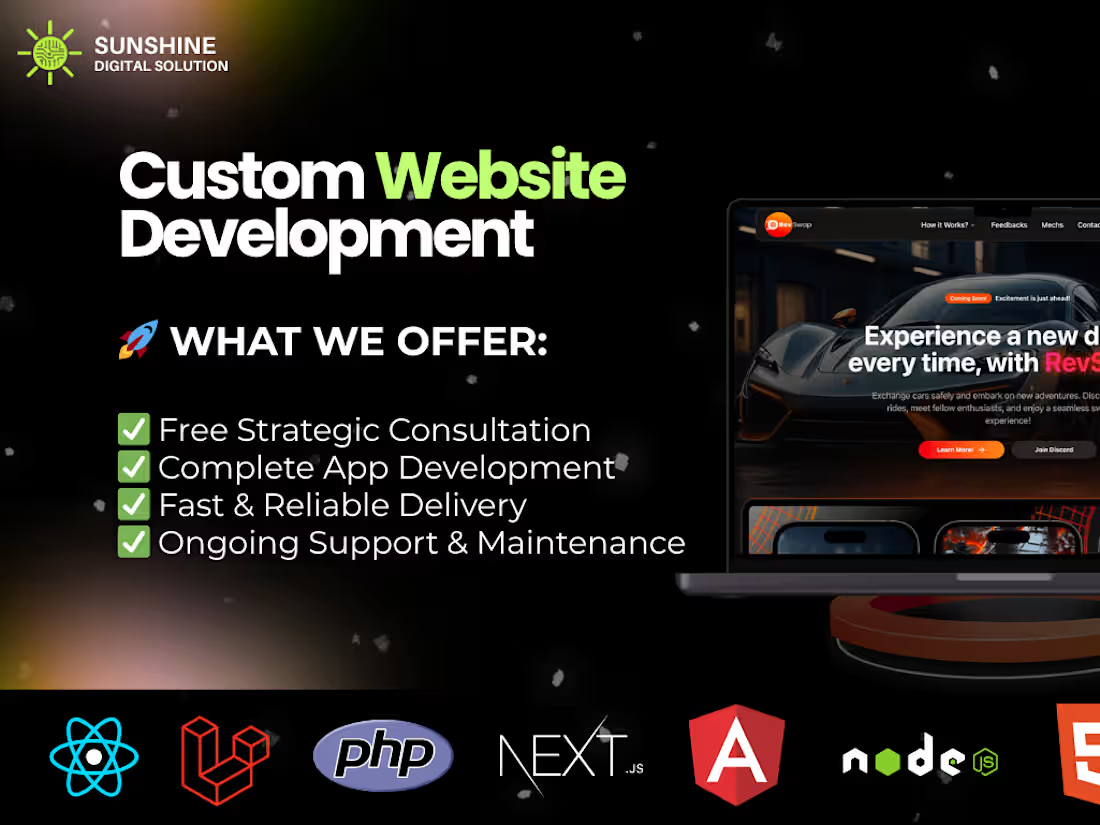
🧩 Custom Website & Web Application Development
Looking for something beyond a template-based site? Our Custom Website & Web App Development service delivers tailored digital solutions built from the ground up — designed to meet your exact business goals, workflows, and user needs.
Whether you need a powerful marketing site, a complex web portal, or a fully interactive application, we combine cutting-edge technologies, clean architecture, and thoughtful UX/UI design to bring your vision to life. Every solution is built with scalability, performance, and long-term flexibility in mind — ensuring your platform evolves with your business.
We don’t just code — we collaborate, strategize, and innovate with you. Let’s build something custom that makes you stand out, not blend in.
What's included
Discovery & Planning
Business and technical requirement gathering
Target audience and workflow mapping
Technical feasibility assessment
Wireframes / user flow charts
Project roadmap & milestones
UI/UX Design
Custom user interface designs (Figma/Adobe XD)
UX strategy for intuitive user journeys
Responsive designs (mobile, tablet, desktop)
Interactive prototypes (optional)
Front-End Development
Custom HTML/CSS/JavaScript development
Frameworks like React, Vue, or Angular (if applicable)
Responsive layout implementation
Cross-browser and device compatibility
Back-End Development
Custom architecture and API development
Database design and integration (SQL, NoSQL)
Admin panel/dashboard functionality
Scalable server-side coding (Node.js, Laravel, Django, etc.)
Integrations & Features
Third-party API integrations (payment, CRM, analytics, etc.)
User authentication and access control
Real-time features (chat, notifications, live updates)
Custom CMS or headless CMS setup (if required)
Testing & QA
Unit and integration testing
Functional, security, and usability testing
Bug fixing and performance tuning
UAT (User Acceptance Testing) phase
Deployment & Hosting
DevOps support (CI/CD pipeline, version control)
Hosting setup (cloud or VPS)
Domain configuration and SSL setup
Live environment launch
Post-Launch Support
Maintenance & update plans
Performance monitoring setup
Optional user training or documentation
Scalable feature roadmap (for future versions)
FAQs
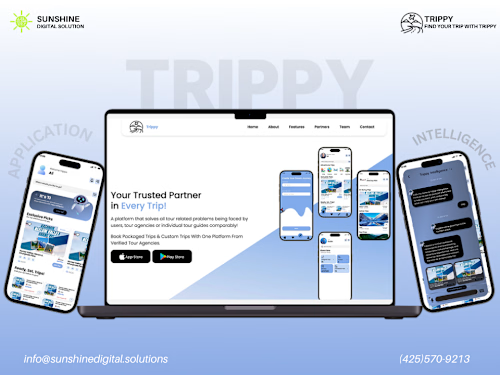
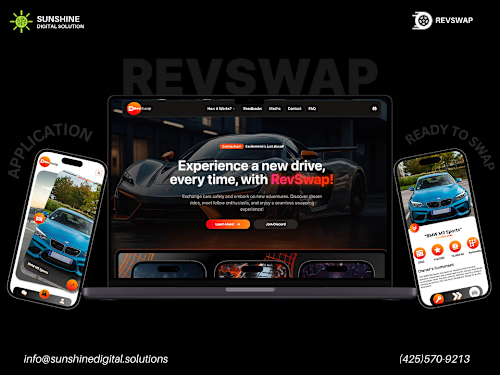
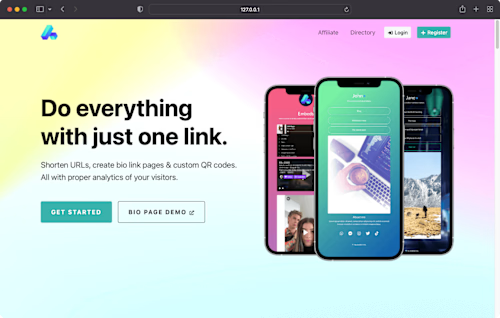
Example work
Sunshine Digital's other services
Starting at$30 /hr
Tags
ExpressJS

Laravel

Next.js

React

TypeScript

Backend Engineer
UX Engineer
Web Developer
Service provided by
Sunshine Digital Solutions Chicago, USA
- 1
- Followers
Custom Website & Web Application DevelopmentSunshine Digital Solutions
Starting at$30 /hr
Tags
ExpressJS
Laravel
Next.js
React
TypeScript
Backend Engineer
UX Engineer
Web Developer
🧩 Custom Website & Web Application Development
Looking for something beyond a template-based site? Our Custom Website & Web App Development service delivers tailored digital solutions built from the ground up — designed to meet your exact business goals, workflows, and user needs.
Whether you need a powerful marketing site, a complex web portal, or a fully interactive application, we combine cutting-edge technologies, clean architecture, and thoughtful UX/UI design to bring your vision to life. Every solution is built with scalability, performance, and long-term flexibility in mind — ensuring your platform evolves with your business.
We don’t just code — we collaborate, strategize, and innovate with you. Let’s build something custom that makes you stand out, not blend in.
What's included
Discovery & Planning
Business and technical requirement gathering
Target audience and workflow mapping
Technical feasibility assessment
Wireframes / user flow charts
Project roadmap & milestones
UI/UX Design
Custom user interface designs (Figma/Adobe XD)
UX strategy for intuitive user journeys
Responsive designs (mobile, tablet, desktop)
Interactive prototypes (optional)
Front-End Development
Custom HTML/CSS/JavaScript development
Frameworks like React, Vue, or Angular (if applicable)
Responsive layout implementation
Cross-browser and device compatibility
Back-End Development
Custom architecture and API development
Database design and integration (SQL, NoSQL)
Admin panel/dashboard functionality
Scalable server-side coding (Node.js, Laravel, Django, etc.)
Integrations & Features
Third-party API integrations (payment, CRM, analytics, etc.)
User authentication and access control
Real-time features (chat, notifications, live updates)
Custom CMS or headless CMS setup (if required)
Testing & QA
Unit and integration testing
Functional, security, and usability testing
Bug fixing and performance tuning
UAT (User Acceptance Testing) phase
Deployment & Hosting
DevOps support (CI/CD pipeline, version control)
Hosting setup (cloud or VPS)
Domain configuration and SSL setup
Live environment launch
Post-Launch Support
Maintenance & update plans
Performance monitoring setup
Optional user training or documentation
Scalable feature roadmap (for future versions)
FAQs
Example work
Sunshine Digital's other services
$30 /hr