
Web Development ServicesAli Raza Khan
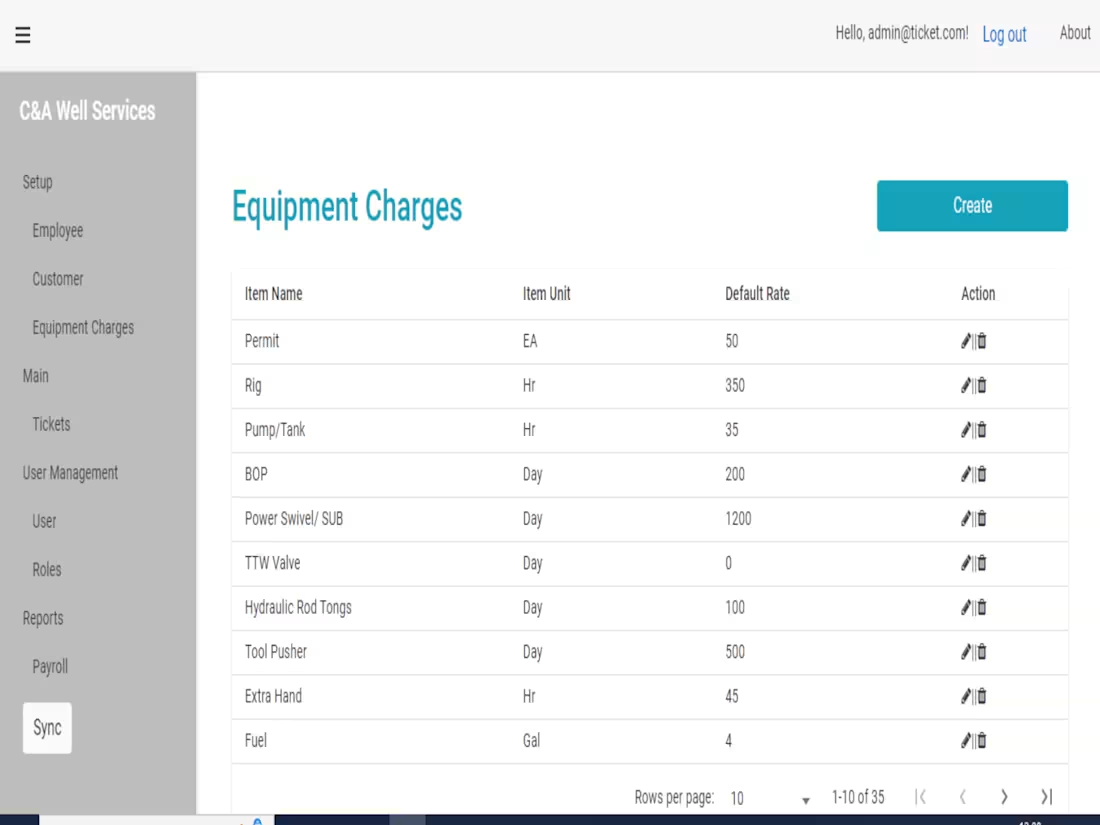
Ali Raza, a skilled web developer, offers services in web development using ASP.NET MVC and Dot Net technologies. He specializes in Web API integration, deployment, entity framework, database schema design, and C# and Linq query development. With his expertise in full-stack development and problem-solving skills, Ali is a collaborative team player who continuously learns to provide top-notch web solutions.
What's included
At end of every project
Project Documentation:
Comprehensive documentation outlining the project's architecture, design decisions, and code structure.
Source Code:
A clean and well-documented source code repository containing all the code developed during the project.
Web Application:
The fully developed and functional ASP.NET Core web application based on the project requirements.
Database Design and Scripts:
Database schema design and scripts to create the necessary tables, relationships, and constraints.
User Interface (UI):
A responsive and user-friendly user interface that meets the design and usability requirements.
Backend Logic:
Implementation of business logic, server-side processes, and backend functionality.
APIs (Application Programming Interfaces):
If applicable, documentation for APIs, including RESTful APIs or other communication interfaces.
Authentication and Authorization:
Implementation of user authentication and authorization mechanisms, including login/logout functionality and role-based access control.
Testing Artifacts:
Test plans, test cases, and test scripts that were used to verify the functionality and quality of the application.
Deployment Artifacts:
Deployment scripts or instructions for deploying the application to different environments (e.g., development, staging, production).
Performance Optimization:
If applicable, documentation on performance optimization strategies and improvements made during development.
Error Handling and Logging:
Implementation of error handling mechanisms and logging features to facilitate debugging and issue resolution.
Security Measures:
Documentation on implemented security measures and considerations, such as encryption, secure coding practices, and protection against common vulnerabilities.
Maintenance and Support Plan:
Recommendations and guidelines for ongoing maintenance, support, and potential future enhancements.
Client Training Materials:
If needed, training materials for end-users or administrators to understand how to use and maintain the system.
Ali's other services
Starting at$40 /hr
Tags
HTML5

JavaScript

React

Shopify

WordPress

Frontend Engineer
Fullstack Engineer
Software Engineer
Service provided by
Ali Raza Khan Lahore, Pakistan
Web Development ServicesAli Raza Khan
Starting at$40 /hr
Tags
HTML5
JavaScript
React
Shopify
WordPress
Frontend Engineer
Fullstack Engineer
Software Engineer
Ali Raza, a skilled web developer, offers services in web development using ASP.NET MVC and Dot Net technologies. He specializes in Web API integration, deployment, entity framework, database schema design, and C# and Linq query development. With his expertise in full-stack development and problem-solving skills, Ali is a collaborative team player who continuously learns to provide top-notch web solutions.
What's included
At end of every project
Project Documentation:
Comprehensive documentation outlining the project's architecture, design decisions, and code structure.
Source Code:
A clean and well-documented source code repository containing all the code developed during the project.
Web Application:
The fully developed and functional ASP.NET Core web application based on the project requirements.
Database Design and Scripts:
Database schema design and scripts to create the necessary tables, relationships, and constraints.
User Interface (UI):
A responsive and user-friendly user interface that meets the design and usability requirements.
Backend Logic:
Implementation of business logic, server-side processes, and backend functionality.
APIs (Application Programming Interfaces):
If applicable, documentation for APIs, including RESTful APIs or other communication interfaces.
Authentication and Authorization:
Implementation of user authentication and authorization mechanisms, including login/logout functionality and role-based access control.
Testing Artifacts:
Test plans, test cases, and test scripts that were used to verify the functionality and quality of the application.
Deployment Artifacts:
Deployment scripts or instructions for deploying the application to different environments (e.g., development, staging, production).
Performance Optimization:
If applicable, documentation on performance optimization strategies and improvements made during development.
Error Handling and Logging:
Implementation of error handling mechanisms and logging features to facilitate debugging and issue resolution.
Security Measures:
Documentation on implemented security measures and considerations, such as encryption, secure coding practices, and protection against common vulnerabilities.
Maintenance and Support Plan:
Recommendations and guidelines for ongoing maintenance, support, and potential future enhancements.
Client Training Materials:
If needed, training materials for end-users or administrators to understand how to use and maintain the system.
Ali's other services
$40 /hr