
Pixel to Profit: Websites That Work as Hard as You DoUsama Naeem
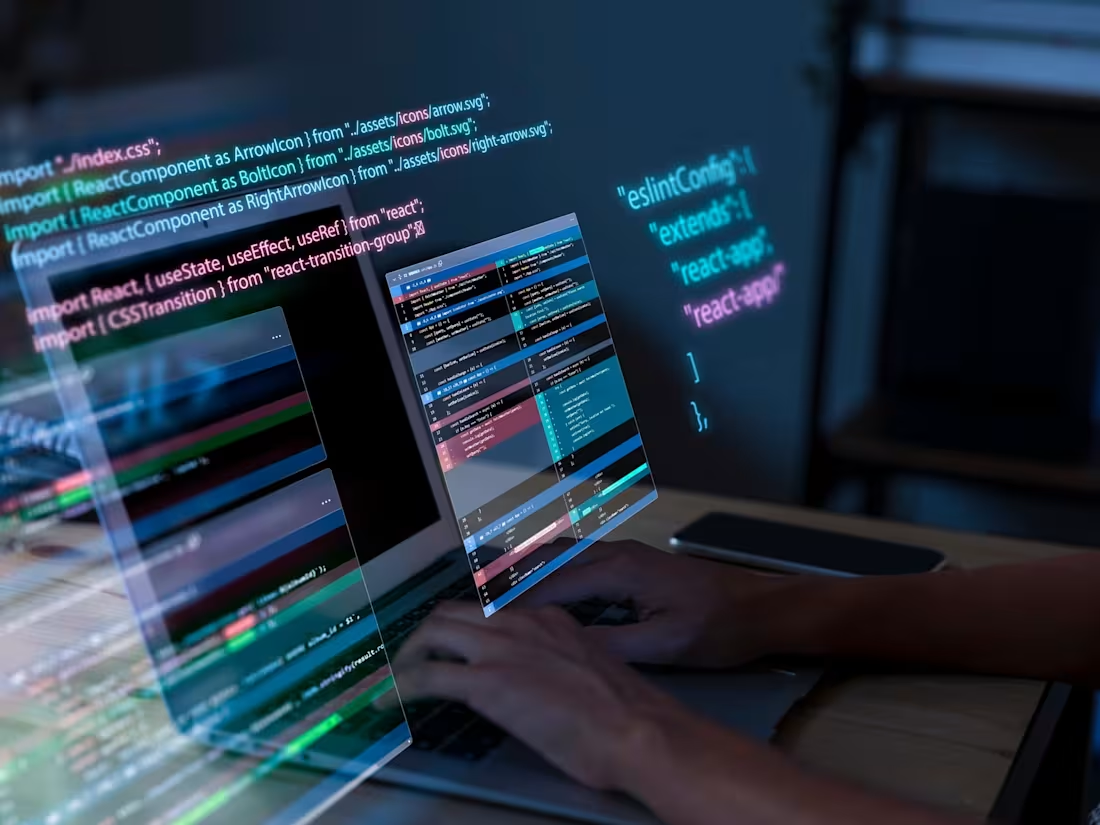
I offer custom website development that transforms your designs or ideas into clean, responsive, and scalable digital experiences. Whether working from a polished mockup or a rough concept, I focus on delivering high-quality code, thoughtful functionality, and future-ready flexibility. What sets me apart is my attention to detail, collaborative approach, and commitment to building solutions that are easy to maintain and evolve.
What's included
Fully Functional Website/Web Application
Responsive design (mobile, tablet, desktop)
Pixel-perfect implementation based on provided design/mockup
Smooth user experience and modern UI behavior
Codebase & Documentation
Clean, well-organized, and maintainable code
Comments and basic documentation for future developers
Environment setup instructions (if needed)
Content Management Integration (if applicable)
CMS setup (e.g., WordPress, Sanity, Strapi)
Editable content fields according to brand needs
Backend Integrations (if required)
API connections
Form handling, databases, authentication, etc.
Admin dashboard or data management features (if scoped)
Performance Optimization
Fast loading times
Image compression, lazy loading, code splitting, etc.
Basic SEO Readiness
Metadata setup
Semantic HTML structure
Sitemap and robots.txt (if required)
Accessibility & Best Practices
Keyboard navigability
Contrast and readable font sizes
Alt text and ARIA labels (as needed)
Testing & Quality Assurance
Cross-browser compatibility
Device responsiveness checks
Bug fixes based on testing feedback
Deployment & Launch Support
Setup on live server or staging environment
Hosting/DNS support (if within scope)
Final polish before go-live
Post-Launch Review & Handover
Time to review and request minor revisions
Developer handoff (including notes or Loom walkthrough if needed)
Optional training session or support window
Starting at$12 /hr
Tags
Adobe XD

Elementor

Figma

Sketch

Webflow

Frontend Engineer
UX Designer
Web Developer
Service provided by
Usama Naeem Abbottabad, Pakistan
- 2
- Followers
Pixel to Profit: Websites That Work as Hard as You DoUsama Naeem
Starting at$12 /hr
Tags
Adobe XD
Elementor
Figma
Sketch
Webflow
Frontend Engineer
UX Designer
Web Developer
I offer custom website development that transforms your designs or ideas into clean, responsive, and scalable digital experiences. Whether working from a polished mockup or a rough concept, I focus on delivering high-quality code, thoughtful functionality, and future-ready flexibility. What sets me apart is my attention to detail, collaborative approach, and commitment to building solutions that are easy to maintain and evolve.
What's included
Fully Functional Website/Web Application
Responsive design (mobile, tablet, desktop)
Pixel-perfect implementation based on provided design/mockup
Smooth user experience and modern UI behavior
Codebase & Documentation
Clean, well-organized, and maintainable code
Comments and basic documentation for future developers
Environment setup instructions (if needed)
Content Management Integration (if applicable)
CMS setup (e.g., WordPress, Sanity, Strapi)
Editable content fields according to brand needs
Backend Integrations (if required)
API connections
Form handling, databases, authentication, etc.
Admin dashboard or data management features (if scoped)
Performance Optimization
Fast loading times
Image compression, lazy loading, code splitting, etc.
Basic SEO Readiness
Metadata setup
Semantic HTML structure
Sitemap and robots.txt (if required)
Accessibility & Best Practices
Keyboard navigability
Contrast and readable font sizes
Alt text and ARIA labels (as needed)
Testing & Quality Assurance
Cross-browser compatibility
Device responsiveness checks
Bug fixes based on testing feedback
Deployment & Launch Support
Setup on live server or staging environment
Hosting/DNS support (if within scope)
Final polish before go-live
Post-Launch Review & Handover
Time to review and request minor revisions
Developer handoff (including notes or Loom walkthrough if needed)
Optional training session or support window
$12 /hr