
Packet/Pouch Packaging DesignAnish Baxi
Picture this: Your packet lands on the shelf beside ten competitors.
Same quality. Same weight. Same price.
But yours? It looks like it belongs in the clearance aisle.
Meanwhile, the brand next to you is charging 30–40% more for essentially the same thing — because their pouch looks intentional. Structured. Premium.
Here’s the hard truth:
Great products in weak packaging get average prices.
On a crowded shelf — whether it’s a supermarket in London, a specialty store in New York, or a grocery aisle in Dubai — you have seconds to win.
Packets and pouches don’t get explained.
They get judged.
I design packaging that makes people pick up first — and justify paying more.
Not decoration.
Not trends.
Strategic packaging systems built to compete anywhere.
What’s Included
1. Packaging Strategy (Before Design Begins)
Before opening any design software, we define:
Who this product is truly for
What price tier it should confidently sit in
What visual codes dominate the category
Where we align — and where we deliberately differentiate
How your packaging should feel in someone’s hand
Why this matters:
Most packaging fails because it’s aesthetic without intention.
Your pouch should communicate value, quality, and positioning instantly.
Result: Clear direction. No guesswork. No random design decisions.
2. Visual Identity for Packaging
If the foundation is weak, the packet will be too.
You receive:
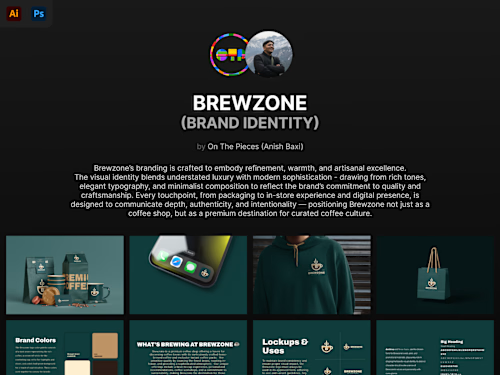
Refined logo system (optimized for small-format impact)
Typography hierarchy (what commands attention vs. what supports)
Cohesive color system (built for print consistency)
Mini style framework for packaging use
Packets are compact canvases.
Every millimeter must work.
3. Packet & Pouch Design System
The core deliverable.
Whether you’re selling:
Coffee
Spices
Grains
Snacks
Health products
Specialty goods
You get:
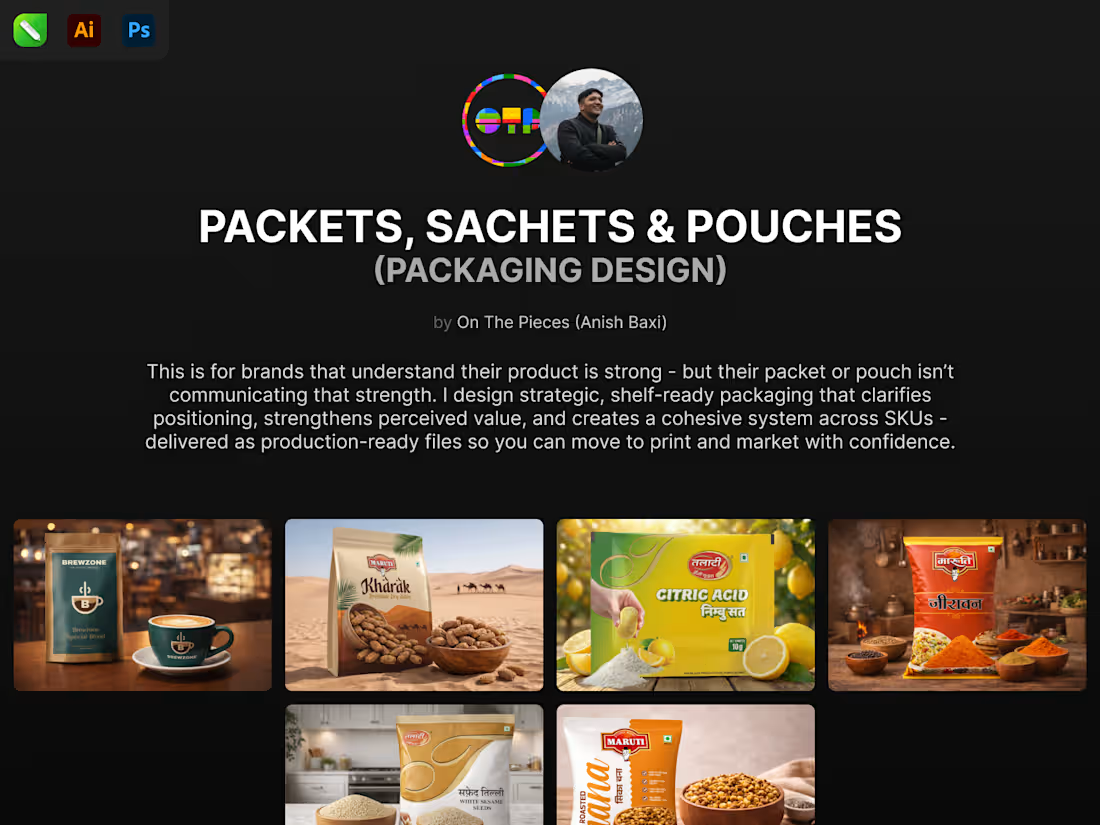
Complete pouch/packet design (front + back layouts)
Structured information hierarchy
Shelf-impact optimization (contrast, readability, balance)
Cohesive design logic across materials
Production-ready files
This is retail psychology applied to flexible packaging.
The front attracts.
The structure convinces.
The system scales.
4. SKU Expansion Framework
If you plan to add:
New flavors
New blends
Different sizes
Product extensions
You need a system — not a one-off design.
I create modular structures so every new SKU feels part of a unified brand family.
Result: You look established, not experimental.
5. Brand Extensions (Optional)
For brands thinking beyond one shelf:
Secondary packaging
Retail display assets
Social launch creatives
Digital packaging adaptations
Marketing collateral aligned with the pouch design
Packaging should integrate with everything — not feel isolated.
6. Packaging Guidelines
A clear rulebook so your brand remains consistent as it grows.
Includes:
Logo usage standards
Typography rules
Color specifications
Layout logic
Visual consistency principles
Real-world application examples
Because you won’t always be the one executing it.
Consistency protects pricing power.
The Outcome
You don’t just get a packet.
You get:
Strong shelf presence
Clear market positioning
Cohesive product range
Confident premium pricing
A packaging system built for global retail environments
In competitive markets, perception is leverage.
If your packaging feels premium, the price feels justified.
FAQs
Example work

Contact for pricing
Duration1 week
Tags
Adobe Illustrator

Adobe Photoshop

CorelDraw

AI Artist
Graphic Designer
Packaging Designer
Design
Food & Beverage
Service provided by
Anish Baxi Indore, India
- 10
- Followers
Packet/Pouch Packaging DesignAnish Baxi
Contact for pricing
Duration1 week
Tags
Adobe Illustrator
Adobe Photoshop
CorelDraw
AI Artist
Graphic Designer
Packaging Designer
Design
Food & Beverage
Picture this: Your packet lands on the shelf beside ten competitors.
Same quality. Same weight. Same price.
But yours? It looks like it belongs in the clearance aisle.
Meanwhile, the brand next to you is charging 30–40% more for essentially the same thing — because their pouch looks intentional. Structured. Premium.
Here’s the hard truth:
Great products in weak packaging get average prices.
On a crowded shelf — whether it’s a supermarket in London, a specialty store in New York, or a grocery aisle in Dubai — you have seconds to win.
Packets and pouches don’t get explained.
They get judged.
I design packaging that makes people pick up first — and justify paying more.
Not decoration.
Not trends.
Strategic packaging systems built to compete anywhere.
What’s Included
1. Packaging Strategy (Before Design Begins)
Before opening any design software, we define:
Who this product is truly for
What price tier it should confidently sit in
What visual codes dominate the category
Where we align — and where we deliberately differentiate
How your packaging should feel in someone’s hand
Why this matters:
Most packaging fails because it’s aesthetic without intention.
Your pouch should communicate value, quality, and positioning instantly.
Result: Clear direction. No guesswork. No random design decisions.
2. Visual Identity for Packaging
If the foundation is weak, the packet will be too.
You receive:
Refined logo system (optimized for small-format impact)
Typography hierarchy (what commands attention vs. what supports)
Cohesive color system (built for print consistency)
Mini style framework for packaging use
Packets are compact canvases.
Every millimeter must work.
3. Packet & Pouch Design System
The core deliverable.
Whether you’re selling:
Coffee
Spices
Grains
Snacks
Health products
Specialty goods
You get:
Complete pouch/packet design (front + back layouts)
Structured information hierarchy
Shelf-impact optimization (contrast, readability, balance)
Cohesive design logic across materials
Production-ready files
This is retail psychology applied to flexible packaging.
The front attracts.
The structure convinces.
The system scales.
4. SKU Expansion Framework
If you plan to add:
New flavors
New blends
Different sizes
Product extensions
You need a system — not a one-off design.
I create modular structures so every new SKU feels part of a unified brand family.
Result: You look established, not experimental.
5. Brand Extensions (Optional)
For brands thinking beyond one shelf:
Secondary packaging
Retail display assets
Social launch creatives
Digital packaging adaptations
Marketing collateral aligned with the pouch design
Packaging should integrate with everything — not feel isolated.
6. Packaging Guidelines
A clear rulebook so your brand remains consistent as it grows.
Includes:
Logo usage standards
Typography rules
Color specifications
Layout logic
Visual consistency principles
Real-world application examples
Because you won’t always be the one executing it.
Consistency protects pricing power.
The Outcome
You don’t just get a packet.
You get:
Strong shelf presence
Clear market positioning
Cohesive product range
Confident premium pricing
A packaging system built for global retail environments
In competitive markets, perception is leverage.
If your packaging feels premium, the price feels justified.
FAQs
Example work
Contact for pricing