
Sports Logo CreationMoiz Asif
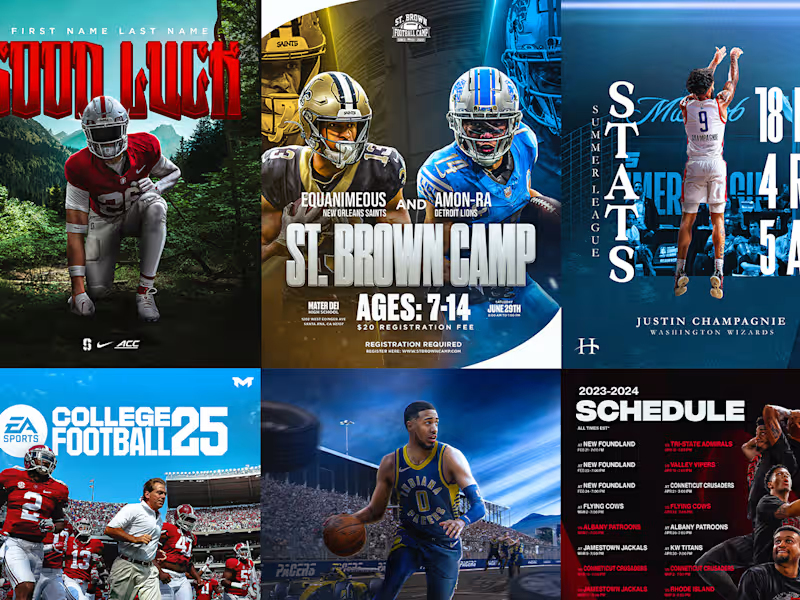
Created unique and memorable logos for sports teams and organizations.
What's included
1x Sports Logo
1. Logo Variations
Primary Logo: Full color and full version.
Secondary Logo: Simplified or alternate layout version (horizontal, stacked, etc.).
Monochrome Logo: Black and white versions.
Icon/Badge: Standalone symbol or emblem version for smaller placements.
Wordmark: Only the text element of the logo.
2. File Formats
Vector Files:
.AI (Adobe Illustrator)
.EPS (Scalable and editable)
.PDF (For printing)
Raster Files:
.PNG (With transparent background for web use)
.JPG (For web use, solid background)
.SVG (For web use, scalable without losing quality)
3. Color Variations
Full-Color: For primary use.
One-Color: Black or white versions for simple applications.
Grayscale: For non-color applications.
Inverted Logo: For dark or light backgrounds.
4. Typography Guidelines
Provide fonts used (if applicable) with download links or font license information.
5. Brand Guidelines
Logo Usage Guide: Includes proper logo spacing, minimum size requirements, and examples of incorrect usage.
Color Palette: Hex, RGB, and CMYK codes for primary and secondary colors.
Font Styles: Font families, sizes, and hierarchy for titles, body text, etc.
6. Favicon
16x16px and 32x32px favicon versions for web use.
7. Mockups/Examples
On Apparel: Examples of the logo on jerseys, hats, etc.
Digital and Print: Business cards, social media avatars, website headers.
Merchandise: Examples on items like water bottles, banners, and sports gear.
8. Licensing and Ownership
Transfer of Rights: Documentation confirming the client’s ownership of the logo.
Moiz's other services
Contact for pricing
Tags
Adobe Illustrator
Adobe InDesign

Adobe Photoshop
Adobe XD
Figma

Brand Designer
Brand Strategist
Digital Marketer
Service provided by
Moiz Asif Sacramento, USA
- 1
- Followers
Sports Logo CreationMoiz Asif
Contact for pricing
Tags
Adobe Illustrator
Adobe InDesign
Adobe Photoshop
Adobe XD
Figma
Brand Designer
Brand Strategist
Digital Marketer
Created unique and memorable logos for sports teams and organizations.
What's included
1x Sports Logo
1. Logo Variations
Primary Logo: Full color and full version.
Secondary Logo: Simplified or alternate layout version (horizontal, stacked, etc.).
Monochrome Logo: Black and white versions.
Icon/Badge: Standalone symbol or emblem version for smaller placements.
Wordmark: Only the text element of the logo.
2. File Formats
Vector Files:
.AI (Adobe Illustrator)
.EPS (Scalable and editable)
.PDF (For printing)
Raster Files:
.PNG (With transparent background for web use)
.JPG (For web use, solid background)
.SVG (For web use, scalable without losing quality)
3. Color Variations
Full-Color: For primary use.
One-Color: Black or white versions for simple applications.
Grayscale: For non-color applications.
Inverted Logo: For dark or light backgrounds.
4. Typography Guidelines
Provide fonts used (if applicable) with download links or font license information.
5. Brand Guidelines
Logo Usage Guide: Includes proper logo spacing, minimum size requirements, and examples of incorrect usage.
Color Palette: Hex, RGB, and CMYK codes for primary and secondary colors.
Font Styles: Font families, sizes, and hierarchy for titles, body text, etc.
6. Favicon
16x16px and 32x32px favicon versions for web use.
7. Mockups/Examples
On Apparel: Examples of the logo on jerseys, hats, etc.
Digital and Print: Business cards, social media avatars, website headers.
Merchandise: Examples on items like water bottles, banners, and sports gear.
8. Licensing and Ownership
Transfer of Rights: Documentation confirming the client’s ownership of the logo.
Moiz's other services
Contact for pricing