
Custom computer vision ML solutionDenis Sudakov
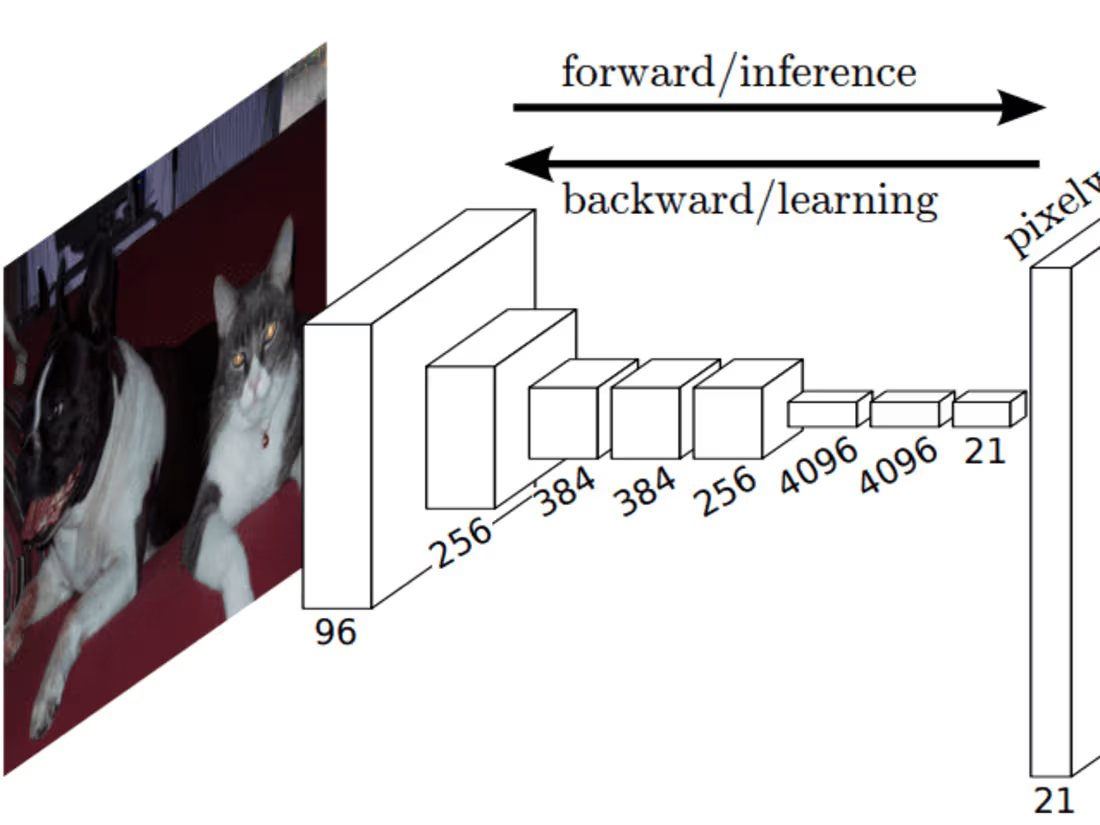
Created customized machine learning and AI-driven solution to your computer vision problem
What's included
Trained and fine tuned model
A machine learning model that has completed the training process and is ready for deployment or integration into a larger system.
Key Components
Model architecture:
Trained parameters
Input/output specifications
Performance metrics
Format:
Serialized model file (e.g., .pkl, .h5, or framework-specific format)
(If needed) Accompanying metadata file (JSON or YAML)
Model training script
Description:
A set of Python scripts designed to train a machine learning model from data preprocessing to model evaluation.
Key Components:
Data loading and preprocessing script
Model definition script
Training script
Evaluation script
Hyperparameter tuning script (optional)
Format:
Multiple .py files or a single Python package
Requirements.txt file listing all dependencies
Usage:
Can be run from command line or imported as modules
Includes clear documentation and in-line comments
Script for Running Model on New Data
Description:
A Python script designed to load a trained machine learning model and use it to make predictions on new, unseen data.
Key Components:
Model loading functionality
Data ingestion and preprocessing
Inference pipeline
Output formatting and saving
Format:
Single .py file or a small Python package
Requirements.txt file listing all dependencies
Usage:
Can be run from command line with arguments for input data and output location
Includes clear documentation and in-line comments
Main Functionalities:
Loading the trained model from a saved file
Reading and preprocessing new data
Applying the model to generate predictions
Post-processing predictions if necessary
Saving or displaying results
Detailed ML Project Documentation
Description:
A detailed document providing a comprehensive overview of the entire machine learning project, including code structure, model architecture, and hyperparameter choices.
Key Components:
Project Overview
Code Structure and Documentation
Data Pipeline
Model Architecture
Hyperparameter Selection
Training Process
Evaluation Metrics
Inference Pipeline
Format:
Markdown or PDF document
Introduction:
Project goals and context
High-level system architecture
Code Structure:
Repository organization
Key modules and their functions
Coding standards and conventions used
Data Pipeline:
Data sources and formats
Preprocessing steps
Feature engineering techniques
Model Architecture:
Detailed description of model layers
Activation functions
Loss function(s)
Diagram of model architecture
Hyperparameters:
List of all hyperparameters
Chosen values and rationale
Hyperparameter tuning process and results
Training Process:
Hardware specifications used
Training loop details
Optimization algorithm
Regularization techniques
Early stopping criteria
Evaluation:
Evaluation metrics used
Performance on validation/test sets
Cross-validation strategy (if applicable)
Inference:
Steps for loading and using the trained model
Input requirements and output format
Performance considerations
Future Work:
Known limitations
Potential improvements and next steps
Denis's other services
Contact for pricing
Tags
Python

PyTorch

scikit-learn

AI Developer
AI Model Developer
ML Engineer
Service provided by
Denis Sudakov Moscow, Russia
Custom computer vision ML solutionDenis Sudakov
Contact for pricing
Tags
Python
PyTorch
scikit-learn
AI Developer
AI Model Developer
ML Engineer
Created customized machine learning and AI-driven solution to your computer vision problem
What's included
Trained and fine tuned model
A machine learning model that has completed the training process and is ready for deployment or integration into a larger system.
Key Components
Model architecture:
Trained parameters
Input/output specifications
Performance metrics
Format:
Serialized model file (e.g., .pkl, .h5, or framework-specific format)
(If needed) Accompanying metadata file (JSON or YAML)
Model training script
Description:
A set of Python scripts designed to train a machine learning model from data preprocessing to model evaluation.
Key Components:
Data loading and preprocessing script
Model definition script
Training script
Evaluation script
Hyperparameter tuning script (optional)
Format:
Multiple .py files or a single Python package
Requirements.txt file listing all dependencies
Usage:
Can be run from command line or imported as modules
Includes clear documentation and in-line comments
Script for Running Model on New Data
Description:
A Python script designed to load a trained machine learning model and use it to make predictions on new, unseen data.
Key Components:
Model loading functionality
Data ingestion and preprocessing
Inference pipeline
Output formatting and saving
Format:
Single .py file or a small Python package
Requirements.txt file listing all dependencies
Usage:
Can be run from command line with arguments for input data and output location
Includes clear documentation and in-line comments
Main Functionalities:
Loading the trained model from a saved file
Reading and preprocessing new data
Applying the model to generate predictions
Post-processing predictions if necessary
Saving or displaying results
Detailed ML Project Documentation
Description:
A detailed document providing a comprehensive overview of the entire machine learning project, including code structure, model architecture, and hyperparameter choices.
Key Components:
Project Overview
Code Structure and Documentation
Data Pipeline
Model Architecture
Hyperparameter Selection
Training Process
Evaluation Metrics
Inference Pipeline
Format:
Markdown or PDF document
Introduction:
Project goals and context
High-level system architecture
Code Structure:
Repository organization
Key modules and their functions
Coding standards and conventions used
Data Pipeline:
Data sources and formats
Preprocessing steps
Feature engineering techniques
Model Architecture:
Detailed description of model layers
Activation functions
Loss function(s)
Diagram of model architecture
Hyperparameters:
List of all hyperparameters
Chosen values and rationale
Hyperparameter tuning process and results
Training Process:
Hardware specifications used
Training loop details
Optimization algorithm
Regularization techniques
Early stopping criteria
Evaluation:
Evaluation metrics used
Performance on validation/test sets
Cross-validation strategy (if applicable)
Inference:
Steps for loading and using the trained model
Input requirements and output format
Performance considerations
Future Work:
Known limitations
Potential improvements and next steps
Denis's other services
Contact for pricing