
Project Documentation TemplatesMichael Halliburton
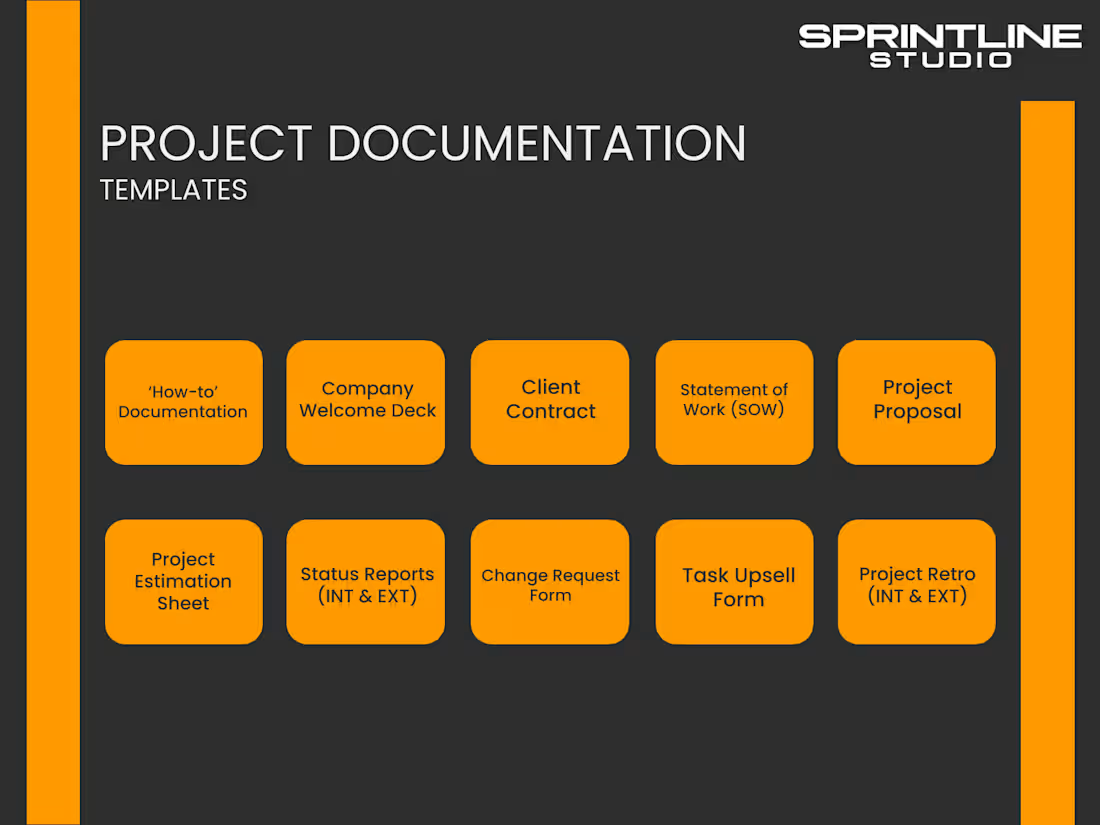
Within this service, I offer the following templates:
Company Welcome Deck
Client Contract
Statement of Work (SoW)
Project Proposal
Estimation Sheet
Change Request Form
Upsell Form
Project Retrospective
I provide these templates based on many years of experience using them to effectively manage projects of all sizes across various industries. By using these templates, you will find that managing both teams and projects becomes much easier and more manageable.
What's included
Company Welcome Deck
A 5-10 slide presentation template to deliver to your new client during the initial conversation and project discussion.
This slide document will showcase:
- History of your company
- Team Members
- Company Facts
- Awards
- Mission & Vision - What the company stands for
- Services - What the company offers
- Past relatable case studies
- Contact Details
Client Contract
A project contract is a legally binding document that outlines all key information regarding the project, financial terms, and client details. It must be signed and agreed upon before any work commences.
This legally binding document template will contain:
- Scope of Work / Services Provided
-Timeline & Deadlines
- Payment Terms, Cost and monthly breakdown payments
- Intellectual Property & Ownership
- Confidentiality
- Cancellation / Termination
- Dispute Resolution
- Limitation of Liability
- Force Majeure
- Signatures
Statement of Work (SoW)
A Statement of Work (SoW) is a formal document that outlines the specific tasks, deliverables, timelines, and scope of a project or piece of work. It is commonly used in project management and procurement to ensure that all parties involved understand the expectations and responsibilities.
The template will contain:
- Project objectives – What the project aims to achieve.
- Scope of work – A detailed description of the work to be performed.
- Deliverables – What will be produced and delivered.
- Timeline and milestones – Deadlines and key stages of the project.
- Payment terms – How and when payments will be made.
- Assumptions and constraints – Any limitations or dependencies to be aware of.
Project Proposal
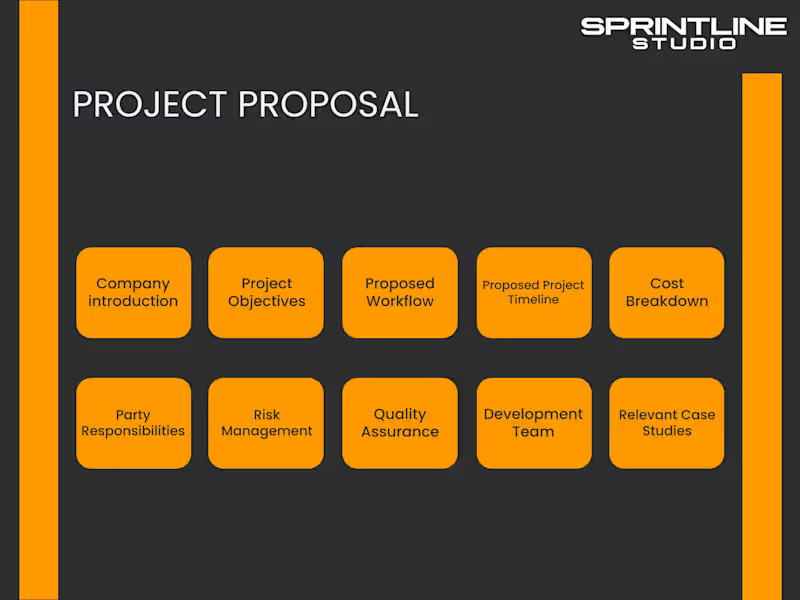
A project proposal is a concise document, typically comprising 5 to 10 slides, that outlines the key elements of a project. While it may not contain a fully detailed Statement of Work (SoW), its primary purpose is to highlight important aspects of the project for quick reference and review.
The template will include:
- Company Overview
- Project Goals and Objectives
- Proposed Workflow
- Project Timeline
- Cost Breakdown
- Roles and Responsibilities
- Risk Management and Quality Assurance
- Development Team
- Relevant Case Studies
Project Estimation Sheet
A project estimation sheet is used to compile a list of tasks along with their estimated hours, enabling the calculation of both the overall project duration and total cost. It also supports internal task management, particularly for sprint planning. Estimation sheets are for internal use only and typically not discussed with the client.
Status Reports (Int & Ext)
A status report is a weekly or monthly update shared with the client, providing an overview of the current state of the project.
It typically includes the following information:
- Budget usage and remaining budget
- Overall project progress
- Current and upcoming tasks
- Any existing or anticipated issues requiring action from either the client or the development team
- Additional notes or comments
Status reports serve as an additional means of communicating project information, either alongside or in place of regular weekly calls and check-ins. Internal reports are usually prepared and shared with department heads to provide a quick overview of each project's status.
Change Request Form
Change request forms are required when the client requests a significant update to a project that may impact the budget, overall timeline, or deadline.
A typical change request form includes the following:
- Project Name
- Client Name
- Date
- Current Timeline or Deadline
- Details of the Request
- Projected Impact on Timeline (if any)
- Additional Costs
- Client Approval or Sign-Off
Task Upsell Form
A task upsell form is similar to a change request form, but is initiated by the development team. Its primary purpose is to document any suggested changes to the project that could impact both the timeline and budget.
The form typically includes the following information:
-Project Name
-Client Name
-Date
-Current Timeline or Deadline
-Details of the Suggested Change or Upsell
-Projected Impact on Timeline (if any)
-Additional Costs
-Client Approval or Sign-Off
Additionally, an upsell form can be used to propose extra tasks that do not initially affect the original project scope or timeline, for example, adding a second payment feature to a website after launch.
Project Retro (Int & Ext)
A project retrospective is a structured review conducted at the end of a project to reflect on what went well, what didn’t, and what could be improved. It involves gathering feedback from both the internal team and the client to identify successes, challenges, and lessons learned. The purpose of a project retrospective is to promote continuous improvement, enhance collaboration, and ensure better outcomes in future projects.
Michael's other services
Starting at$100
Duration1 day
Tags
Google Slides

Project Manager
Service provided by
Michael Halliburton Dundee, UK
Project Documentation TemplatesMichael Halliburton
Within this service, I offer the following templates:
Company Welcome Deck
Client Contract
Statement of Work (SoW)
Project Proposal
Estimation Sheet
Change Request Form
Upsell Form
Project Retrospective
I provide these templates based on many years of experience using them to effectively manage projects of all sizes across various industries. By using these templates, you will find that managing both teams and projects becomes much easier and more manageable.
What's included
Company Welcome Deck
A 5-10 slide presentation template to deliver to your new client during the initial conversation and project discussion.
This slide document will showcase:
- History of your company
- Team Members
- Company Facts
- Awards
- Mission & Vision - What the company stands for
- Services - What the company offers
- Past relatable case studies
- Contact Details
Client Contract
A project contract is a legally binding document that outlines all key information regarding the project, financial terms, and client details. It must be signed and agreed upon before any work commences.
This legally binding document template will contain:
- Scope of Work / Services Provided
-Timeline & Deadlines
- Payment Terms, Cost and monthly breakdown payments
- Intellectual Property & Ownership
- Confidentiality
- Cancellation / Termination
- Dispute Resolution
- Limitation of Liability
- Force Majeure
- Signatures
Statement of Work (SoW)
A Statement of Work (SoW) is a formal document that outlines the specific tasks, deliverables, timelines, and scope of a project or piece of work. It is commonly used in project management and procurement to ensure that all parties involved understand the expectations and responsibilities.
The template will contain:
- Project objectives – What the project aims to achieve.
- Scope of work – A detailed description of the work to be performed.
- Deliverables – What will be produced and delivered.
- Timeline and milestones – Deadlines and key stages of the project.
- Payment terms – How and when payments will be made.
- Assumptions and constraints – Any limitations or dependencies to be aware of.
Project Proposal
A project proposal is a concise document, typically comprising 5 to 10 slides, that outlines the key elements of a project. While it may not contain a fully detailed Statement of Work (SoW), its primary purpose is to highlight important aspects of the project for quick reference and review.
The template will include:
- Company Overview
- Project Goals and Objectives
- Proposed Workflow
- Project Timeline
- Cost Breakdown
- Roles and Responsibilities
- Risk Management and Quality Assurance
- Development Team
- Relevant Case Studies
Project Estimation Sheet
A project estimation sheet is used to compile a list of tasks along with their estimated hours, enabling the calculation of both the overall project duration and total cost. It also supports internal task management, particularly for sprint planning. Estimation sheets are for internal use only and typically not discussed with the client.
Status Reports (Int & Ext)
A status report is a weekly or monthly update shared with the client, providing an overview of the current state of the project.
It typically includes the following information:
- Budget usage and remaining budget
- Overall project progress
- Current and upcoming tasks
- Any existing or anticipated issues requiring action from either the client or the development team
- Additional notes or comments
Status reports serve as an additional means of communicating project information, either alongside or in place of regular weekly calls and check-ins. Internal reports are usually prepared and shared with department heads to provide a quick overview of each project's status.
Change Request Form
Change request forms are required when the client requests a significant update to a project that may impact the budget, overall timeline, or deadline.
A typical change request form includes the following:
- Project Name
- Client Name
- Date
- Current Timeline or Deadline
- Details of the Request
- Projected Impact on Timeline (if any)
- Additional Costs
- Client Approval or Sign-Off
Task Upsell Form
A task upsell form is similar to a change request form, but is initiated by the development team. Its primary purpose is to document any suggested changes to the project that could impact both the timeline and budget.
The form typically includes the following information:
-Project Name
-Client Name
-Date
-Current Timeline or Deadline
-Details of the Suggested Change or Upsell
-Projected Impact on Timeline (if any)
-Additional Costs
-Client Approval or Sign-Off
Additionally, an upsell form can be used to propose extra tasks that do not initially affect the original project scope or timeline, for example, adding a second payment feature to a website after launch.
Project Retro (Int & Ext)
A project retrospective is a structured review conducted at the end of a project to reflect on what went well, what didn’t, and what could be improved. It involves gathering feedback from both the internal team and the client to identify successes, challenges, and lessons learned. The purpose of a project retrospective is to promote continuous improvement, enhance collaboration, and ensure better outcomes in future projects.
Michael's other services
$100