
Your board is going to ask you this question. Probably sooner than you think.
"What are we actually getting from all this AI spend?"And if you're being honest, you don't have a clean answer yet.
Neither did the 40+ finance leaders I've spoken to over the past six months. These aren't unsophisticated people. They're sharp CFOs at well-funded companies managing real budgets. But somewhere between the Copilot licenses, the GPT API bills, the custom model your engineering team built, and that AI vendor the CEO approved after reading a TechCrunch article, the numbers stopped being traceable.
Engineering will tell you they're saving 20% on development time. But they can't connect that to revenue. The CEO greenlit $500K in new tools last quarter based on competitive pressure, not a business case. And the board wants one number. One clean, defensible number.
Nobody has it.
We've been running million-dollar AI budgets the same way marketing ran campaigns before attribution existed. On gut feel. On vendor promises. On the assumption that because everyone else is spending, it must be working.
It isn't good enough anymore.
What actually changes the conversation
Connect your AI tools to real KPIs, not usage stats.
"We processed 10,000 AI responses" means nothing. "AI-assisted support tickets resolved 34% faster, saving $180K in headcount costs" is a number you can put in front of a board and defend without flinching. The difference between a vanity metric and a defensible one is whether it ties back to dollars your company either made or didn't spend.
Measure what you would have spent without these tools, not just whether people are logging in.
Usage doesn't equal value. The right question is never "are people using Copilot?" It's "what would we be paying three junior engineers to do if Copilot didn't exist?" That's the number that tells you whether the tool is earning its seat.
Have a monthly recommendation on every single tool in your stack.
Scale it, maintain it, or kill it. No tool should have a permanent seat at the table just because someone important approved it once. The companies getting this right are the ones treating their AI stack the way they treat headcount: with a regular review cycle and a willingness to cut what isn't performing.
This is what Board ROI does
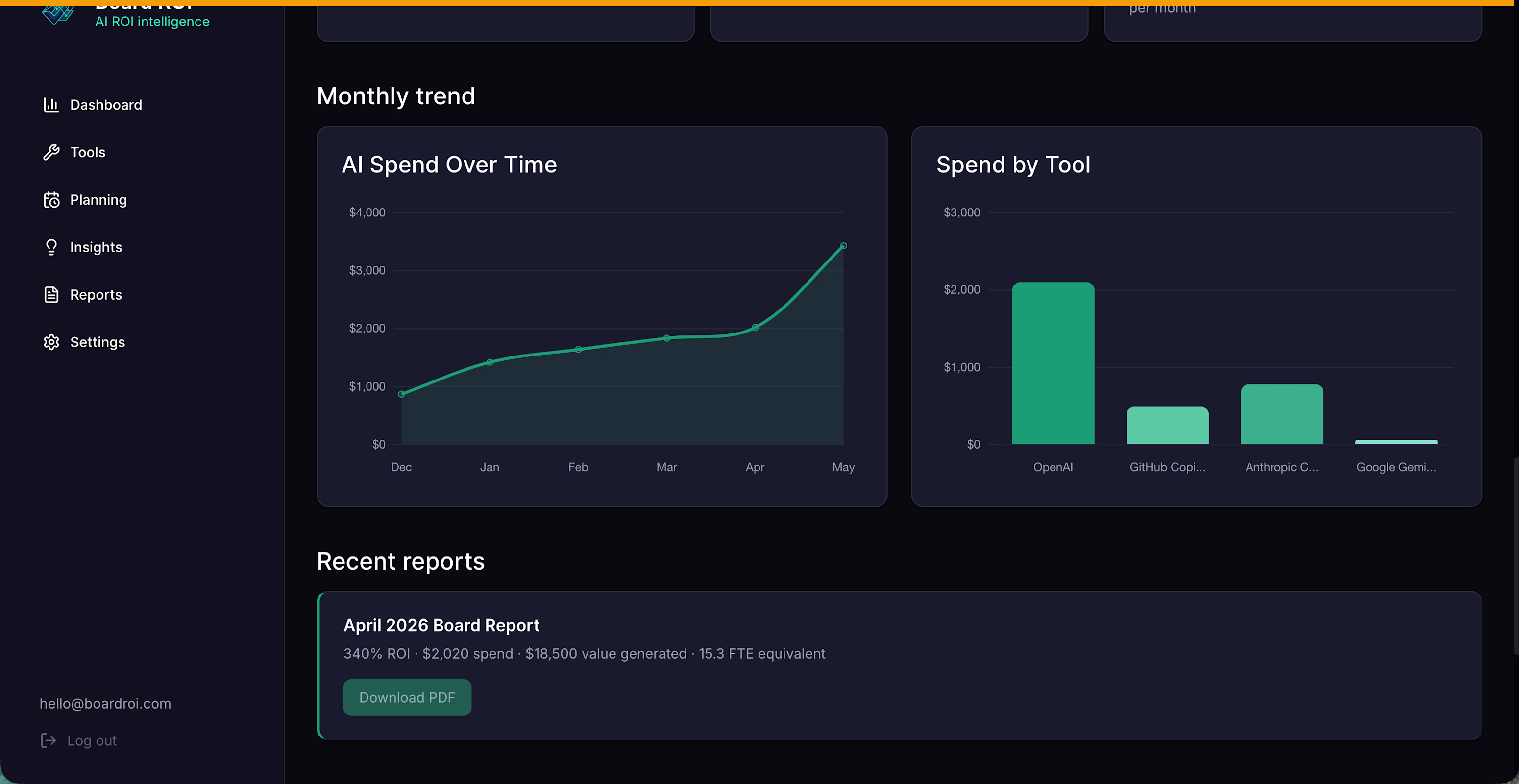
One dashboard. Plain language. No data scientist sits between you and the answer.
This isn't a dashboard that replaces your thinking. It's the one that finally gives you something to say in the room.
Founding members get 50% off forever - $199/mo instead of $399. Only 10 spots available.
🔒 10 spots left.
If your next board meeting is coming up and you're still pulling numbers from three different spreadsheets, send me a message or grab one of the remaining spots below.
👉 Claim your founding member spot now

Get it for$199.00
per month
Tags
Accountant
CFO
FinTech & Payments
AI ROI
Board Reports
ROI
Spend
Your board is going to ask you this question. Probably sooner than you think.
"What are we actually getting from all this AI spend?"And if you're being honest, you don't have a clean answer yet.
Neither did the 40+ finance leaders I've spoken to over the past six months. These aren't unsophisticated people. They're sharp CFOs at well-funded companies managing real budgets. But somewhere between the Copilot licenses, the GPT API bills, the custom model your engineering team built, and that AI vendor the CEO approved after reading a TechCrunch article, the numbers stopped being traceable.
Engineering will tell you they're saving 20% on development time. But they can't connect that to revenue. The CEO greenlit $500K in new tools last quarter based on competitive pressure, not a business case. And the board wants one number. One clean, defensible number.
Nobody has it.
We've been running million-dollar AI budgets the same way marketing ran campaigns before attribution existed. On gut feel. On vendor promises. On the assumption that because everyone else is spending, it must be working.
It isn't good enough anymore.
What actually changes the conversation
Connect your AI tools to real KPIs, not usage stats.
"We processed 10,000 AI responses" means nothing. "AI-assisted support tickets resolved 34% faster, saving $180K in headcount costs" is a number you can put in front of a board and defend without flinching. The difference between a vanity metric and a defensible one is whether it ties back to dollars your company either made or didn't spend.
Measure what you would have spent without these tools, not just whether people are logging in.
Usage doesn't equal value. The right question is never "are people using Copilot?" It's "what would we be paying three junior engineers to do if Copilot didn't exist?" That's the number that tells you whether the tool is earning its seat.
Have a monthly recommendation on every single tool in your stack.
Scale it, maintain it, or kill it. No tool should have a permanent seat at the table just because someone important approved it once. The companies getting this right are the ones treating their AI stack the way they treat headcount: with a regular review cycle and a willingness to cut what isn't performing.
This is what Board ROI does
One dashboard. Plain language. No data scientist sits between you and the answer.
This isn't a dashboard that replaces your thinking. It's the one that finally gives you something to say in the room.
Founding members get 50% off forever - $199/mo instead of $399. Only 10 spots available.
🔒 10 spots left.
If your next board meeting is coming up and you're still pulling numbers from three different spreadsheets, send me a message or grab one of the remaining spots below.
👉 Claim your founding member spot now
$199.00per month