
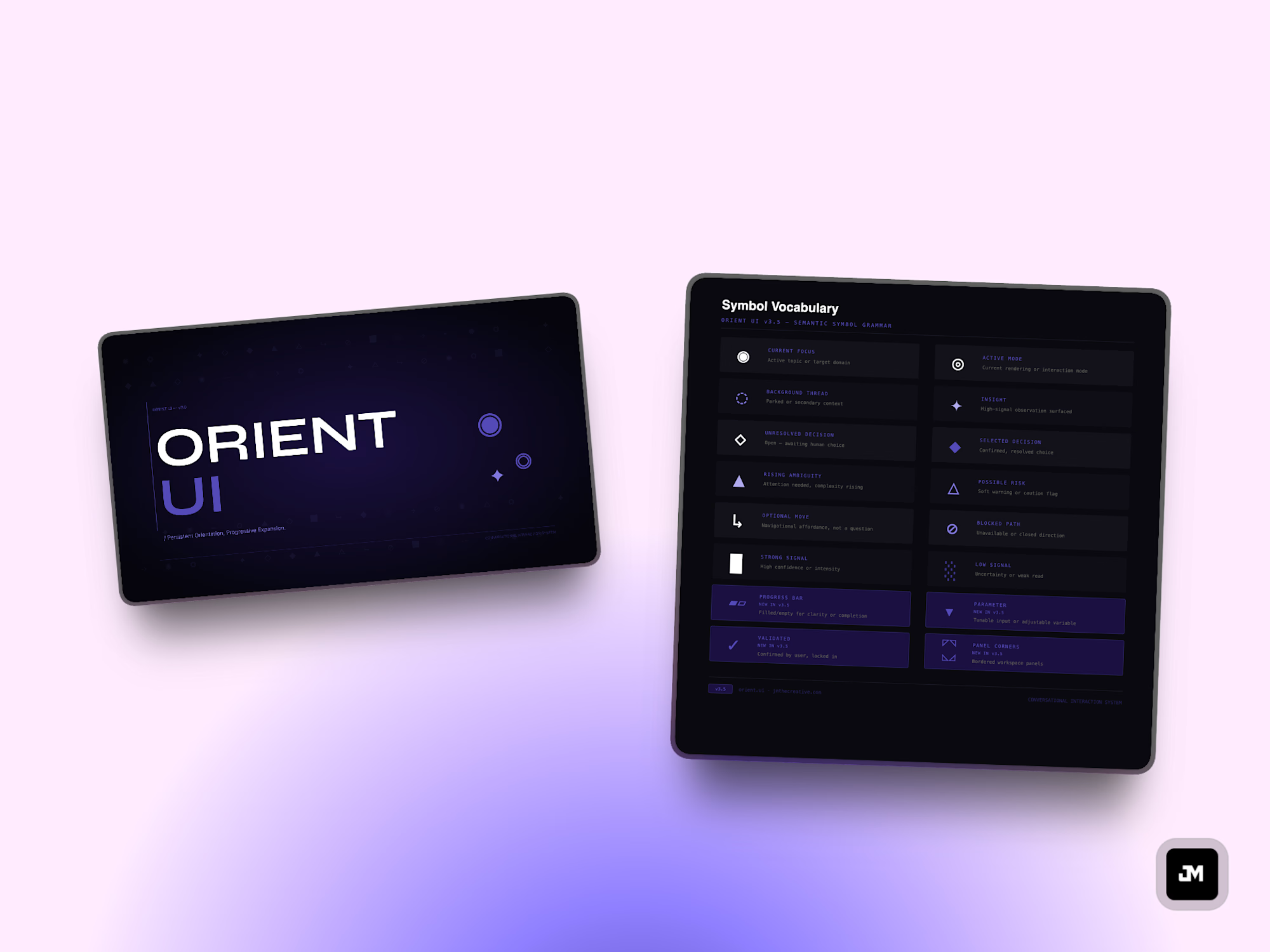
Orient UI is a design system for AI conversation. It gives Claude (and other AI tools) persistent orientation, adaptive visual rendering, human-in-the-loop checkpoints, and structured surfaces.
It turns unstructured AI conversations into guided interactions — interviews, diagnostics, decision support, design sessions, and elicitation flows that keep you and the AI oriented throughout.
What's inside:
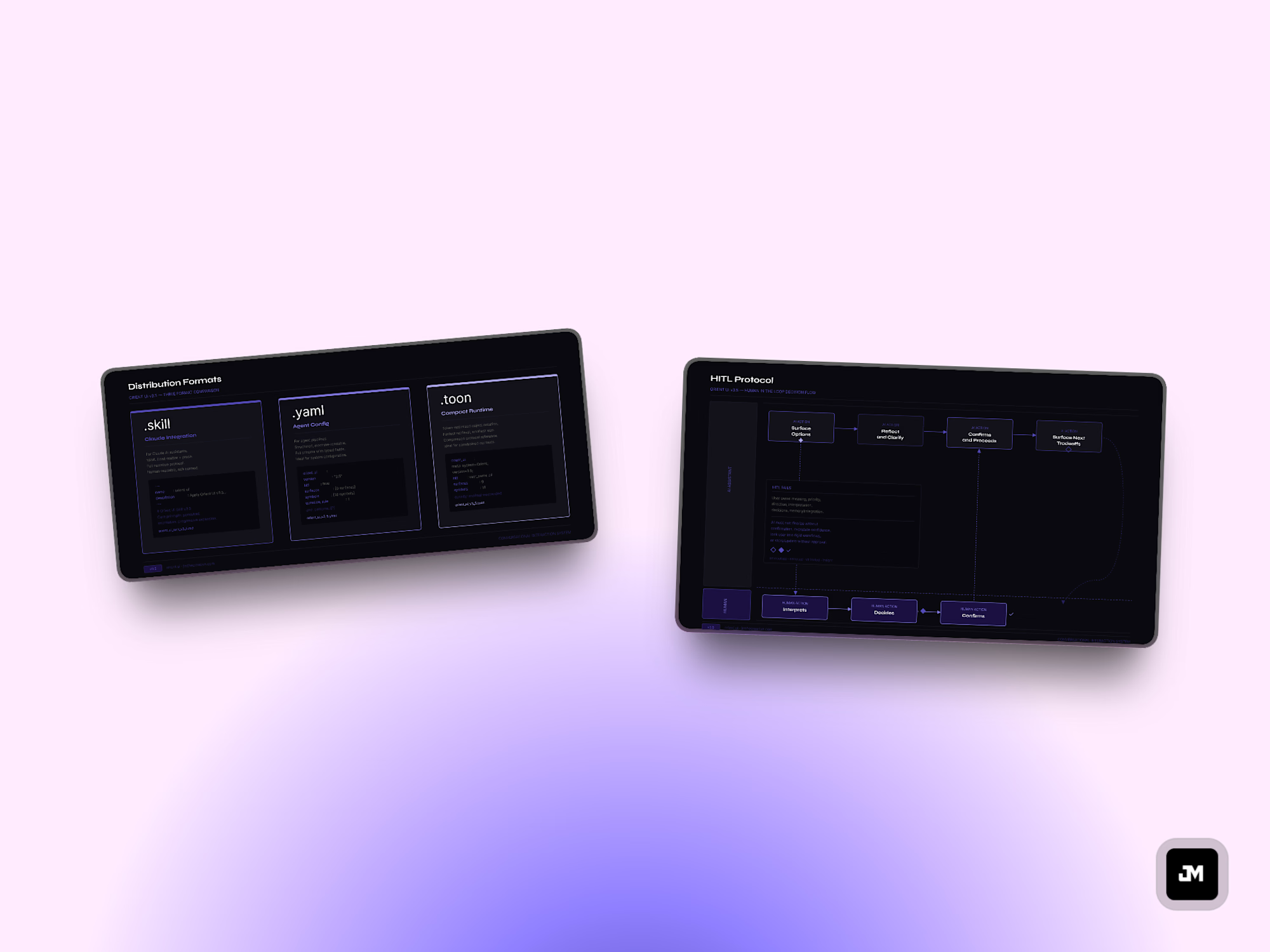
Orient UI.md — full canonical protocol with all surfaces, governance patterns, and visual grammarOrient UI Skill.md (Claude format) — drop it into Claude and Orient UI activates immediatelyOrient UI YAML.md — structured YAML representation for agent configuration, routing, and implementation specsOrient UI TOON.md — token-optimized object notation for compact runtime contextREADME.md — navigation and usage guide for deciding which format to use and how to apply the systemWho it's for:
Designers, consultants, operators, researchers, and anyone running structured conversations with AI who wants better pacing, clearer state tracking, and human-in-the-loop control over meaning and decisions.
Core principles:
Persistent orientation, progressive expansion
One-question rule (one active question per turn, always)
Human-in-the-loop protocol (AI never finalizes meaning without confirmation)
Smallest useful rendering (escalate structure only when it helps cognition)
Named surfaces for interviews, scorecards, decision reports, wireframes, diagrams, charts, personas, empathy maps, and hybrid views
Orient UI is the same system I use to shape context before every design engagement.
Get it for$20.00
Tags
AI
Design Systems Specialist
AI prompts
Product created by
Jonathan Martinez proBrooklyn, USA
- $1k+
- Earned
- 3
- Paid projects
- 5.00
- Rating
- 28
- Followers
Get it for$20.00
Tags
AI
Design Systems Specialist
AI prompts
Orient UI is a design system for AI conversation. It gives Claude (and other AI tools) persistent orientation, adaptive visual rendering, human-in-the-loop checkpoints, and structured surfaces.
It turns unstructured AI conversations into guided interactions — interviews, diagnostics, decision support, design sessions, and elicitation flows that keep you and the AI oriented throughout.
What's inside:
Orient UI.md — full canonical protocol with all surfaces, governance patterns, and visual grammarOrient UI Skill.md (Claude format) — drop it into Claude and Orient UI activates immediatelyOrient UI YAML.md — structured YAML representation for agent configuration, routing, and implementation specsOrient UI TOON.md — token-optimized object notation for compact runtime contextREADME.md — navigation and usage guide for deciding which format to use and how to apply the systemWho it's for:
Designers, consultants, operators, researchers, and anyone running structured conversations with AI who wants better pacing, clearer state tracking, and human-in-the-loop control over meaning and decisions.
Core principles:
Persistent orientation, progressive expansion
One-question rule (one active question per turn, always)
Human-in-the-loop protocol (AI never finalizes meaning without confirmation)
Smallest useful rendering (escalate structure only when it helps cognition)
Named surfaces for interviews, scorecards, decision reports, wireframes, diagrams, charts, personas, empathy maps, and hybrid views
Orient UI is the same system I use to shape context before every design engagement.
$20.00