
Live demo: https://linefeed-theme.pages.dev
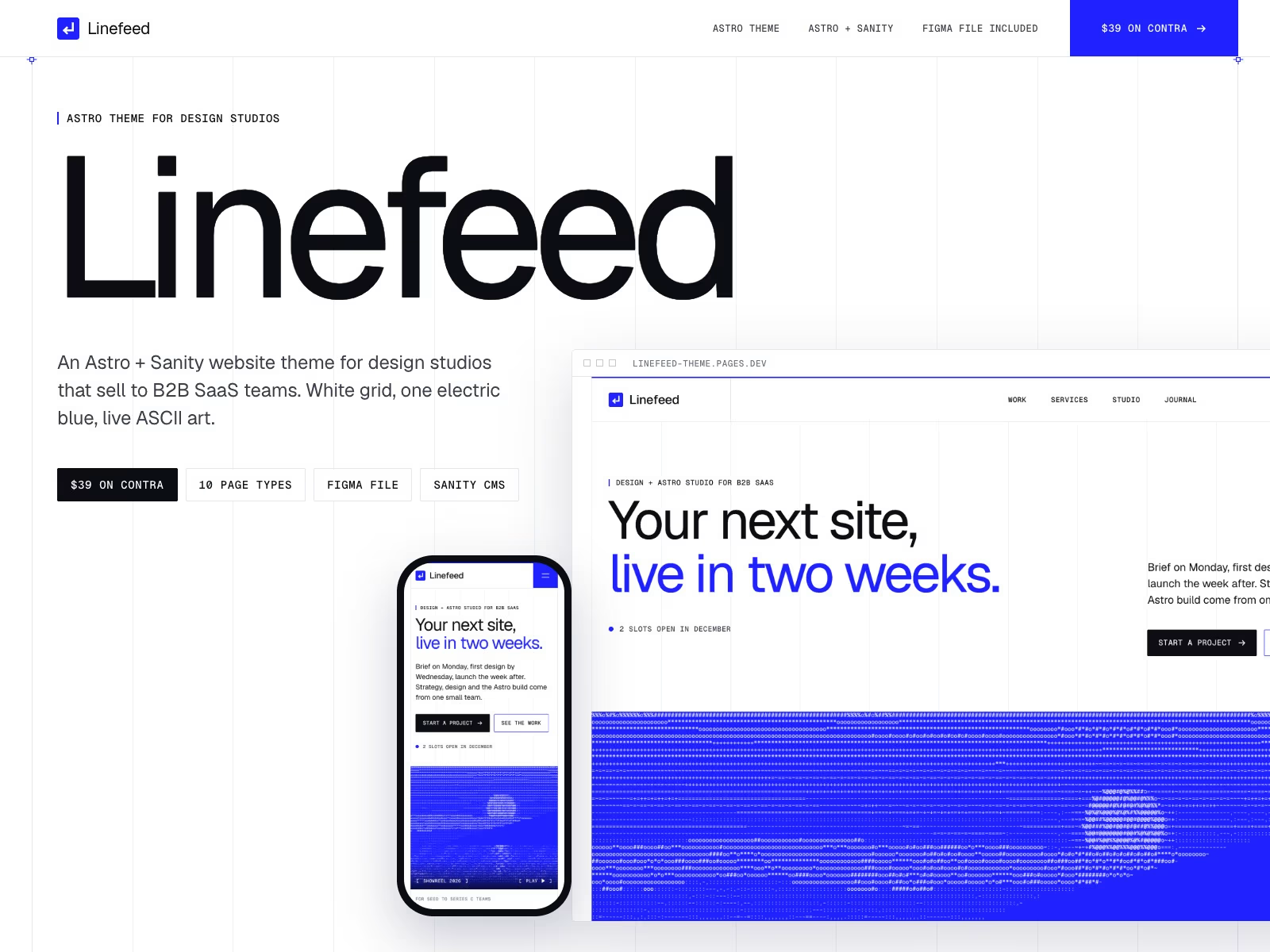
Linefeed is an Astro + Sanity website theme for design and development studios that work with B2B SaaS teams. White canvas, a hairline column grid, one electric blue for every action, and procedural ASCII and stipple art instead of stock photos. The hero lake is live ASCII that ripples as you watch.
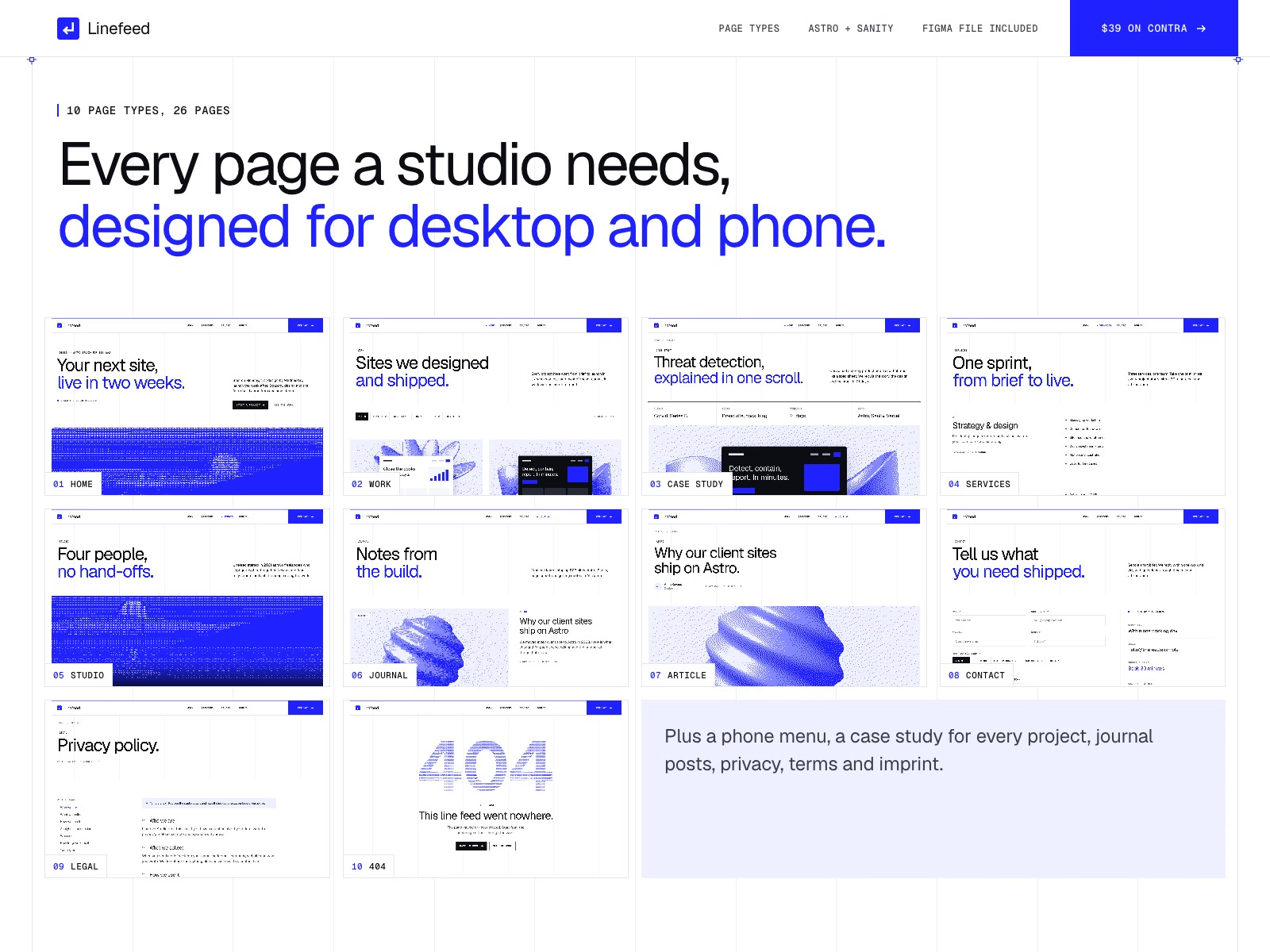
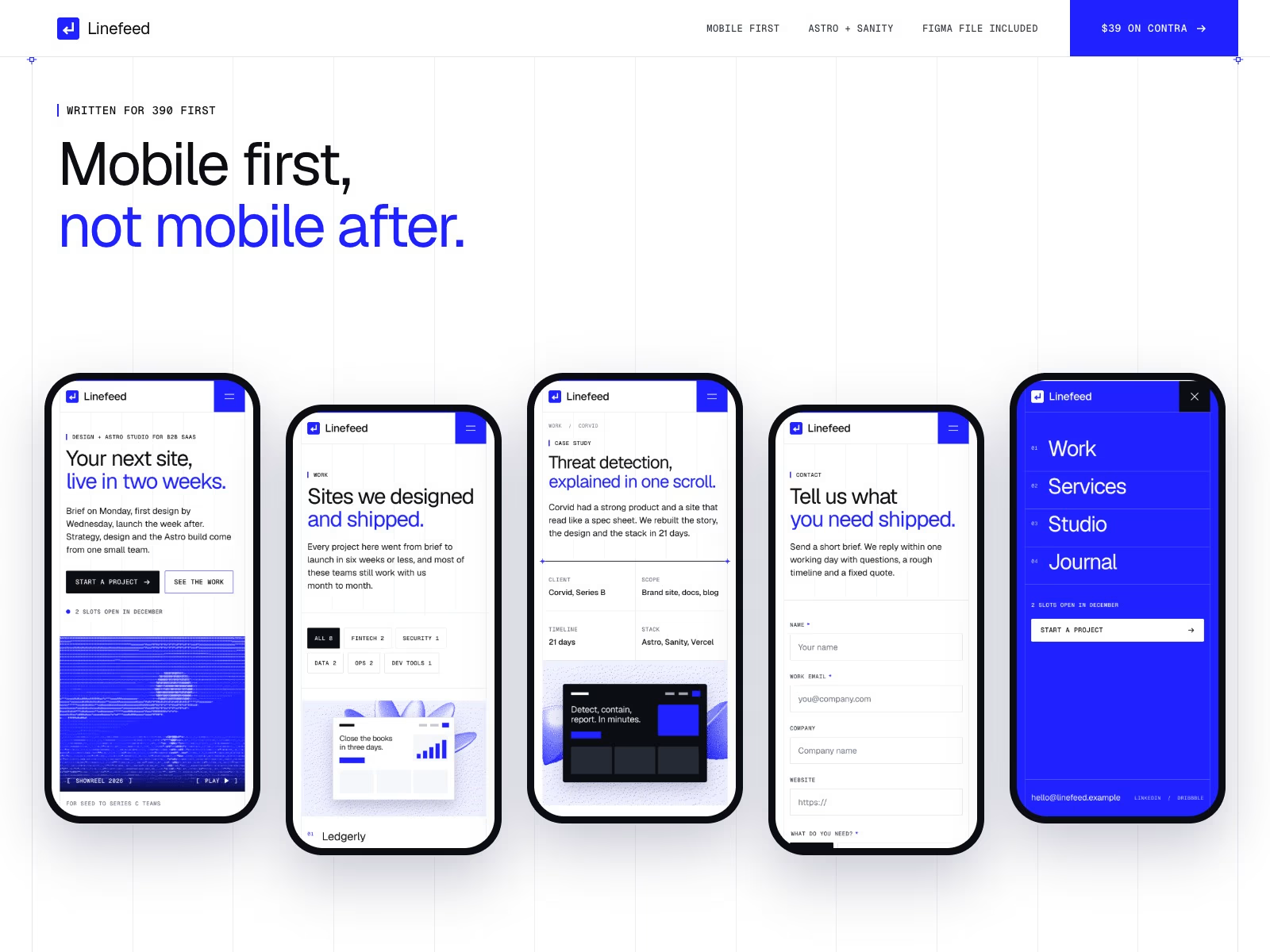
26 pages, 10 page types: home, work with eight case studies, services, studio, a journal with eight posts, contact with a brief form, privacy, terms, imprint and a 404. Every page is written for the phone first
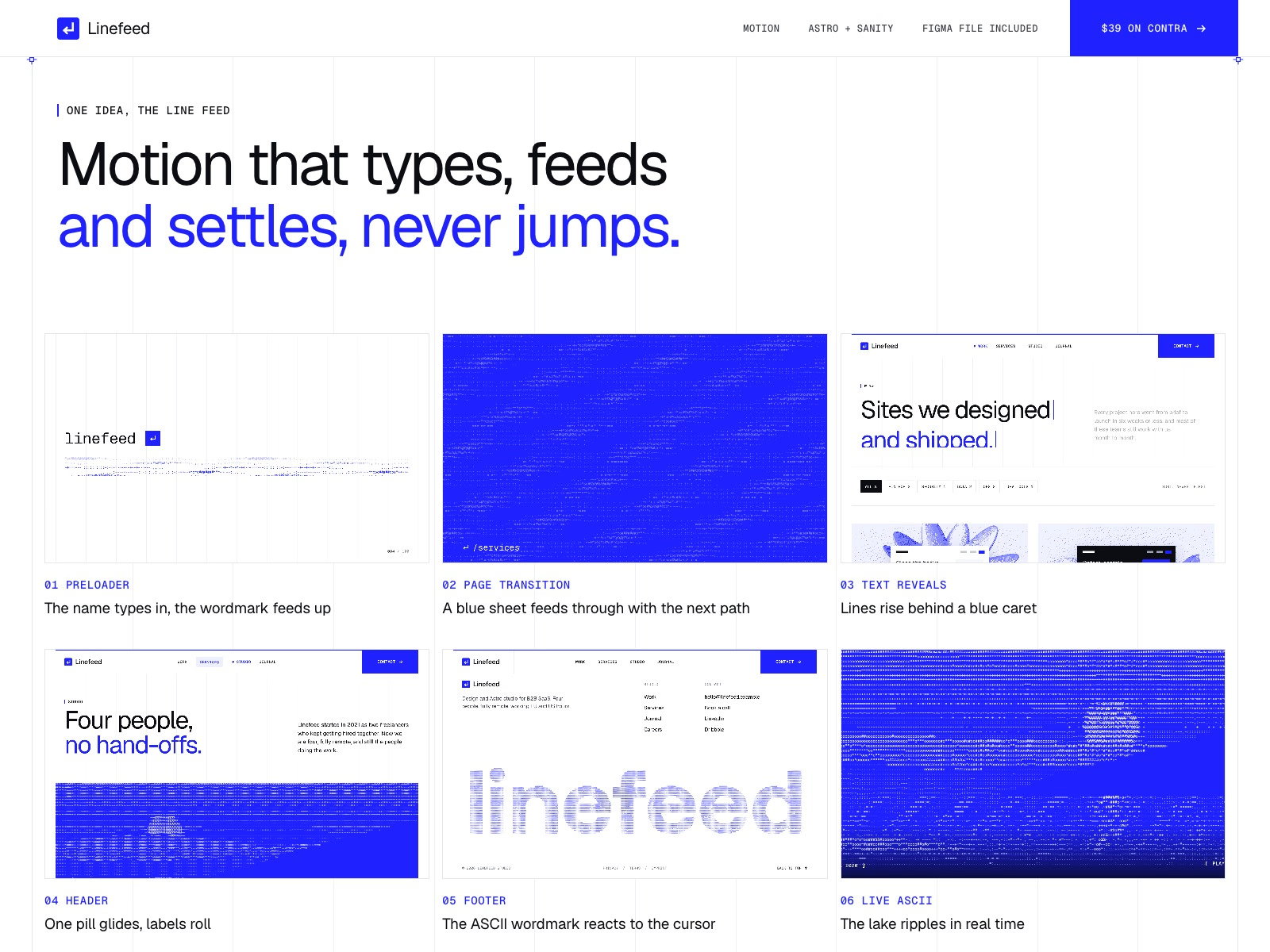
Motion with one idea, the line feed: a typing preloader, a paper-feed page transition, headings that rise line by line behind a blue caret, a footer wordmark that reacts to the cursor, a gliding nav pill, rolling labels, buttons that fill like a new line, Lenis smooth scrolling and a fixed header. All of it turns off for reduced motion
Edit in Sanity or in one file: Sanity Studio schemas and a seed script with all the demo content. Without Sanity the site builds from one JSON file
SEO and AI search built in: Organization, ProfessionalService, Service, FAQ, CreativeWork, BlogPosting and breadcrumb structured data, a social image per page, sitemap, RSS, a robots.txt that welcomes AI crawlers, and llms.txt
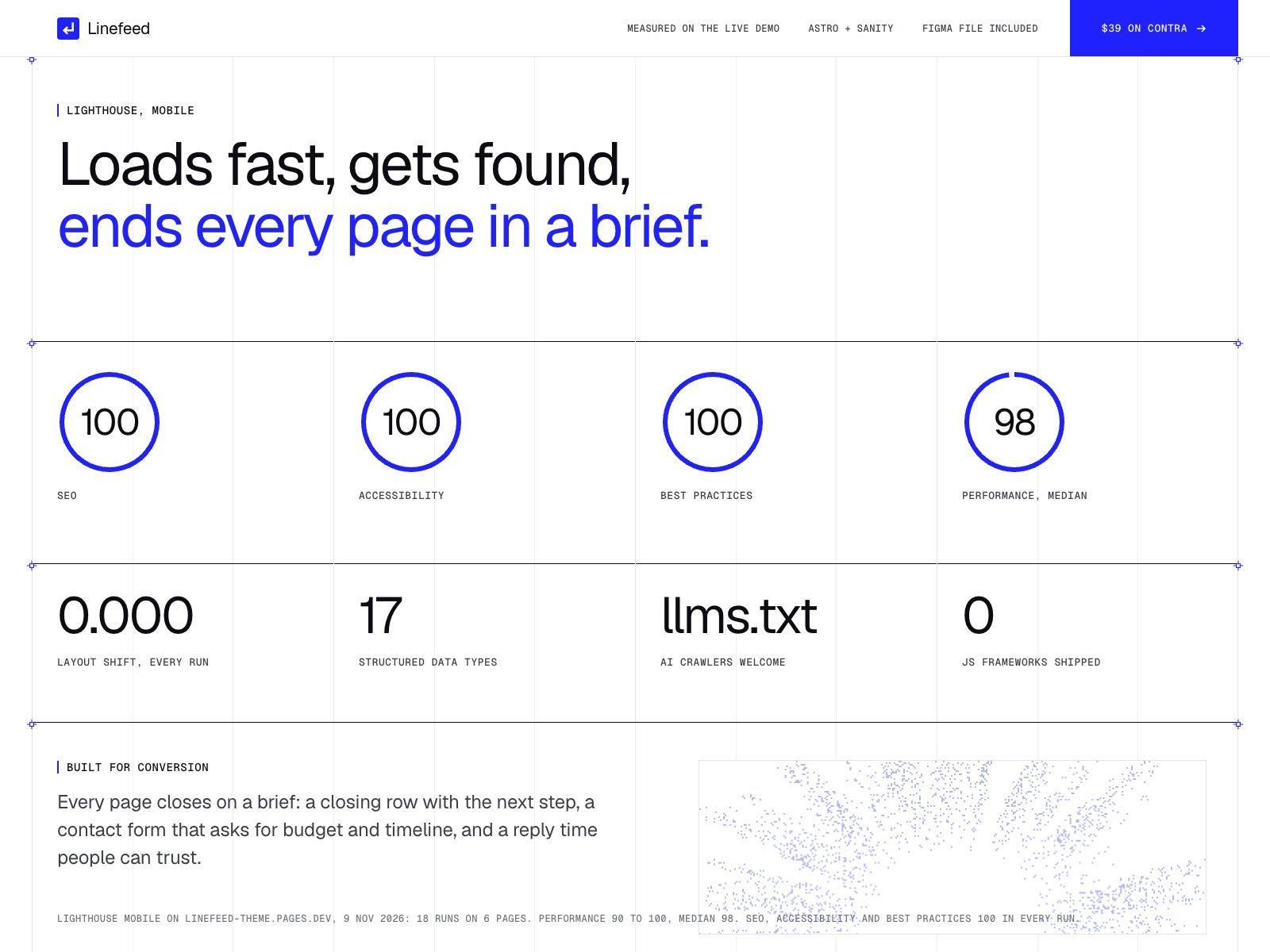
Fast: Lighthouse on mobile, measured on the live demo: 100 in SEO, Accessibility and Best Practices in every run, Performance 90 to 100 (median 98 over 18 runs on six pages), no layout shift
Art kit: the Python script that drew every ASCII and stipple picture, so new art stays in the same hand
Contact form for Formspree, Web3Forms or Basin
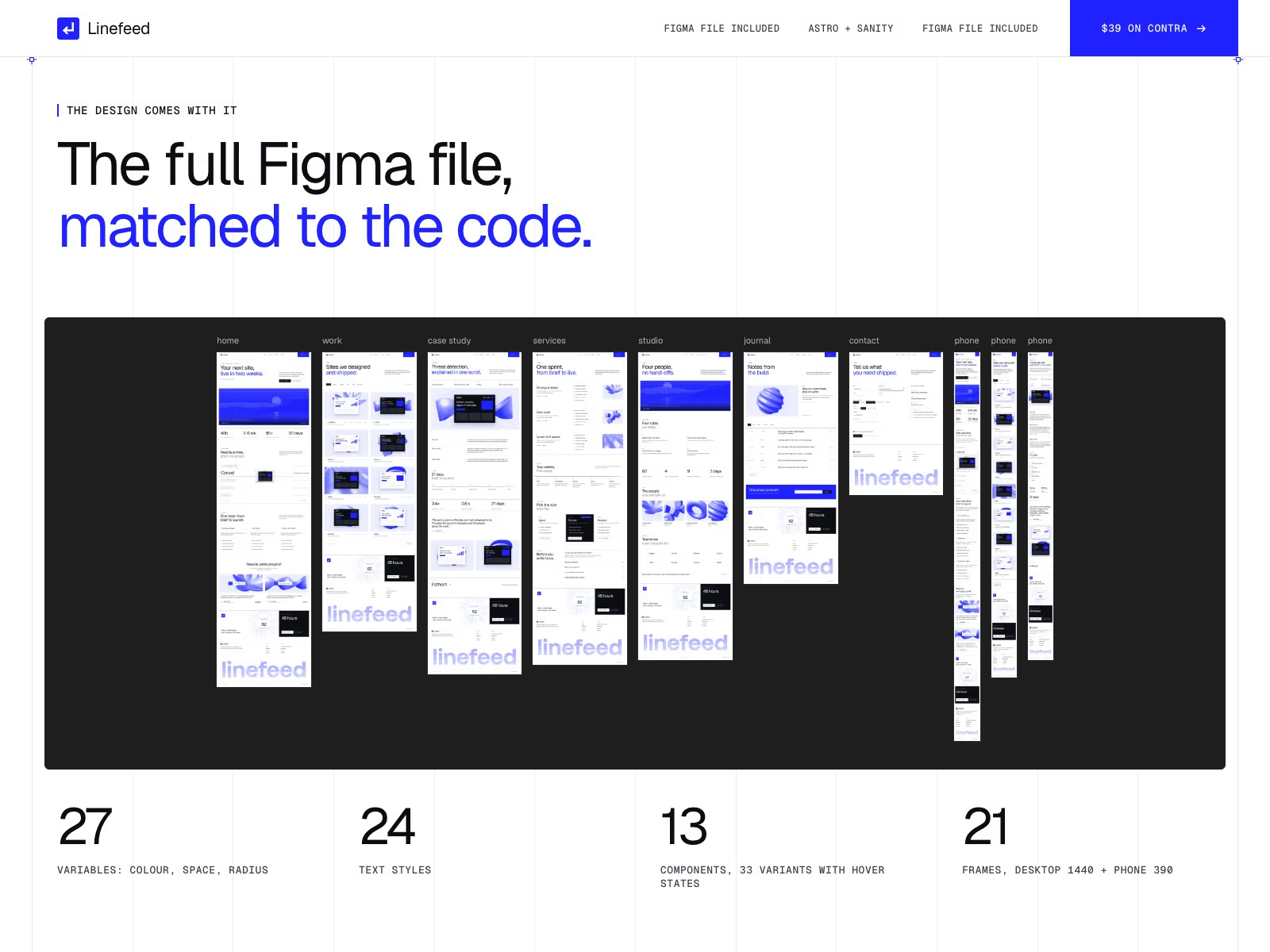
Figma file included: every page at 1440 and 390, the open phone menu, a board of hover and focus states, 13 components, 24 text styles and 27 variables. Set in Geist, free on Google Fonts
One payment, unlimited client projects, free updates.


Pavlo's other products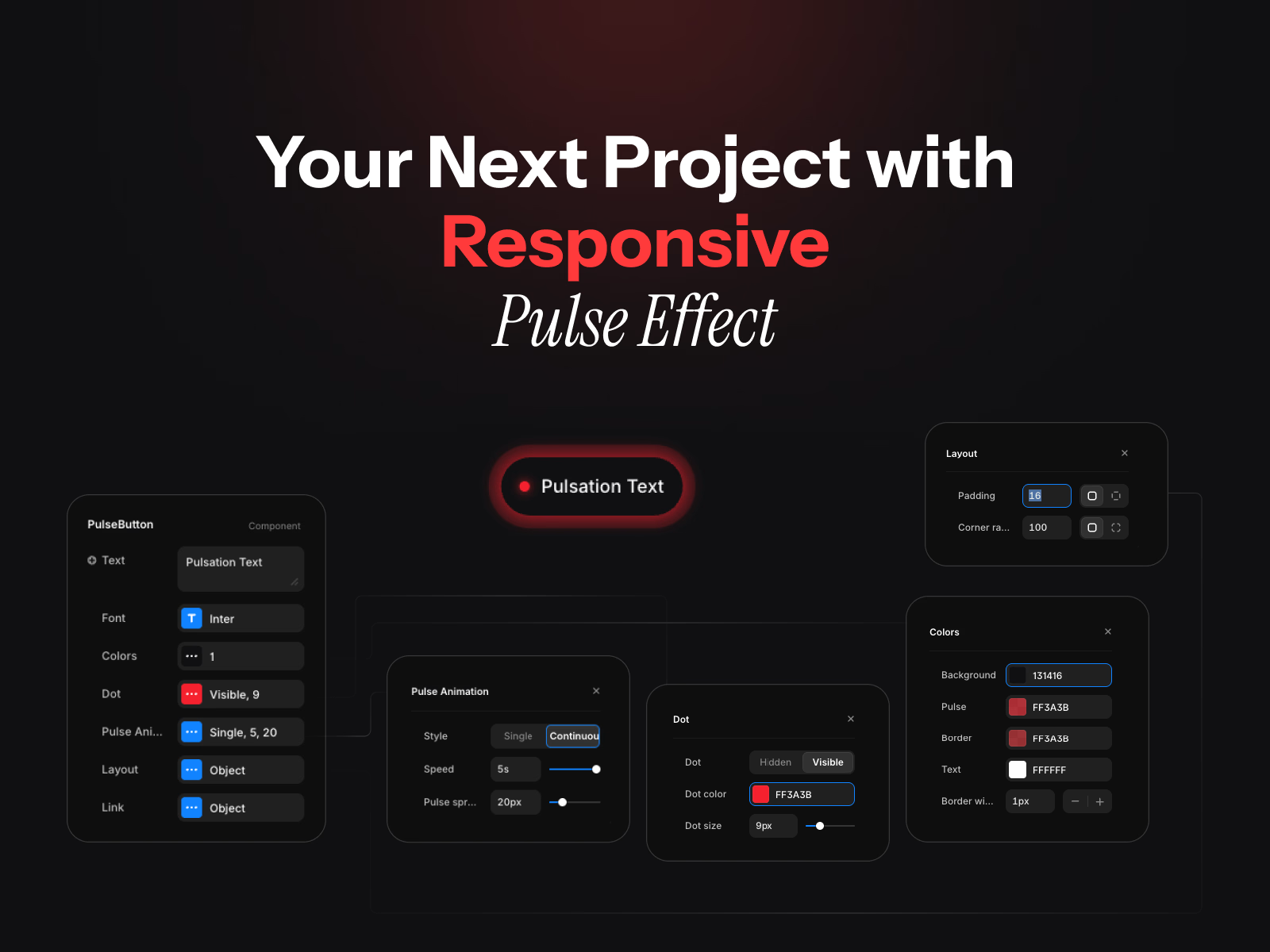
Framer Pulse Beacon Animation Component
$10.00
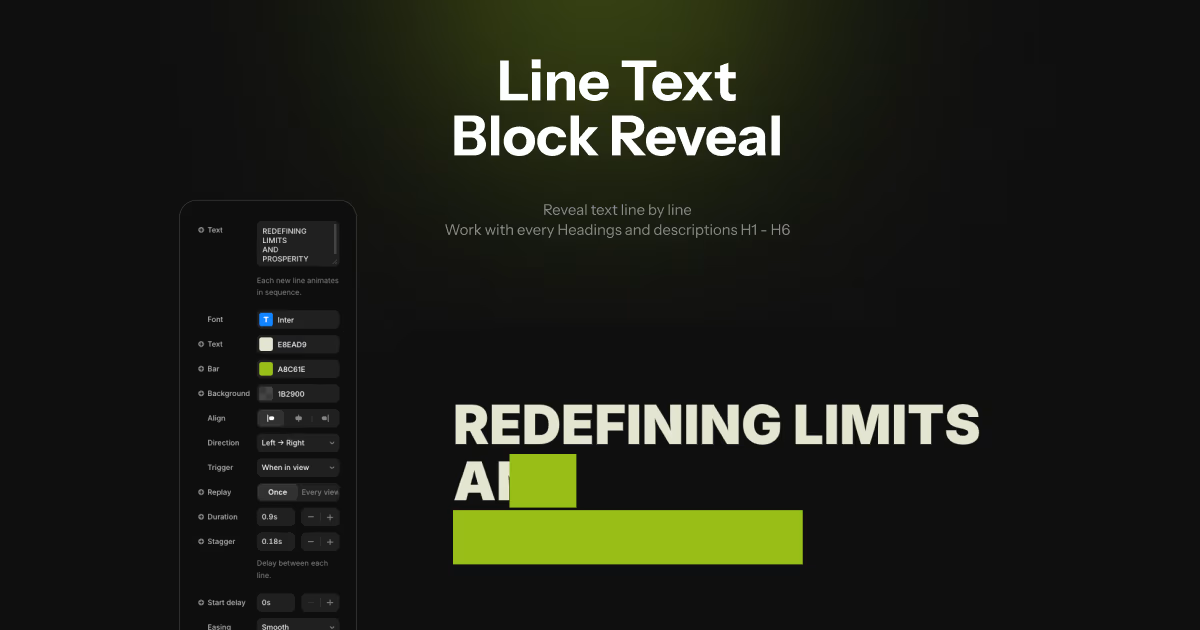
Framer Text Reveal Animation Component
$10.00
Get it for$39.00
Tags
Astro
Live demo: https://linefeed-theme.pages.dev
Linefeed is an Astro + Sanity website theme for design and development studios that work with B2B SaaS teams. White canvas, a hairline column grid, one electric blue for every action, and procedural ASCII and stipple art instead of stock photos. The hero lake is live ASCII that ripples as you watch.
26 pages, 10 page types: home, work with eight case studies, services, studio, a journal with eight posts, contact with a brief form, privacy, terms, imprint and a 404. Every page is written for the phone first
Motion with one idea, the line feed: a typing preloader, a paper-feed page transition, headings that rise line by line behind a blue caret, a footer wordmark that reacts to the cursor, a gliding nav pill, rolling labels, buttons that fill like a new line, Lenis smooth scrolling and a fixed header. All of it turns off for reduced motion
Edit in Sanity or in one file: Sanity Studio schemas and a seed script with all the demo content. Without Sanity the site builds from one JSON file
SEO and AI search built in: Organization, ProfessionalService, Service, FAQ, CreativeWork, BlogPosting and breadcrumb structured data, a social image per page, sitemap, RSS, a robots.txt that welcomes AI crawlers, and llms.txt
Fast: Lighthouse on mobile, measured on the live demo: 100 in SEO, Accessibility and Best Practices in every run, Performance 90 to 100 (median 98 over 18 runs on six pages), no layout shift
Art kit: the Python script that drew every ASCII and stipple picture, so new art stays in the same hand
Contact form for Formspree, Web3Forms or Basin
Figma file included: every page at 1440 and 390, the open phone menu, a board of hover and focus states, 13 components, 24 text styles and 27 variables. Set in Geist, free on Google Fonts
One payment, unlimited client projects, free updates.
Pavlo's other products
Framer Pulse Beacon Animation Component
$10.00
Framer Text Reveal Animation Component
$10.00
$39.00