
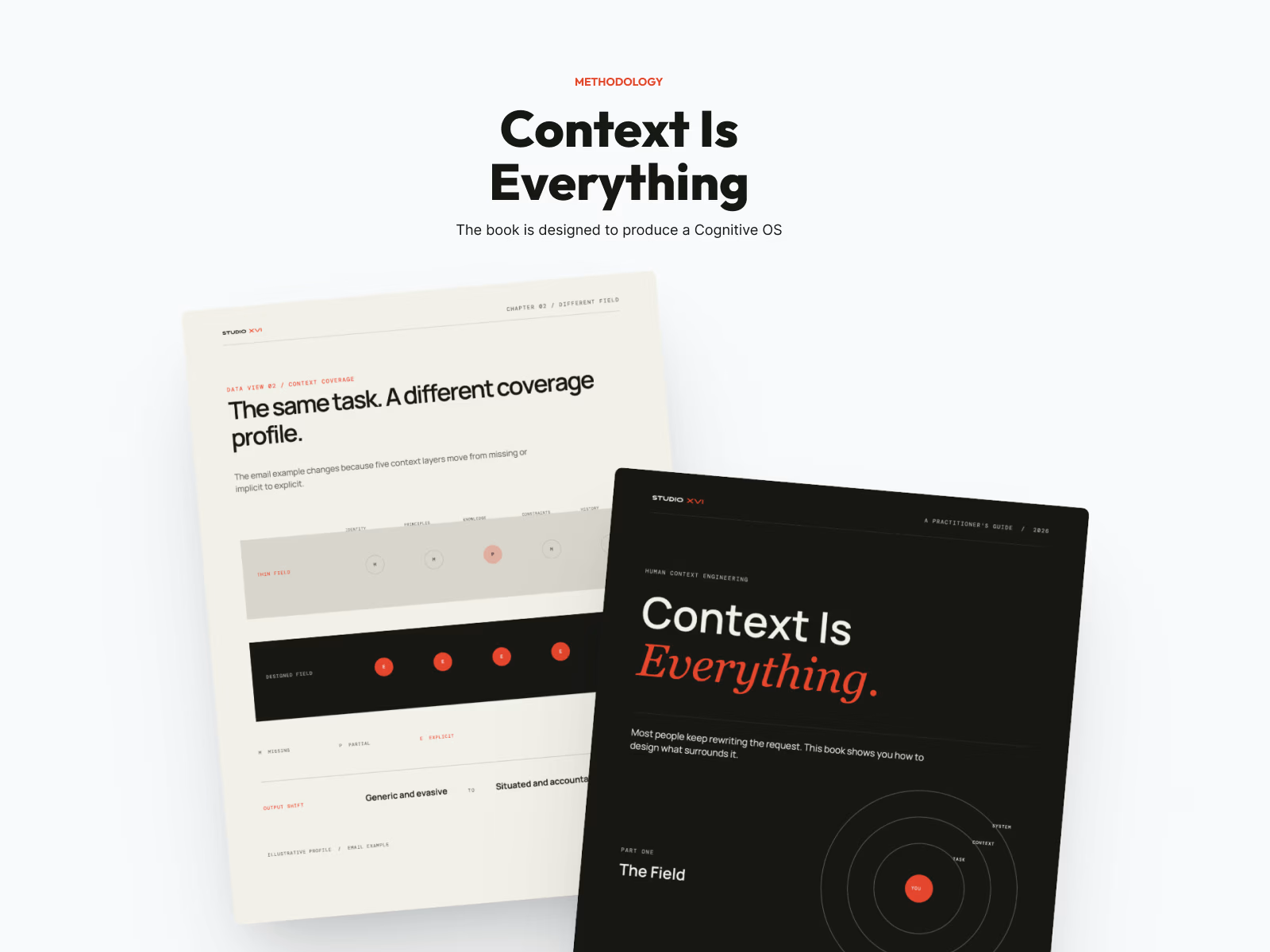
Most people think better prompts lead to better AI output. They don't. Better context does.
Context Is Everything is a free practitioner's guide to context engineering — the discipline of designing the environment around your AI interactions instead of just refining the words inside them.
This isn't a prompt library. It's a structural shift in how you think about working with AI.
What's inside
The book is built in three progressive parts:
Part One: The Mental Model — why prompting hits a ceiling, what context engineering actually is, and the difference between being a user and being an architect
Part Two: The Tools — mods, layers, packs, and the building blocks of behavioral architecture
Part Three: The Full System — how to build a working Cognitive OS from the ground up
Every chapter ends with three exercises (Reflect, Apply, Build) that accumulate into a complete, working system by the final page.
Who it's for
AI users who've hit the ceiling of prompting and want to understand why
Consultants, designers, and operators who use AI in real work, not toy demos
Anyone curious about why some people get wildly better results from the same models
Claude, ChatGPT, and Gemini users at any level of adoption
What this book is not
A collection of prompts to copy and paste
A technical manual requiring coding experience
A tool-specific guide locked to one platform
Something that expires when the next model drops
The frameworks work because they're built on how context functions, not on how any specific tool is designed right now.
Written by Jonathan Martinez — AI Systems Analyst and creator of Orient UI.
Get it for$0.00
Tags
Context
AI
Product created by
Jonathan Martinez proBrooklyn, USA
- $1k+
- Earned
- 4
- Paid projects
- 5.00
- Rating
- 28
- Followers
Jonathan's other products
AI Analyst Workflow
$39.00
Get it for$0.00
Tags
Context
AI
Most people think better prompts lead to better AI output. They don't. Better context does.
Context Is Everything is a free practitioner's guide to context engineering — the discipline of designing the environment around your AI interactions instead of just refining the words inside them.
This isn't a prompt library. It's a structural shift in how you think about working with AI.
What's inside
The book is built in three progressive parts:
Part One: The Mental Model — why prompting hits a ceiling, what context engineering actually is, and the difference between being a user and being an architect
Part Two: The Tools — mods, layers, packs, and the building blocks of behavioral architecture
Part Three: The Full System — how to build a working Cognitive OS from the ground up
Every chapter ends with three exercises (Reflect, Apply, Build) that accumulate into a complete, working system by the final page.
Who it's for
AI users who've hit the ceiling of prompting and want to understand why
Consultants, designers, and operators who use AI in real work, not toy demos
Anyone curious about why some people get wildly better results from the same models
Claude, ChatGPT, and Gemini users at any level of adoption
What this book is not
A collection of prompts to copy and paste
A technical manual requiring coding experience
A tool-specific guide locked to one platform
Something that expires when the next model drops
The frameworks work because they're built on how context functions, not on how any specific tool is designed right now.
Written by Jonathan Martinez — AI Systems Analyst and creator of Orient UI.
Jonathan's other products
AI Analyst Workflow
$39.00
$0.00