UX Case Study: Closed Loop NFT Ticketing System

Chadd Weston



Design Exploration: Closed Loop NFT Ticketing Prototype
I recently worked on a high fidelity prototype of a fully closed-loop blockchain-based NFT ticketing system for the Calaxy app. This design exploration aims to address key issues around bot-based scalping and incumbent ticket platform price gouging currently wreaking havoc on the $85B global live event ticketing industry.
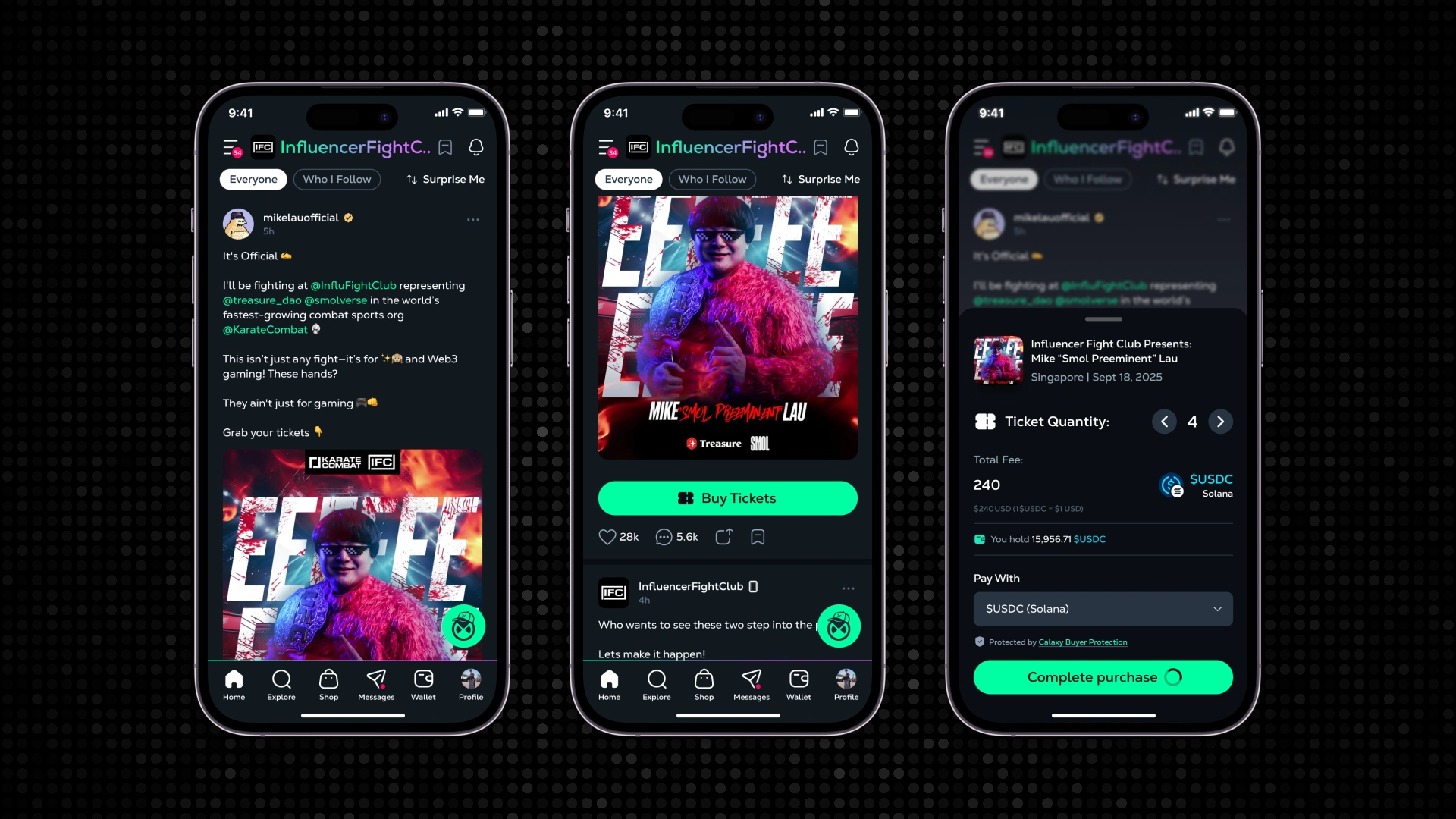
Social Selling: Buyer grabs tickets straight off a post in the home feed via slideup checkout panel. NFT tickets are airdropped in DMs from the seller account, automatically.
Problem:
Ticket purchasing has shifted heavily online, with challenges including high demand leading to rapid sell-outs, dynamic pricing, and accessibility issues. Bots and automated software exacerbate this by scooping up tickets in bulk during initial sales, leaving genuine buyers frustrated. In the US, for instance, the ease of secondary market purchases has become a major channel, but primary sales often face criticism for opaque pricing and fees. Trends for 2025 include increased adoption of mobile wallets and AI-driven personalization, but these also introduce vulnerabilities like data breaches during transactions.
The secondary ticket market, where tickets are resold after initial purchase, is a significant part of the ecosystem but plagued by issues like scalping (buying low and selling high) and price gouging. This market was valued at USD 2.64 billion globally in 2022 and is projected to reach USD 5.11 billion by 2030, growing at a CAGR of 9.5%. While it benefits consumers—saving over USD 414 million in 2024 through below-face-value resales—it also drives up average prices, especially for concerts, due to resale markups. Scalping undercuts the live-music ecosystem by inflating costs without benefiting venues or artists proportionally.
Solution:
Calaxy is exploring a fully closed loop NFT-based ticketing system that would address several of the above challenges head on.
This ticketing feature would be an add-on to Calaxy's existing monetization engine which currently provides 11 independent revenue streams for sellers (Creators / Artists / Brands).
This ticketing product system would essentially allow artists to:
1. Create IRL or live stream general admission events (GA for MVP)
2. Sell tickets direct to fans within Calaxy
3. Collect resale royalties enforced via blockchain at an amount set during ticket creation.
4. Admit fans "at the door" via assigned scanner accounts.
5. Realize top line revenue that has not significantly cut down by monopolized incumbent platform fees and other "middle players" present in the traditional ticketing value chain.
This ticketing system would effectively be "closed loop" in that no outside ticketing provider would be necessary at any part of the typical event ticketing and experience delivery lifecycle. From ticket creation to admission at the door, everything is handled directly within the Calaxy platform.
Seller Journey:
Ticket sellers which could include music artists, managers, event brands, authors, or promoters would be able to setup and start selling NFT tickets for an IRL or digital live stream event direct-to-fans in mere minutes. This journey preview will focus on an IRL "fight night" at the Grand Ballroom, Shangri La hotel in Singapore.
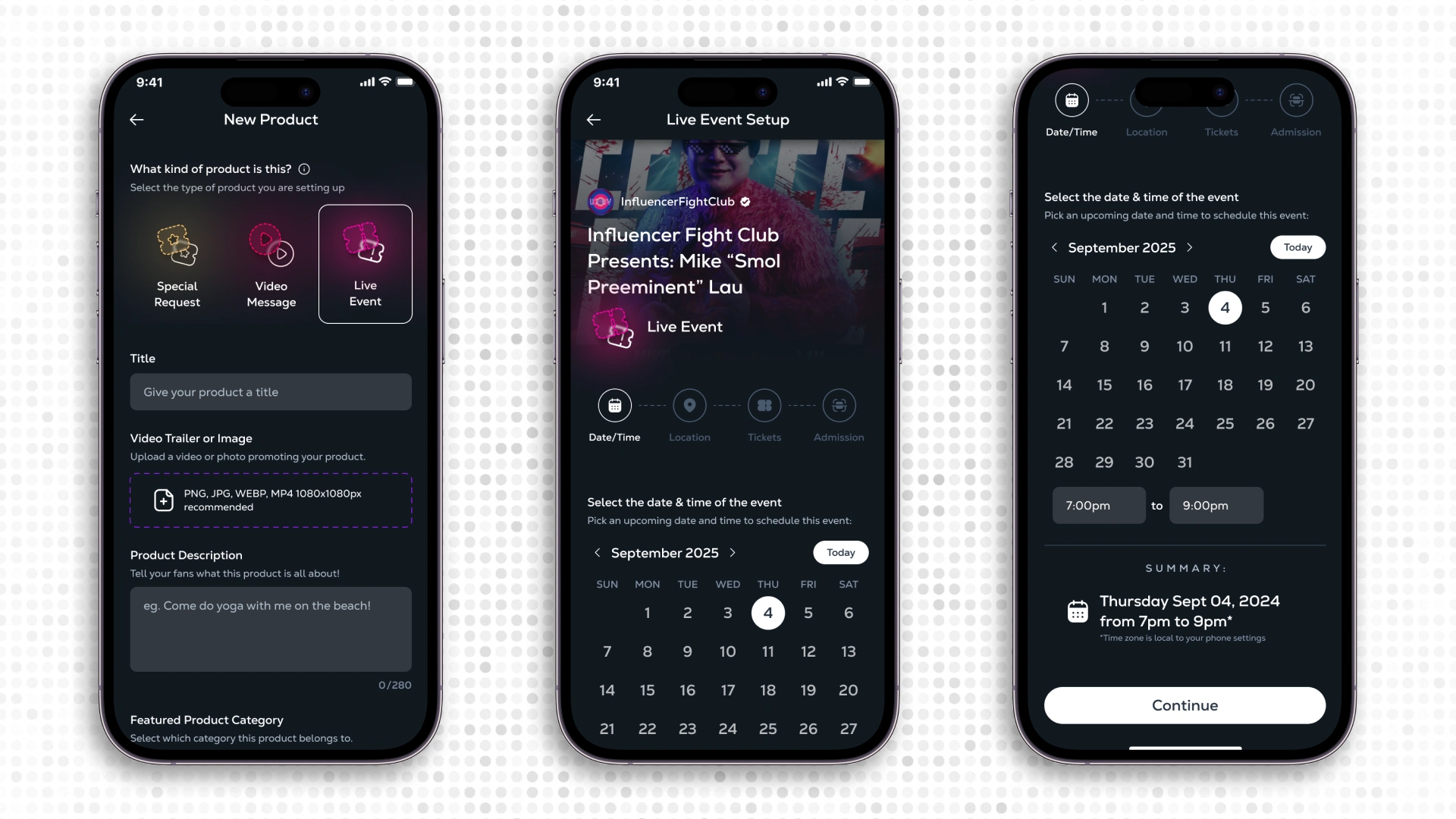
Screen 1 & 2: Seller creates a new "live event" product type to add to their shop. Begins inputting event details.
Add new "Live Event" product type in your Shop
Seller would create a new "Live Event" product type in their Shop and start filling out details like "event title and description", upload main image or trailer, and select relevant product categories. The next screen would capture the date & time of the event.

Screen 3: Event location details, showing a confirmation at the bottom before proceeding.
Date / Time & Location details
The second setup screen would capture location details, offer the ability to "save the location for future use" and provide a location summary at the bottom before proceeding.

Screen 4: Ticket Creation & Pricing
Ticket Creation & Pricing
On the ticket creation screen the seller would set total quantity of tickets to be sold for the event, single ticket price, schedule a release date/time for tickets to go on sale (optional), establish blockchain enforceable resale royalties, and type a custom delivery messages that would be texted from their account to the buyer automatically at the time of purchase. The seller would also be able to see a preview of their NFT ticket which would be constructed from inputs already capture prior (eg. event main image, title, ticket quantity).
When setting the price, the seller would see in real time, what the "sell out revenue" would be net of Calaxy's platform fees. This makes is easy for the seller to target a net "top line" revenue number that they would capture if the event were to sell out.
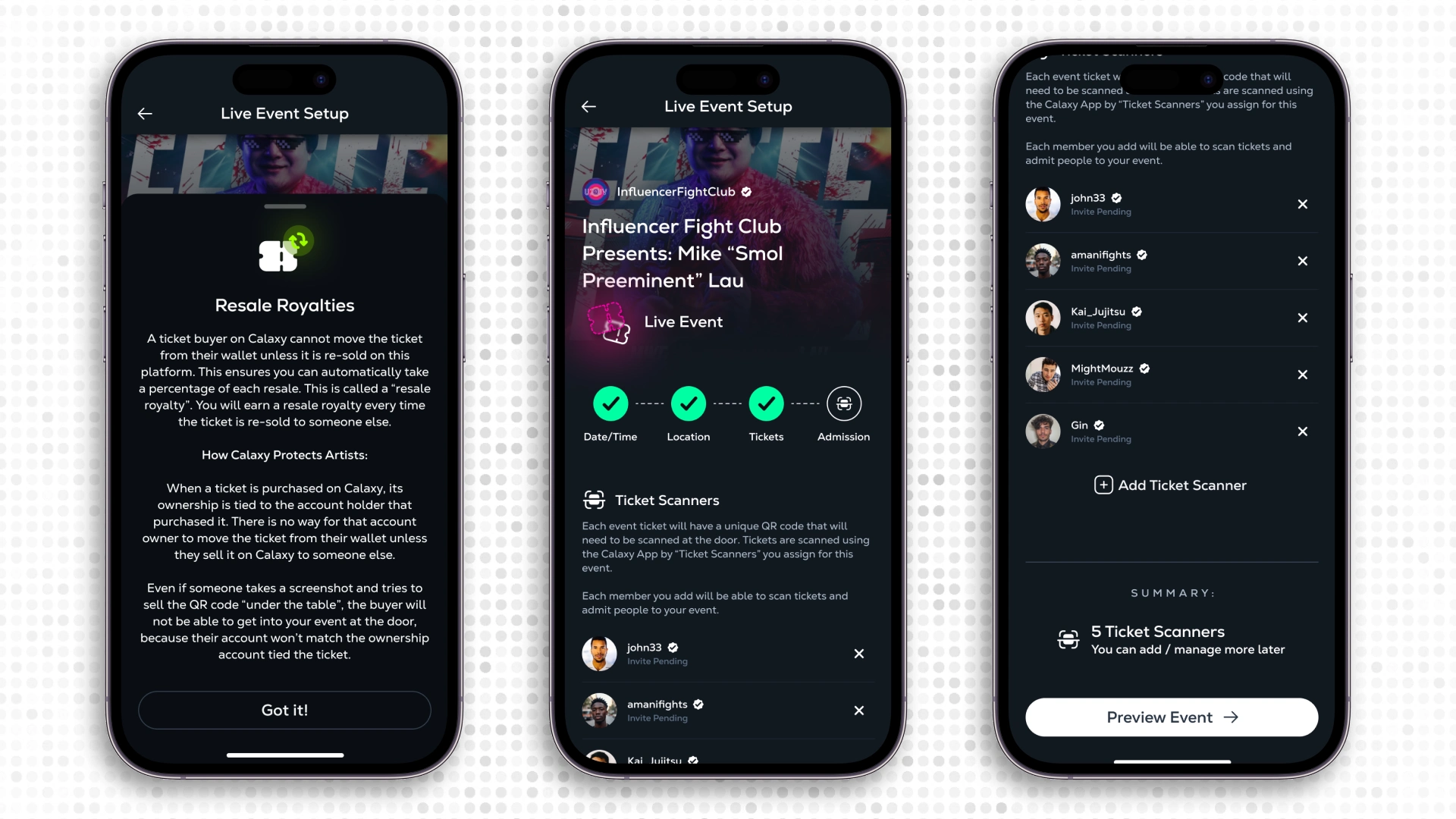
Screen 5: Add scanner accounts to admit attendees at the door.
Assign scanner accounts
To make this a fully closed-loop system, we need to provide sellers with the capability of admitting ticket holder to their physical event. To make this process seamless, the seller would simply "add" ticket scanner accounts (other Calaxy platform users) to their event. These scanners would get an invite & accept, and would experience their own dedicated user journey that guides them through the scanning process at the door.
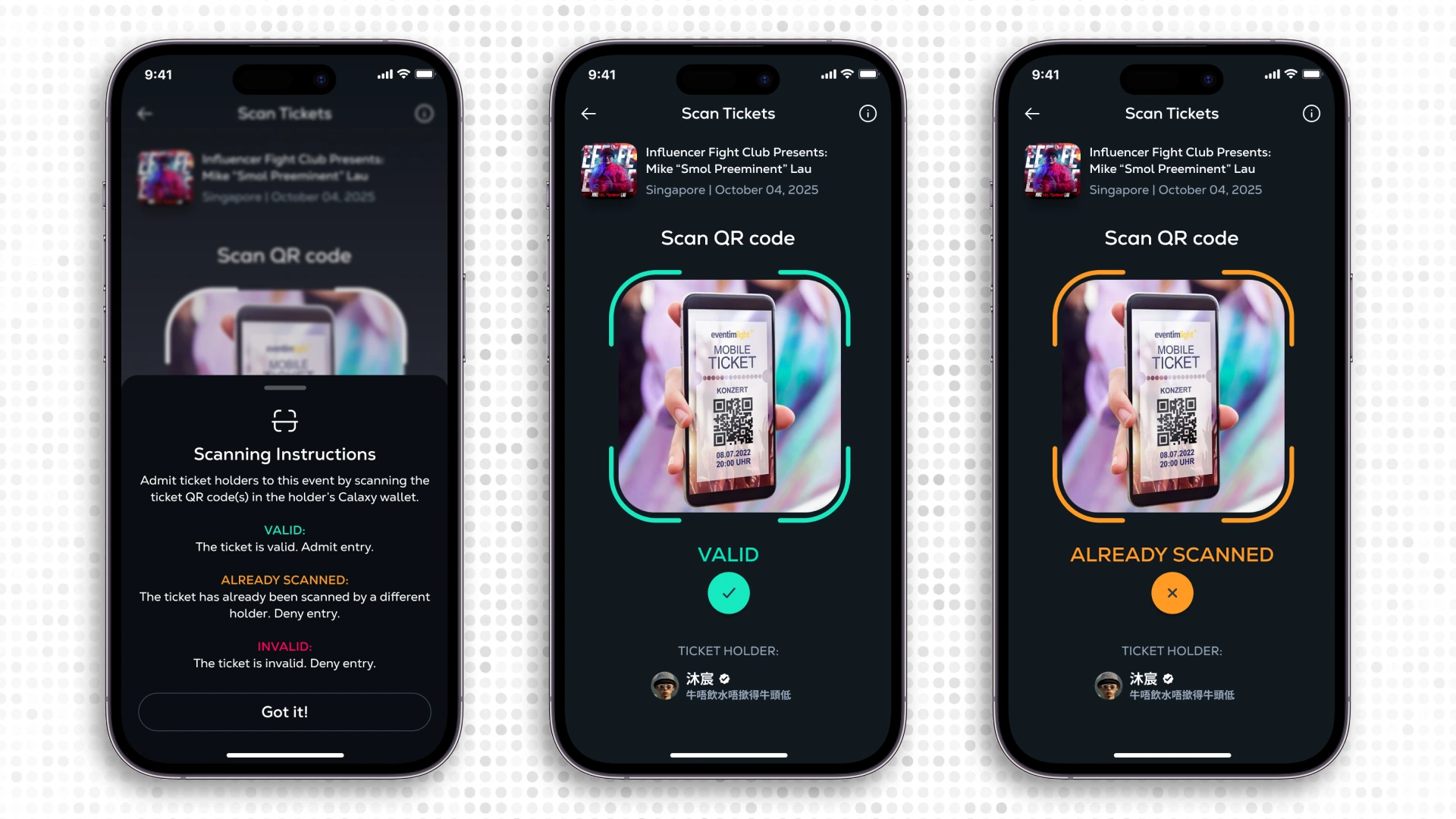
Scanner account UX for scanning tickets at the door. QR code would be a live dynamic code that changes ever 60 seconds for added security, so only attendees that hold legitimate tickets in their Calaxy wallets would be successfully admitted.
Buyer Journey:
Buyers would be able to grab tickets for this event straight off the seller's profile, the main home feed (social selling checkout panel), or dedicated Shop tab. Purchased NFT tickets would automatically airdrop from the seller account in DMs to the buyer. Tickets would live in the buyer's crypto wallet - "collectibles" tab.
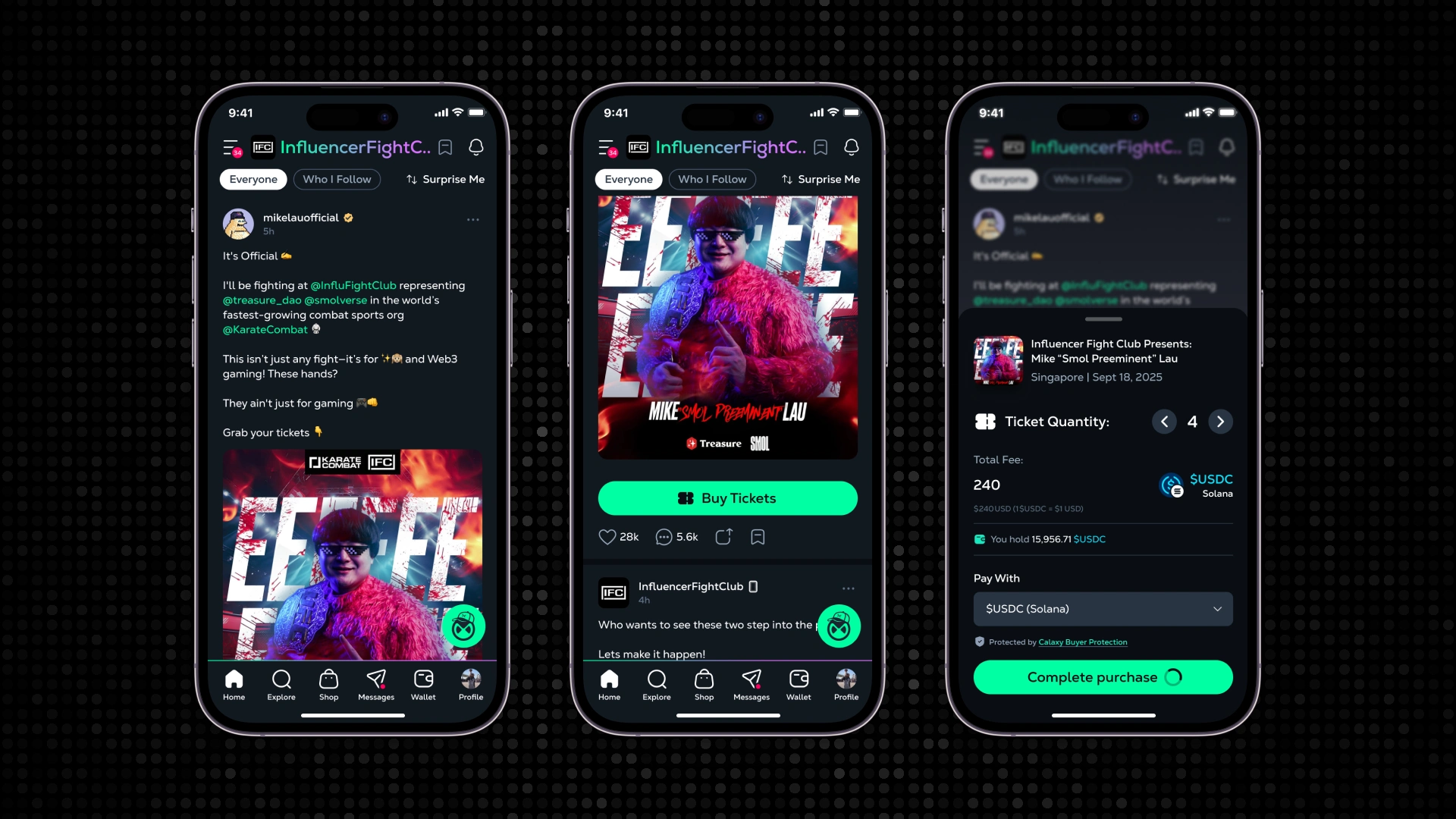
Buyers would be able to grab tickets straight off the home feed when they see a post about the event, with a social selling link that opens up a slide up checkout panel where they can pay with $USDC stablecoins held in their wallet.
Buyers would be able to grab tickets from either the home feed (off a post about the event that would automatically include a "buy now" button), or from the sellers user profile or dedicated Shop tab on the bottom nav bar. No matter which entry point the buyers comes in from, the checkout process is seamless. Buyers can checkout and pay with $USDC stablecoins held in their wallet, or use a connected credit card.
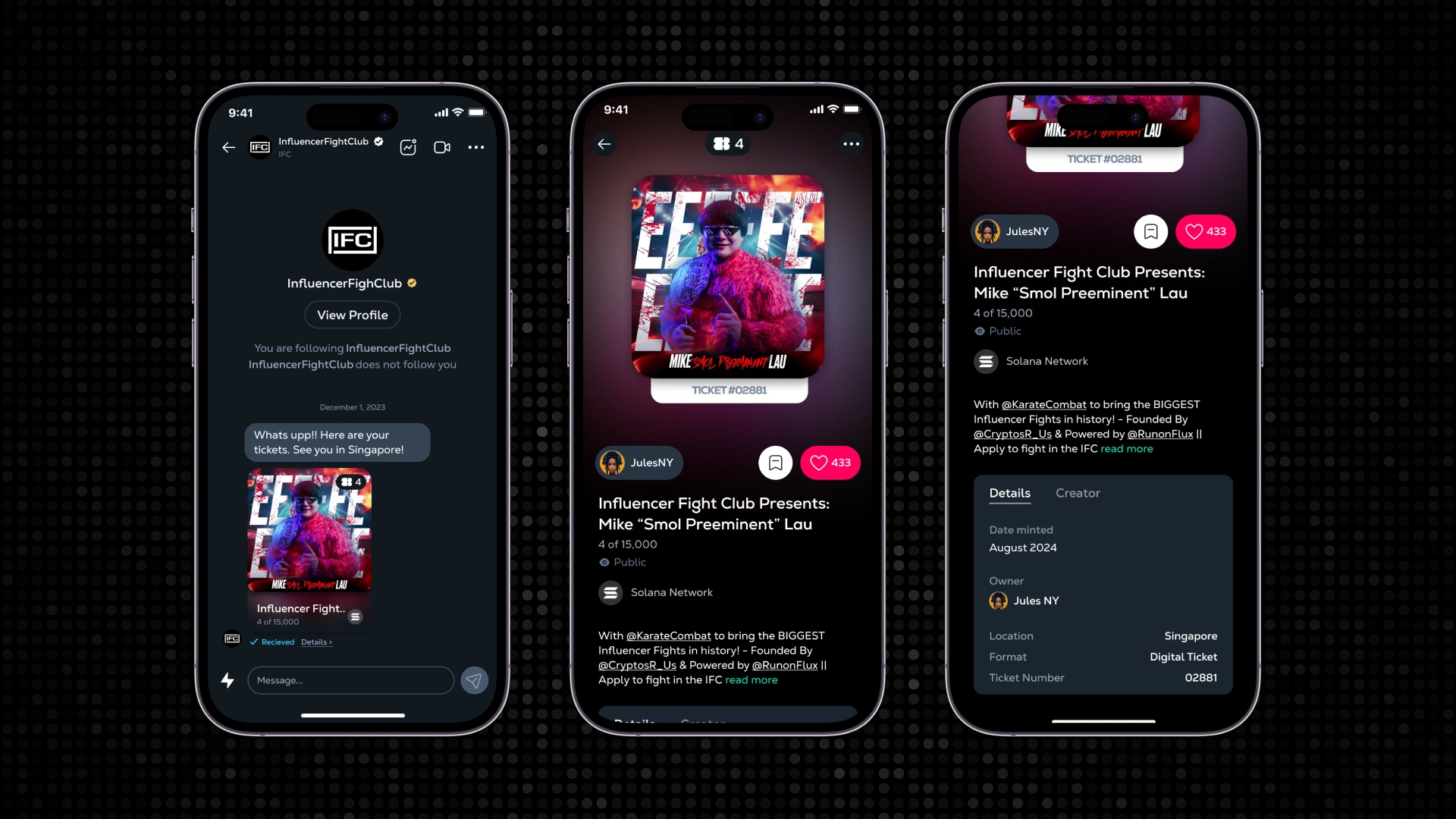
Purchased tickets are airdropped directly to the buyer's wallet and surfaced through DMs as a simple text message.
Ticket delivery is instant. Tickets are airdropped from the seller account directly to the buyer's wallet and surfaced through DMs, along with the seller's custom delivery message. The NFT ticket in the DMs is simply a representation of the ticket sitting in the buyer's wallet. A simple tap on the NFT ticket will open its detail view, much like opening a ticket in Apple wallet. Buyers will be able to see things like which network the NFT lives on, event name, total tickets held out of total in circulation (ev. 4 of 15,000) and more advanced, onchain attributes visible on a block explorer (which would open in a separate link in the browser)
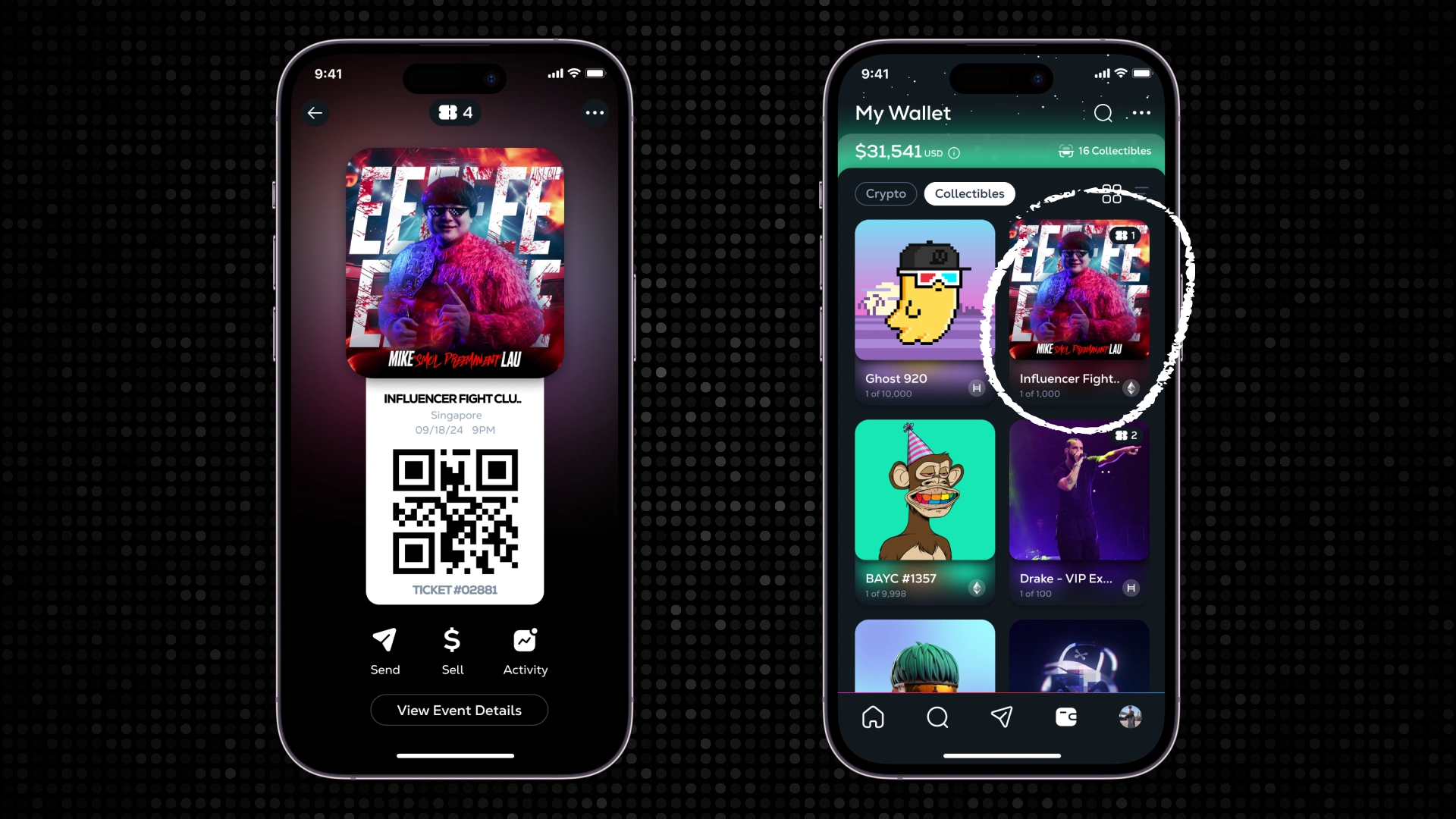
Tickets live in the buyer's built-in Calaxy wallet. Tapping on the NFT card would open its detail view. At the gate, the ticket holder simply taps the main card image to slide open the dynamic QR code.
NFT tickets live in the buyer's wallet, and can be opened "at the door" of the event for quick scanning. These NFT tickets can also be texted to friends, or resold on marketplaces like Opensea.
Conclusion:
The live event ticketing industry in its current form is plagued with issues that cost artists and fans millions in lost opportunities primarily due to programmatic primary bulk ticket purchasing, and price gouging by monopolized incumbent ticketing platforms.
This high fidelity UX prototype explores what a closed loop NFT-based ticketing system powered by blockchain might look like, and seeks to address some of these problems head on.
Proof of human buyer: This prototype would help avoid bot programmatic buying by requiring every purchaser to have a valid Calaxy wallet setup with biometric on-device authentication that runs at the time of purchase, not just at sign in. (eg. FaceID scan to complete purchase)
Direct to fan seller model: This system would establish a direct-to-fan first party and resale value chain that eliminates alot of the middle-layer technologies that are often criticized for price gouging, netting artists and Creators a far smaller "slice of the pie" than they otherwise deserve.
Reseller royalty enforcement: The resale royalty established at the time of ticket creation (issuance) would be codified into each NFT ticket on blockchain via standards like Ethereum's ERC-721: Non-Fungible Token Standard, which provides a blueprint for creating unique, indivisible digital assets with attributes like resale royalties enforced within its smart contract architecture. This provides stronger royalty assurances to sellers that the current standard.
Truly solving these issues at scale will require careful consideration and future research. This MVP is designed to provide a palatable visual experience of what some of these solutions might look like once they are fully operationalized on blockchain architecture.
Key future considerations:
Buyer Privacy
Proof of human buyer (programmatic purchase prevention)
OTC resale prevention (issuer royalty enforcement)
Ticket price discovery (dynamic via bonding curves or fixed based on issuer preference)
IRL vs. digital live event ticketing/admission
Like this project
Posted Oct 20, 2025
I recently worked on a high fidelity prototype of a fully closed-loop blockchain-based NFT ticketing system for the Calaxy app. This is the full case study.
Likes
0
Views
0
Clients
Calaxy