Projects using WebRTC
Projects using WebRTC
Sign Up
Post a job
Sign Up
Log In
Filters
1
Projects
People
Message
0
Anthony Ettinger
pro
Quantum-Resistant Encrypted Messaging App Development
0
10
Message
0
Srayan Jana
Contributed to Pion, a Go implementation of WebRTC
0
13
Message
2
Max Hora
max
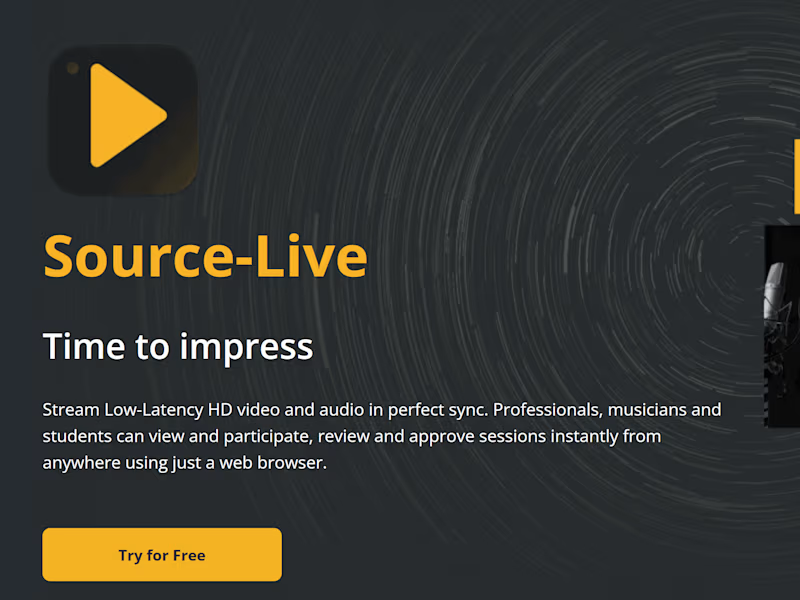
Source Elements | Low latency desktop webrtc streaming solution
2
37
Message
0
Dustin Rowley
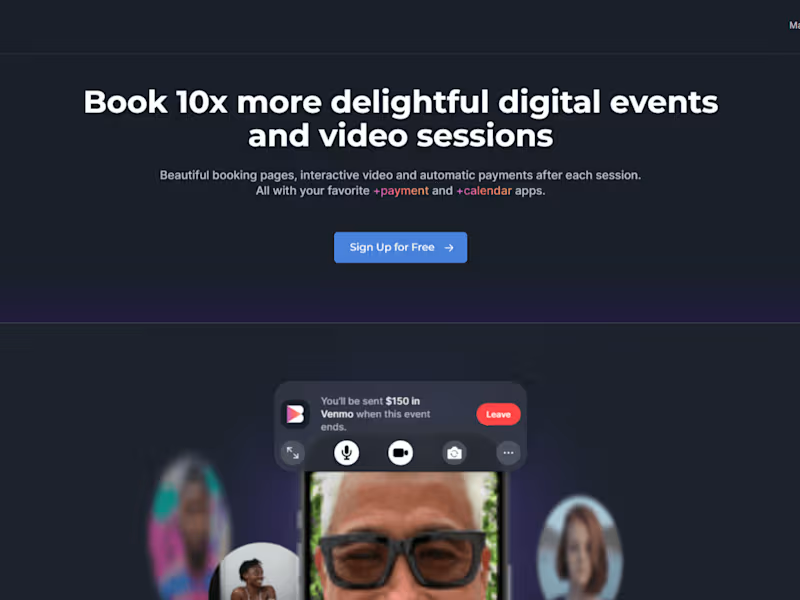
Bookvid
0
17
Message
23
SanganakHQ
pro
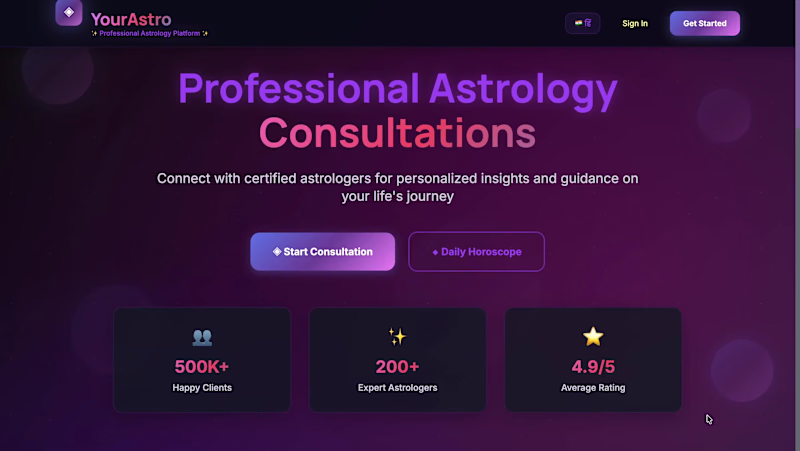
YourAstro – AI Astrology SaaS (Next.js, React, Supabase)
1
23
26
Message
0
Mehul Sethia | Senseibles
pro
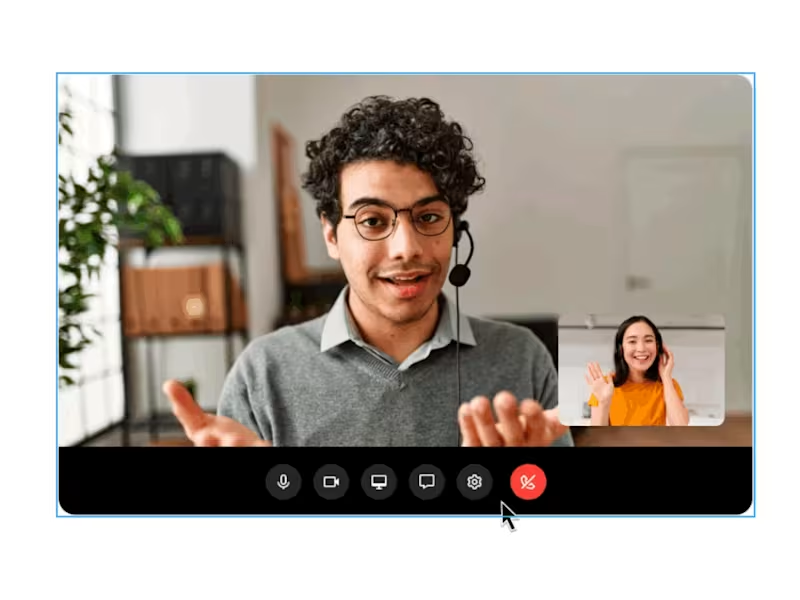
Converc — Turn Website Visitors Into Live Conversations URL: https://converc.com One-liner Built a real-time browser-based calling platform from scratch — MVP live in 5 days. Project Overview Converc solves a problem that costs B2B companies revenue every day: high-intent visitors land on your site, can't get a human immediately, and leave. It embeds a call widget that connects visitors to sales reps in real time — no booking links, no forms, no friction. I architected and built the full product: a Next.js frontend, Supabase backend with Row Level Security, and WebRTC-powered peer-to-peer audio calling that works entirely in the browser with no native app required. The stack was chosen for performance, low latency, and the ability to ship fast without sacrificing production quality. What I Built WebRTC call engine with real-time signalling via Supabase Realtime Embeddable call widget (drop-in script for any website) Agent dashboard with live call status, queue management, and session history Webhook integration layer for CRM and Slack notifications on call events OAuth-based authentication with Google and dev/prod environment separation Supabase RLS policies enforcing strict data isolation between workspaces How I Shipped It The core MVP — widget, signalling, agent dashboard, and working calls — was shipped in 5 days using Cursor with Claude as the AI pair programmer. Post-MVP work covered Google Safe Browsing clearance, Slack App submission, analytics scoping, and hardening the auth and security model for production. Tech Stack Next.js · Supabase · PostgreSQL · WebRTC · Vercel · Tailwind CSS
0
225
Message
1
Viktor Zahurskyi
pro
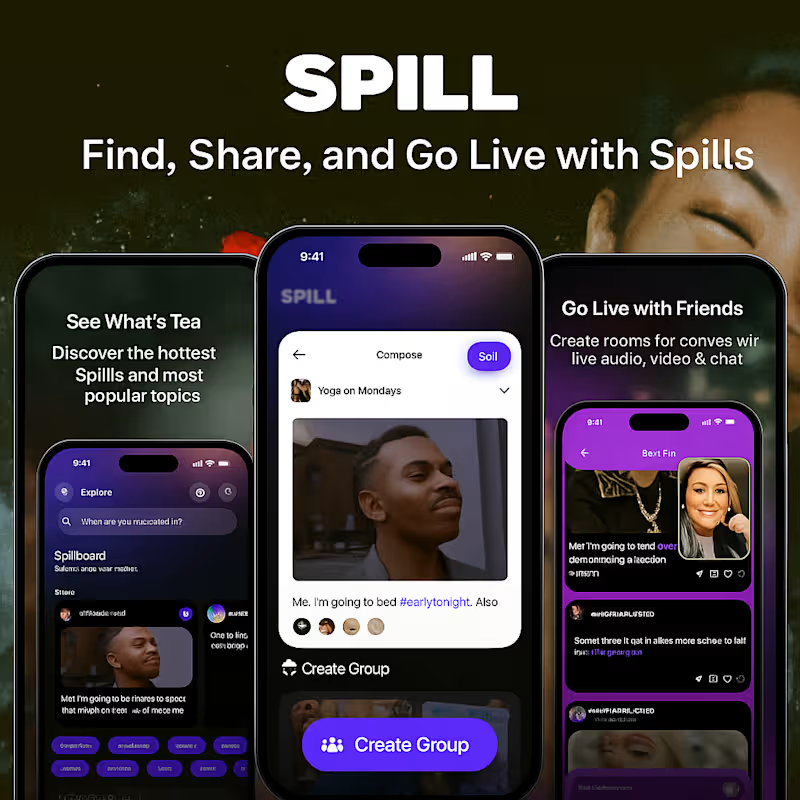
Swift| SwiftUI | Spill‑App – Social Media & Community Platform
1
15
Message
0
Armughan Shahid
pro
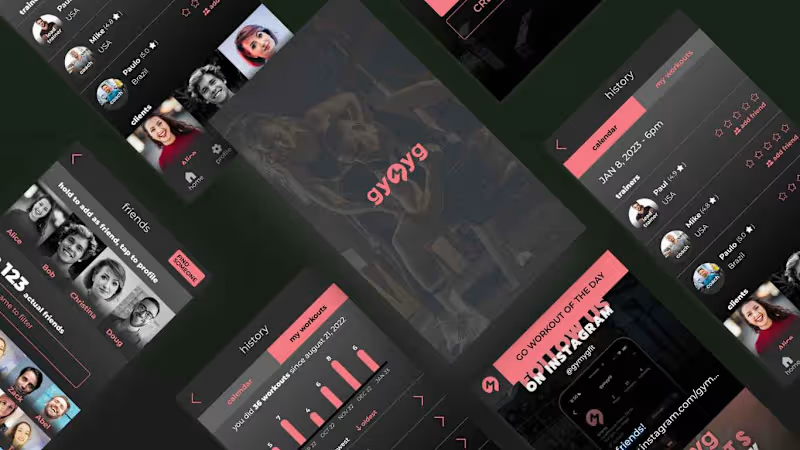
GYMYG — Virtual Fitness Platform California, USA · 12 Months · 7-Person Team The Problem The home fitness market exploded but the tech never caught up. Existing solutions were either pre-recorded content with no real interaction, or basic video calls with no fitness intelligence built in. GYMYG needed something that didn't exist yet — a platform where certified trainers and clients could train together in real time, with the intelligence to match them, program for them, and keep them accountable long after the first session. What We Built A complete virtual fitness ecosystem — two separate applications for trainers and clients, coordinated through a single backend, with an admin layer running everything underneath. Sessions run over WebRTC with adaptive bitrate streaming, so video quality adjusts automatically based on connection strength without dropping the call. TURN/STUN resilience means sessions stay live even on difficult networks. In 50,000+ sessions delivered, the failure rate never crossed 1%. The AI layer does the work that makes GYMYG more than just a video call. Programming is calibrated to each user's goals and adherence patterns — if someone keeps skipping leg day, the system knows. Biometric and session telemetry track safe progression and flag recovery needs before they become injuries. Trainer-client matching uses availability, specialty, and historical satisfaction signals — not just whoever's online. Community features — live group classes, asynchronous content, and moderated chat — were built in from day one because retention data is clear: people who train alone quit. People who train in community don't. Technical Architecture Real-time sessions: WebRTC with adaptive bitrate streaming + TURN/STUN resilience Backend: Node.js services layer handling real-time state, scheduling, and payments Database: MongoDB with rigorously designed schemas and TTL-based event retention Infrastructure: AWS with autoscaling, managed queues, and full-stack observability — metrics, logs, traces Security: Tokenized access, scoped permissions, encrypted media signaling throughout Stack: React Native · Node.js · WebRTC · MongoDB · AWS Results 50,000+ live sessions delivered 95% customer satisfaction across rolling quarters Sub-1% session failure rate Improved 90-day retention driven by social features and AI-personalised programming First live fitness app to offer real-time trainer-client interaction at this scale Successfully launched into the US fitness market in 12 months What This Proves Real-time platforms at scale aren't just a backend problem. They're an architecture problem. The decisions made in month one — how sessions are handled, how data is structured, how the AI layer sits inside the product — are what determine whether you hit 50,000 sessions or fall apart at 500. GYMYG was built to handle the former from day one.
0
191
Message
2
Vince Swu
pro
Speaker-Aware AI Voice Assistant Development
2
6
Message
0
Aldrin Caballero
I worked there as a React Native engineer for about 1.5 years, focused primarily on the mobile experience for long-form audio and editorial content. My work centered on content delivery, playback reliability, and offline support — including designing a caching layer that balanced storage limits with user expectations (e.g., partial downloads, smart eviction, and content freshness). I also collaborated closely with backend and product teams to align CMS structure with how content is consumed in-app.
0
92
Message
3
Florencio Rosales
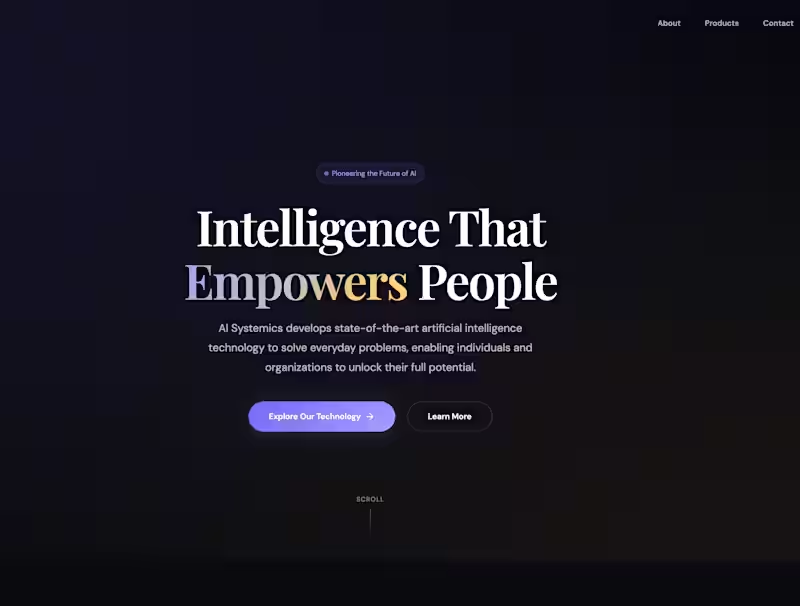
AI-Powered Algorithmic Trading Platform — AI Systemics Built core technology infrastructure for AI Systemics — an AI company developing intelligent solutions that bring institutional-grade capabilities to everyday users. Primary focus on their flagship product, Quanntick™, an AI-powered algorithmic trading platform that brings institutional-level trading to individual investors. Developed the machine learning pipeline powering real-time market analysis and signal generation — processing live CME Group licensed market data, running predictive models, and executing automated trading strategies on futures markets with precision and speed. Built the performance tracking dashboard giving users transparent visibility into trade execution, strategy performance, and portfolio metrics in real-time.
1
3
368
Message
1
Facundo Cappella
max
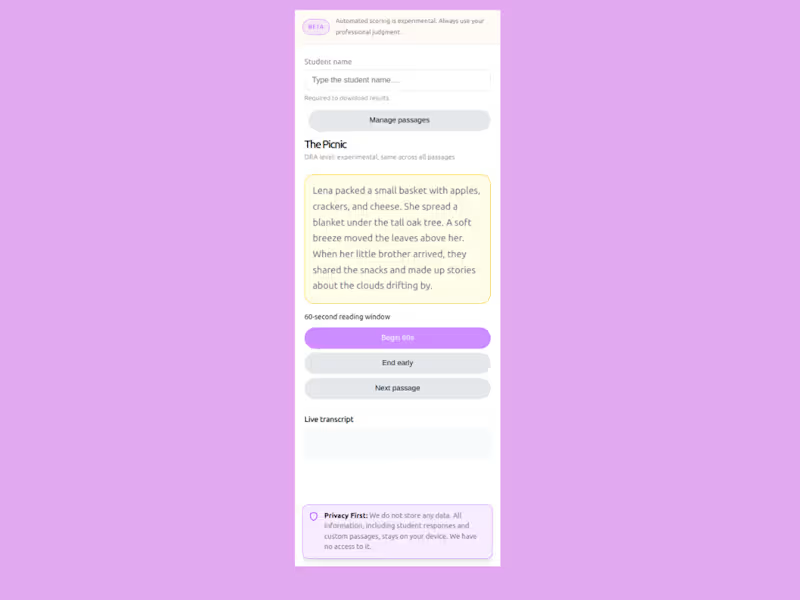
Development of DRA Assessment Web Application
1
11
Message
1
Jagwinder Singh
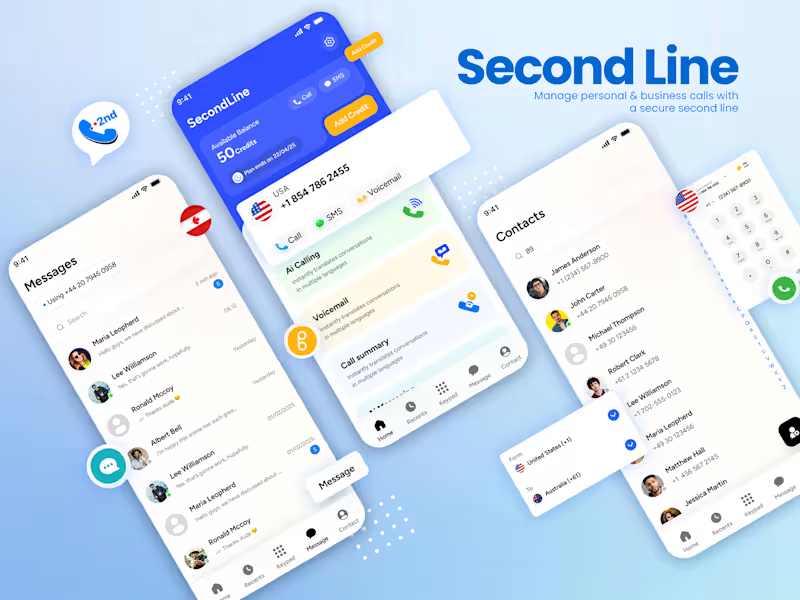
Second line: 2nd Phone Number https://apps.apple.com/us/app/second-line-2nd-phone-number/id1645238377
1
175
Message
0
Rishabh Chopra
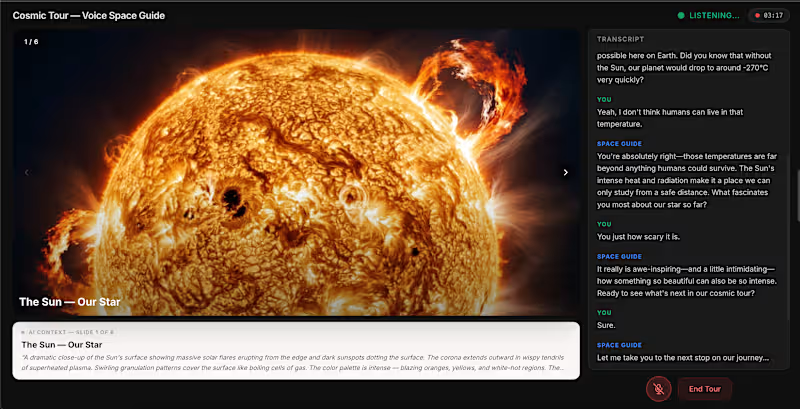
AI Learning Tools - Real-Time Voice & Video Generation
0
6
Message
0
Abhishek Kumar
pro
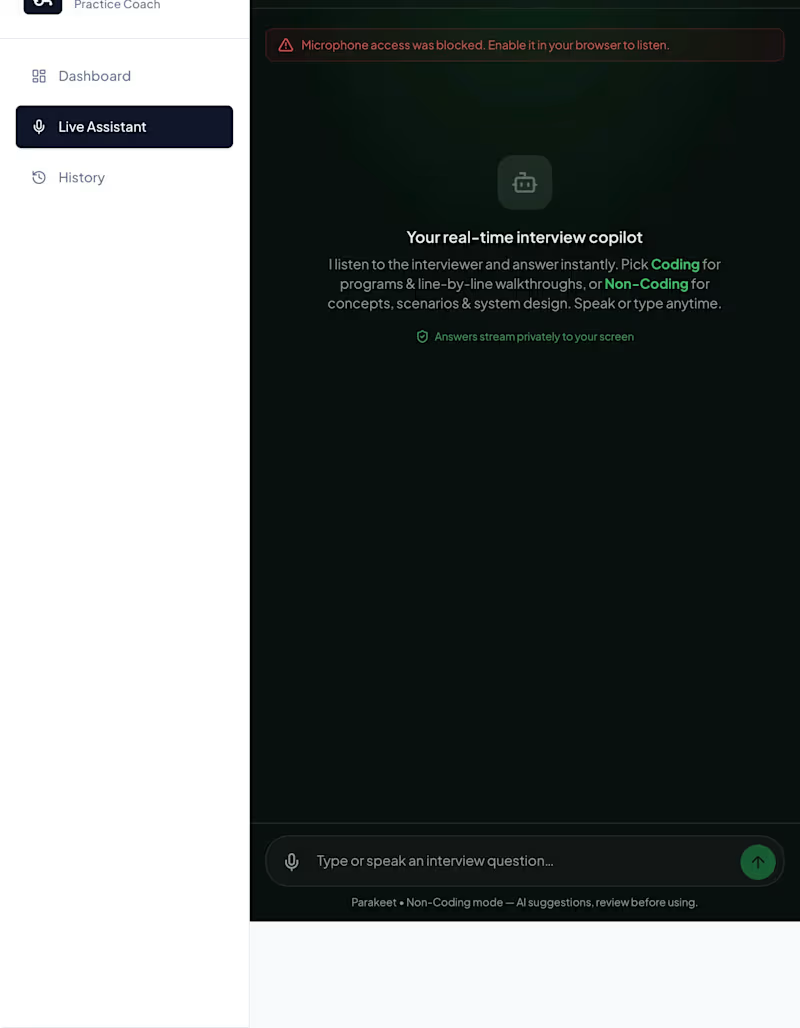
Mock INTERVIEW ASSISTANT
0
88
Message
0
Ravi Gorani
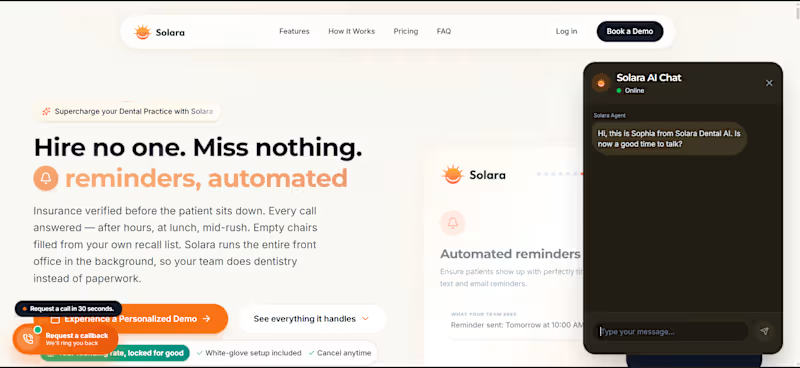
Solara AI is an end-to-end voicebot and web chatbot for dental practices (Live Demo: https://solara.supermia.ai/). Built using LiveKit SIP, OpenAI GPT-4o, ElevenLabs, and FastAPI, it handles inbound/outbound phone calls and website chat. It answers patient queries, checks real-time calendar availability, and books appointments on Google Calendar. Featuring noise cancellation and WebSockets, it provides sub-second voice latency and natural conversation flows to automate dental clinic scheduling 24/7.
0
99
Explore projects