Projects using SEO PowerSuite in VaranasiProjects using SEO PowerSuite in VaranasiThe best SEO company in NYC won’t win AI search with backlinks alone.
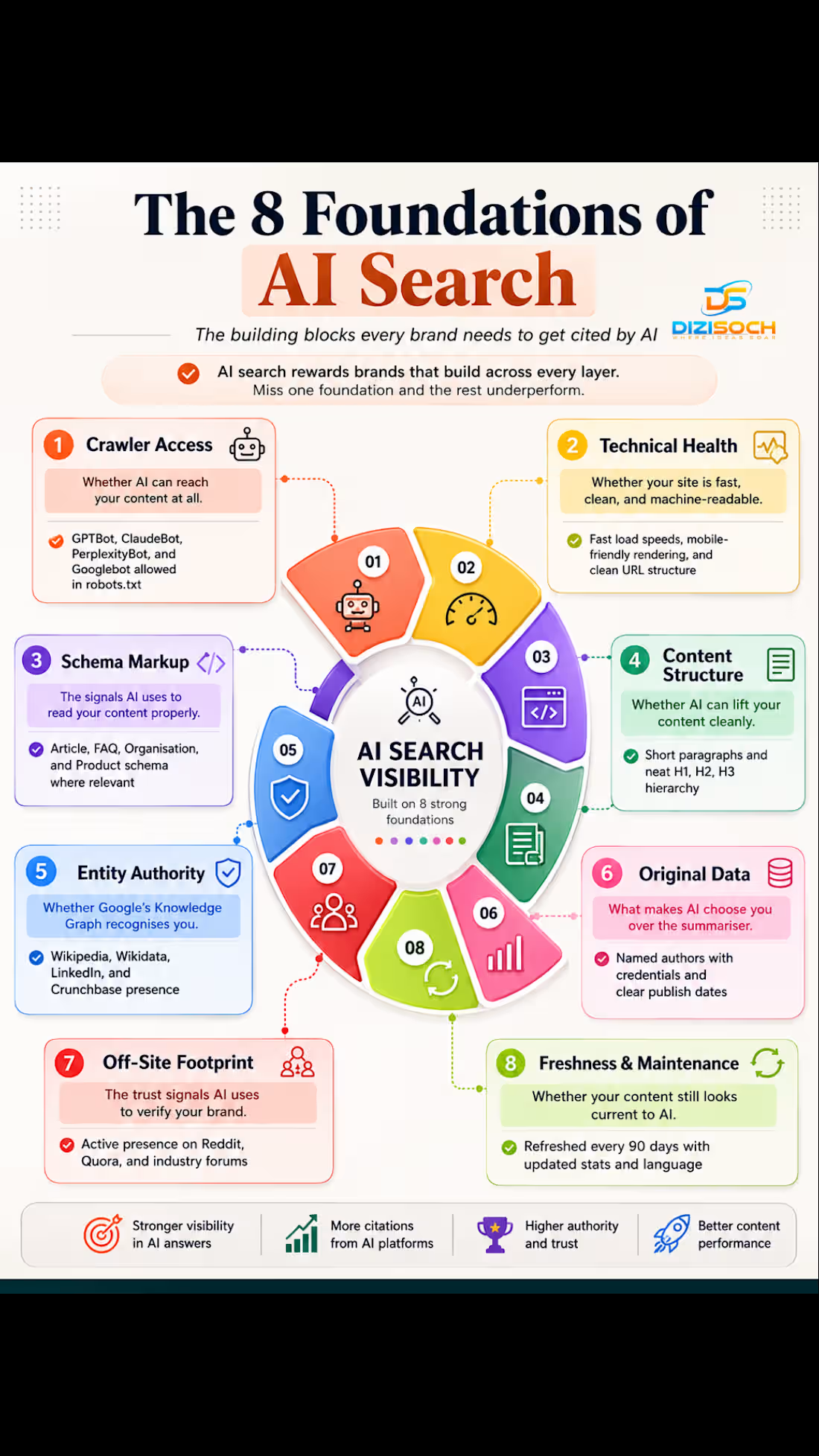
AI visibility is built on 8 foundations and missing just one can weaken everything above it.
Here’s what matters:
Crawler Access
If AI crawlers can’t reach your content, they can’t cite it.
Technical Health
Fast, clean, mobile-friendly pages make your content easier for machines to process.
Schema Markup
Structured data helps AI understand what your pages, products, organizations, and content actually represent.
Content Structure
Clear H1s, H2s, H3s, short paragraphs, and answer-first sections make information easier to extract.
Entity Authority
AI needs to understand that your brand is a real, recognizable entity — not just another website.
Original Data
Unique research, statistics, expert insights, and named authors give AI something worth citing.
Off-Site Footprint
Reddit, Quora, industry publications, reviews, and other third-party sources can strengthen the signals around your brand.
Freshness & Maintenance
Outdated content loses relevance. Your strongest pages need regular updates with current information.
The problem is that most businesses optimize only one or two of these.
They improve rankings.
Publish more blogs.
Build backlinks.
Then wonder why their competitors appear in ChatGPT, Gemini, or Perplexity.
The reality?
AI search rewards the entire ecosystem around your brand.
That means SEO is no longer just:
Keywords → Rankings → Traffic.
It is becoming:
Technical foundation → Structured content → Entity authority → Original information → Off-site trust → AI citations → Business visibility.
That’s the shift a best digital marketing company in NYC needs to understand.
You don't need to “hack” AI search.
You need to build a brand that AI can crawl, understand, verify, trust, and cite.
Which of these 8 foundations is weakest on your website right now? The best SEO company in NYC can’t use one AI SEO strategy and expect ChatGPT, Claude, and Gemini to respond the same way.
Here’s the proof:
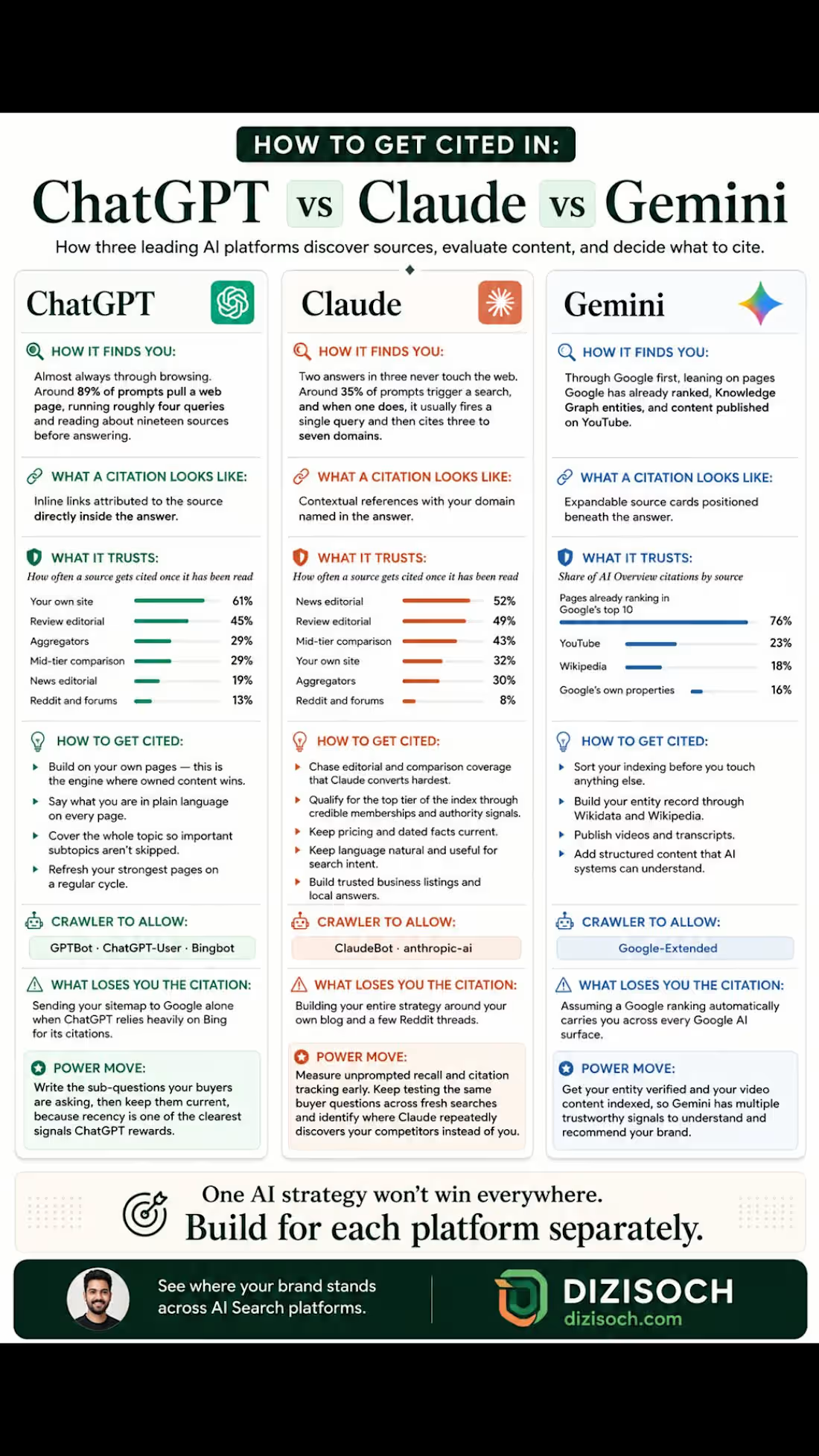
ChatGPT, Claude, and Gemini discover and evaluate sources differently.
ChatGPT can rely heavily on web browsing and inline citations.
Claude tends to surface contextual references and authoritative editorial sources.
Gemini leans heavily on Google’s ecosystem, Knowledge Graph entities, and content already performing in Google.
So why are businesses using the same SEO playbook for all three?
That’s the problem.
AI search isn’t one search engine.
Each platform has its own:
→ Source preferences
→ Citation format
→ Trust signals
→ Crawling behavior
→ Optimization opportunities
For example, optimizing for Gemini means strengthening your Google presence, entity signals, structured content, and video ecosystem.
Optimizing for ChatGPT requires making your content easy to discover, understand, and cite.
And Claude rewards strong editorial authority, credible comparisons, fresh information, and well-supported content.
The biggest mistake?
Treating AI visibility like traditional SEO.
You can rank well on Google and still be invisible inside ChatGPT.
You can get cited by ChatGPT and barely appear in Gemini.
And your competitor can dominate one platform while you're focusing entirely on another.
The solution is simple:
Stop building one AI strategy. Build platform-specific visibility.
Create content around real buyer questions.
Build strong entities and third-party authority.
Keep information fresh.
Make your content easy to extract and understand.
Publish across the ecosystems each AI platform trusts.
Then track where your brand is actually being mentioned and cited.
That’s what modern SEO looks like.
And that’s what a best digital marketing company in NYC should be thinking about beyond traditional Google rankings.
One AI strategy won’t win everywhere.
Build for each platform separately.
Which AI platform currently sends you the most visibility: ChatGPT, Claude, or Gemini?
#dizisoch I Stopped Using Claude Like A Chatbot. Everything Changed.
For months, I thought AI was just another productivity tool.
I was wrong.
Most people open Claude...
Ask one question...
Get one answer...
Close the tab.
Then they wonder why AI isn't changing their business.
A few weeks ago, I stopped treating Claude like a chatbot.
I started treating it like an employee.
One that could think, organize, write, analyze, brainstorm, summarize, and even challenge my ideas.
That single mindset shift completely changed how I work.
Now Claude helps me:
Plan my day before I start working.
Write proposals in minutes.
Turn meeting notes into action plans.
Generate LinkedIn content.
Analyze business decisions.
Reply to clients faster.
Build SOPs.
Even spot bottlenecks I would've missed.
The biggest mistake businesses make with AI isn't choosing the wrong tool.
It's asking AI random questions instead of building repeatable workflows.
That's why some teams save 10 hours a week...
While others barely save 10 minutes.
The businesses growing the fastest in 2026 aren't replacing people with AI.
They're eliminating repetitive work so people can focus on decisions that actually grow the business.
Whether you're running a startup, searching for the best digital marketing company in NYC, working with the best SEO company in NYC, or simply trying to scale smarter, AI workflows are quickly becoming a competitive advantage—not a nice-to-have.
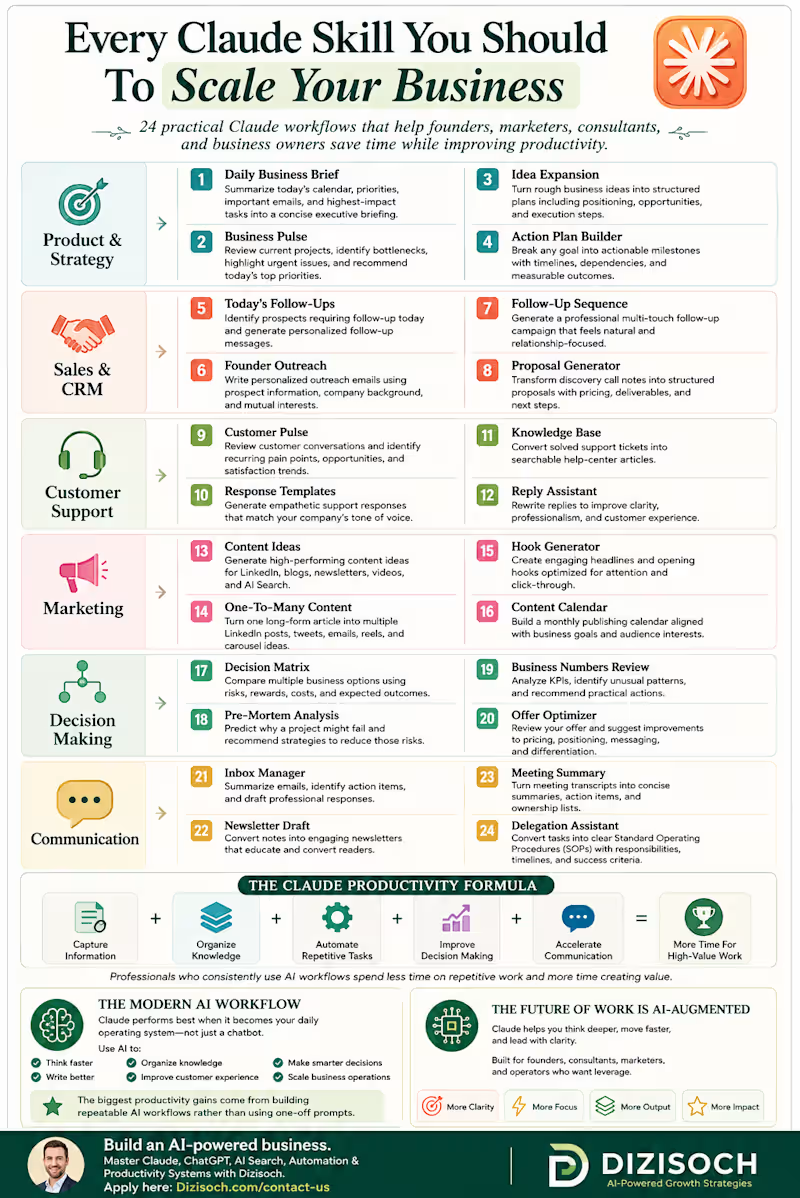
The infographic above contains 24 Claude workflows I believe every founder, marketer, consultant, and business owner should steal.
You don't need all 24.
Start with one.
Turn it into a habit.
Then build another.
Small systems compound into massive productivity.
The businesses that win in the next five years won't necessarily have the biggest teams.
They'll have the smartest systems.
What AI workflow has saved you the most time?
I'd love to add it to my list.