Freelancers using Bing Ads in Varanasi
Freelancers using Bing Ads in Varanasi
Sign Up
Post a job
Sign Up
Log In
Filters
2
Projects
People
Sarvesh yadav
Varanasi, India
We Don’t just rank Websites — we build Digital Foundations
8
Followers
Follow
Message
We Don’t just rank Websites — we build Digital Foundations
0
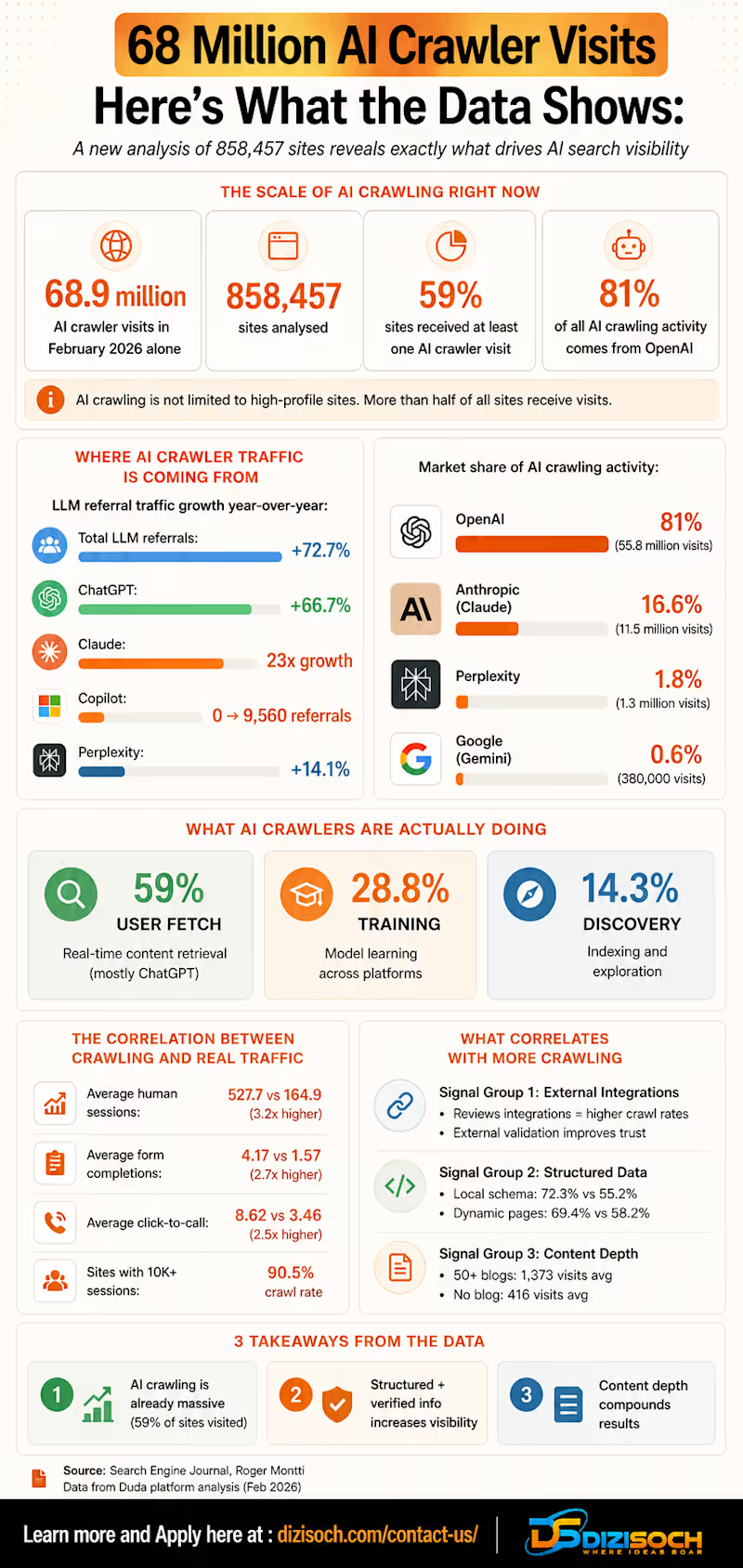
68 million visits. Silent. Invisible. But they’re already reshaping the internet. And almost no one is talking about it. → AI crawlers are everywhere now. The data is brutal: • 59% of websites have already been visited by AI • 81% of crawling comes from a single player • +72% growth in LLM referral traffic YoY This isn’t a trend. It’s a shift. Here’s the real insight: AI doesn’t browse like humans. It extracts. It learns. It decides your visibility… without you. Today, when you create content, you’re writing for 2 audiences: Humans Machines And the second one is taking over. What the data actually shows: → 59% of AI activity = real-time content fetching → 28.8% = model training → 14.3% = discovery Which means: Your content is either used… or ignored. There’s no middle ground. But here’s what really drives AI visibility: External integrations → The more connected you are, the more “trusted” you become Structured data → Schema + dynamic pages = immediate boost Content depth → 50+ articles = 3x more traffic vs no blog Now here’s the shift smart companies are already making: They’re not just hiring the best digital marketing company in New York USA anymore. They’re looking for something else: → The best AI SEO company in New York USA Because visibility is no longer just about ranking pages… It’s about being understood by machines. And here’s what most people are missing: The most crawled websites are also the best-performing businesses. • 3.2x more human sessions • 2.7x more conversions • 2.5x more actions (calls, forms, etc.) AI doesn’t replace your traffic. It multiplies it. Simple conclusion: If you’re still optimizing only for Google… You’re already behind. The new SEO isn’t “Search Engine Optimization.” It’s: → AI Visibility Optimization 3 rules to remember: An AI reads your content before a human does Structure matters more than style Depth beats surface-level content The internet is changing. Not in 5 years. Now. The real question isn’t: “How do I rank on Google?” It’s: “Do AI systems understand my content… and want to surface it?” Those who adapt early will dominate. The rest will disappear… without even realizing why. Are you building for humans only… or for AI too?
0
25
0
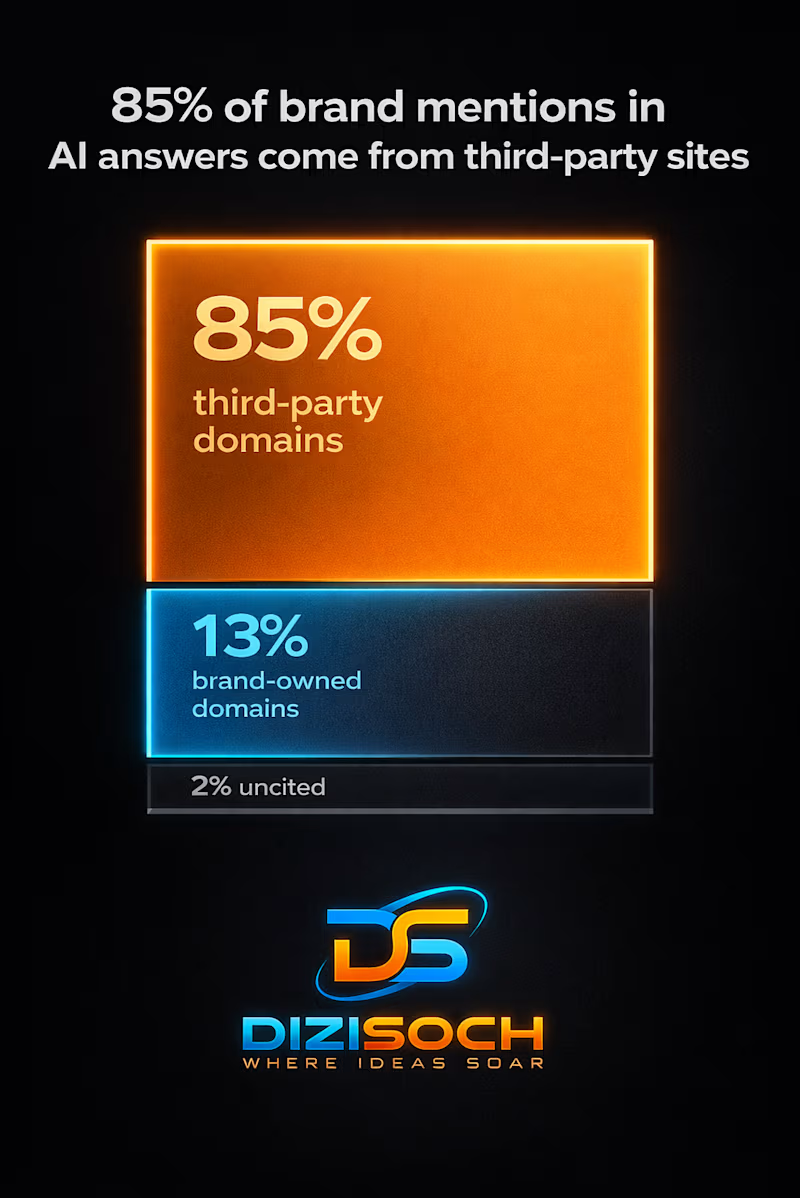
Most brands are playing the wrong game… and they don’t even know it. Here’s something that might change how you think about growth: The majority of visibility in AI-driven answers doesn’t come from your website. It comes from everywhere else. I recently analysed how brands are being surfaced inside AI responses — and the pattern was clear. A brand I was reviewing had: A well-designed website Decent SEO Active social media Yet… zero visibility when people asked AI tools for recommendations. Why? Because their presence was limited to their own domain. Here’s the real problem: Most businesses are obsessed with ranking their website… But AI doesn’t think like Google alone anymore. It pulls signals from: Articles Mentions Discussions Third-party platforms So even if your site is perfect… you’re invisible where it matters most. The solution? Shift from “website SEO” → to “ecosystem visibility” Start focusing on: Getting mentioned on relevant platforms Building authority outside your website Creating content that lives beyond your domain That’s how you get picked up in AI answers. Right now, most brands are missing this shift. Which means opportunity for the ones who act early. If you want, I can break this down and show you exactly how to position your brand so AI tools start recommending you. Comment below if you have any question.
0
27
0
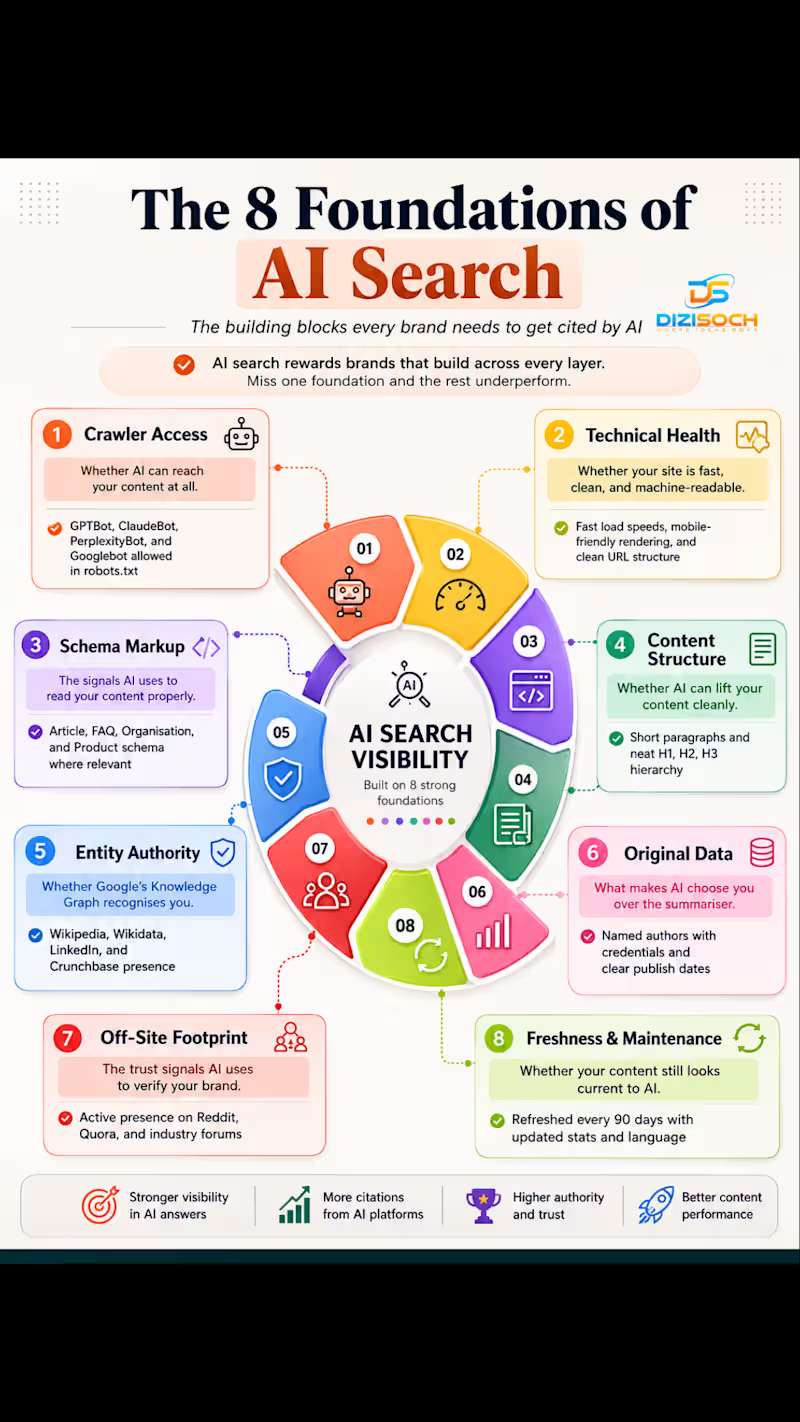
The best SEO company in NYC won’t win AI search with backlinks alone. AI visibility is built on 8 foundations and missing just one can weaken everything above it. Here’s what matters: Crawler Access If AI crawlers can’t reach your content, they can’t cite it. Technical Health Fast, clean, mobile-friendly pages make your content easier for machines to process. Schema Markup Structured data helps AI understand what your pages, products, organizations, and content actually represent. Content Structure Clear H1s, H2s, H3s, short paragraphs, and answer-first sections make information easier to extract. Entity Authority AI needs to understand that your brand is a real, recognizable entity — not just another website. Original Data Unique research, statistics, expert insights, and named authors give AI something worth citing. Off-Site Footprint Reddit, Quora, industry publications, reviews, and other third-party sources can strengthen the signals around your brand. Freshness & Maintenance Outdated content loses relevance. Your strongest pages need regular updates with current information. The problem is that most businesses optimize only one or two of these. They improve rankings. Publish more blogs. Build backlinks. Then wonder why their competitors appear in ChatGPT, Gemini, or Perplexity. The reality? AI search rewards the entire ecosystem around your brand. That means SEO is no longer just: Keywords → Rankings → Traffic. It is becoming: Technical foundation → Structured content → Entity authority → Original information → Off-site trust → AI citations → Business visibility. That’s the shift a best digital marketing company in NYC needs to understand. You don't need to “hack” AI search. You need to build a brand that AI can crawl, understand, verify, trust, and cite. Which of these 8 foundations is weakest on your website right now?
0
37
0
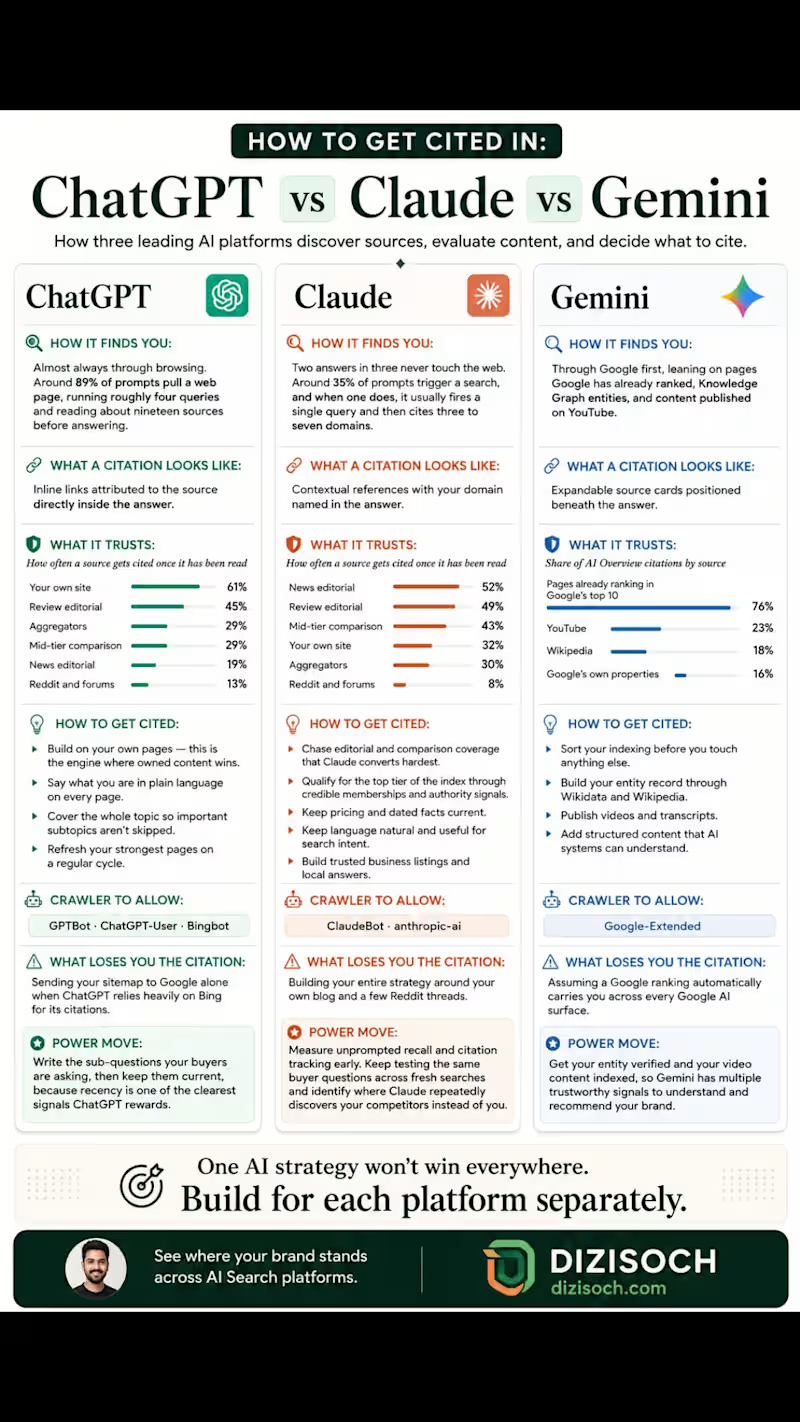
The best SEO company in NYC can’t use one AI SEO strategy and expect ChatGPT, Claude, and Gemini to respond the same way. Here’s the proof: ChatGPT, Claude, and Gemini discover and evaluate sources differently. ChatGPT can rely heavily on web browsing and inline citations. Claude tends to surface contextual references and authoritative editorial sources. Gemini leans heavily on Google’s ecosystem, Knowledge Graph entities, and content already performing in Google. So why are businesses using the same SEO playbook for all three? That’s the problem. AI search isn’t one search engine. Each platform has its own: → Source preferences → Citation format → Trust signals → Crawling behavior → Optimization opportunities For example, optimizing for Gemini means strengthening your Google presence, entity signals, structured content, and video ecosystem. Optimizing for ChatGPT requires making your content easy to discover, understand, and cite. And Claude rewards strong editorial authority, credible comparisons, fresh information, and well-supported content. The biggest mistake? Treating AI visibility like traditional SEO. You can rank well on Google and still be invisible inside ChatGPT. You can get cited by ChatGPT and barely appear in Gemini. And your competitor can dominate one platform while you're focusing entirely on another. The solution is simple: Stop building one AI strategy. Build platform-specific visibility. Create content around real buyer questions. Build strong entities and third-party authority. Keep information fresh. Make your content easy to extract and understand. Publish across the ecosystems each AI platform trusts. Then track where your brand is actually being mentioned and cited. That’s what modern SEO looks like. And that’s what a best digital marketing company in NYC should be thinking about beyond traditional Google rankings. One AI strategy won’t win everywhere. Build for each platform separately. Which AI platform currently sends you the most visibility: ChatGPT, Claude, or Gemini? #dizisoch
0
21
Bing Ads
(2)
Follow
Message
Explore people