Freelance AI Developers in Romford
Sign Up
Post a job
Sign Up
Log In
Filters
2
Projects
People
Ali Shan
pro
London, UK
Full-Stack & AI Dev | TypeScript, Next.js, React, Node
$25k+
Earned
5x
Hired
5.0
Rating
83
Followers
Follow
Message
Full-Stack & AI Dev | TypeScript, Next.js, React, Node
0
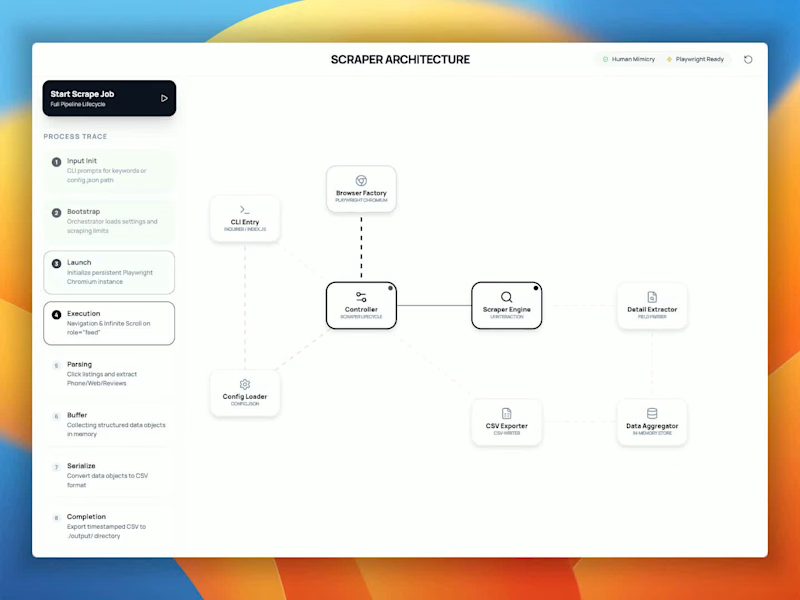
Development of Google Maps Data Scraper
0
18
17
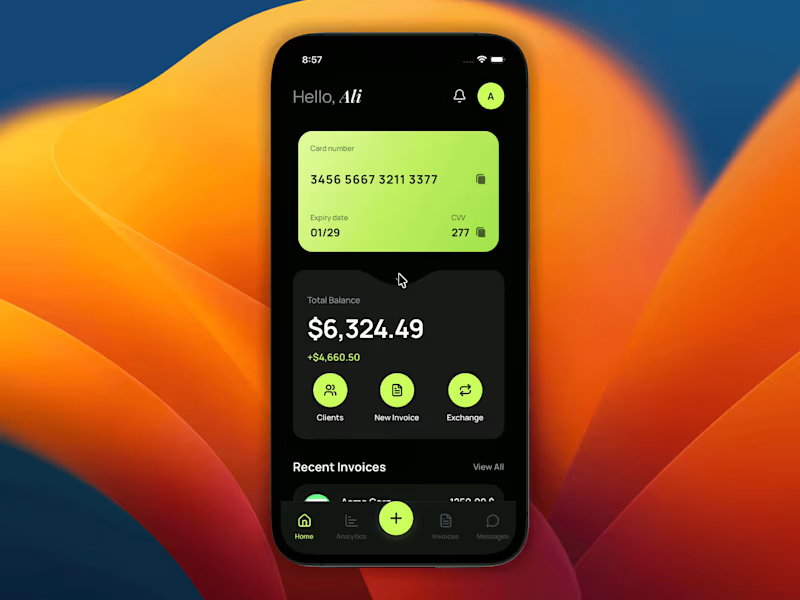
Just wrapped up something for the Tempo Labs Challenge. Pivvot, a simple invoice management app for freelancers (built with Expo + React Native). But the core flows finally feel right — creating clients, sending invoices, tracking history. Designing it for the kind of freelancers (like me) who just want an app that works without being bloated. #Scratch Your Own Itch Tempo Link: Link (https://dca5595f-e944-4bdf-ac2d-5bcbdf7ca4de.canvases.tempo.build/)LinkedIn: Link (https://www.linkedin.com/posts/ali-shan-218675282_just-wrapped-up-something-for-the-tempo-labs-activity-7404758456433553408-E1y4?utm_source=social_share_send&utm_medium=member_desktop_web&rcm=ACoAAETMQfQBkqosZMhoadBU6K00EWk9kPBHb6A)Twitter: Link (https://x.com/SaifunShan/status/1998992714688508346)
1
17
583
2
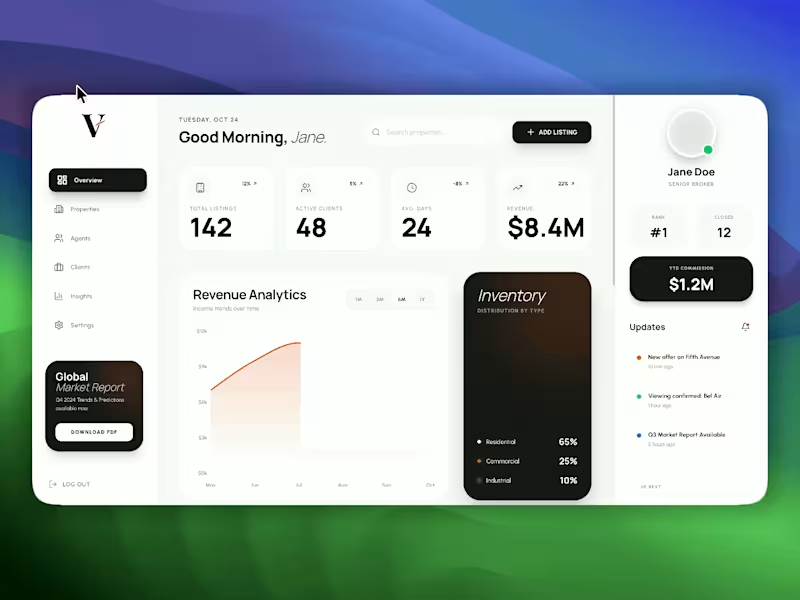
Vantage Real Estate Intelligence Platform
2
24
0
ChiroChat AI Chatbot Development
0
39
AI Developer
(7)
Follow
Message
Moyo Weke
pro
London, UK
Frontend Dev & Web Designer | Framer, Figma, Decks
$1k+
Earned
2x
Hired
5.0
Rating
12
Followers
Follow
Message
Frontend Dev & Web Designer | Framer, Figma, Decks
0
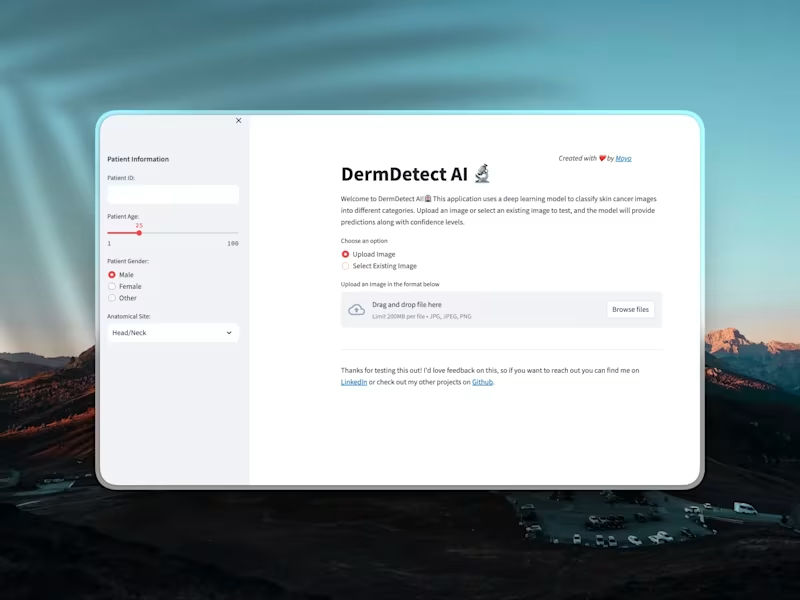
AI-Powered Skin Cancer Classification : Computer Vision
0
6
1
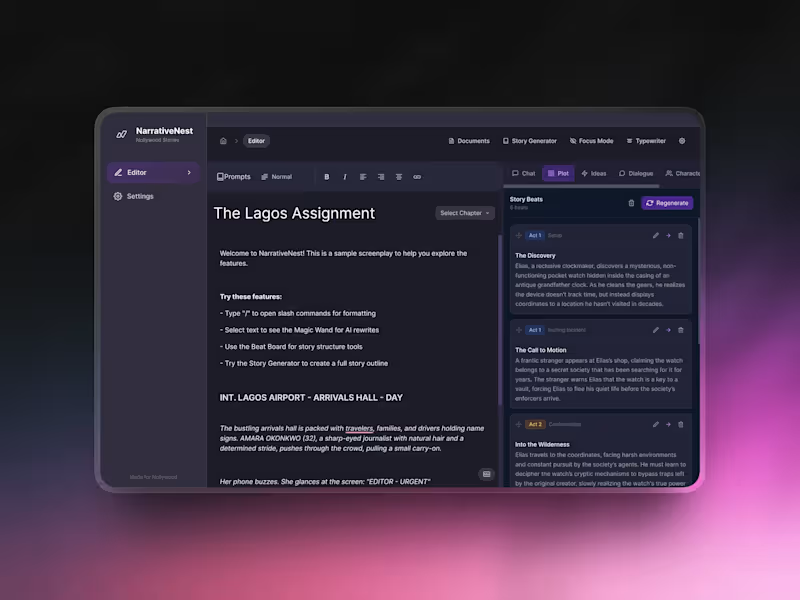
NarrativeNest
1
44
0
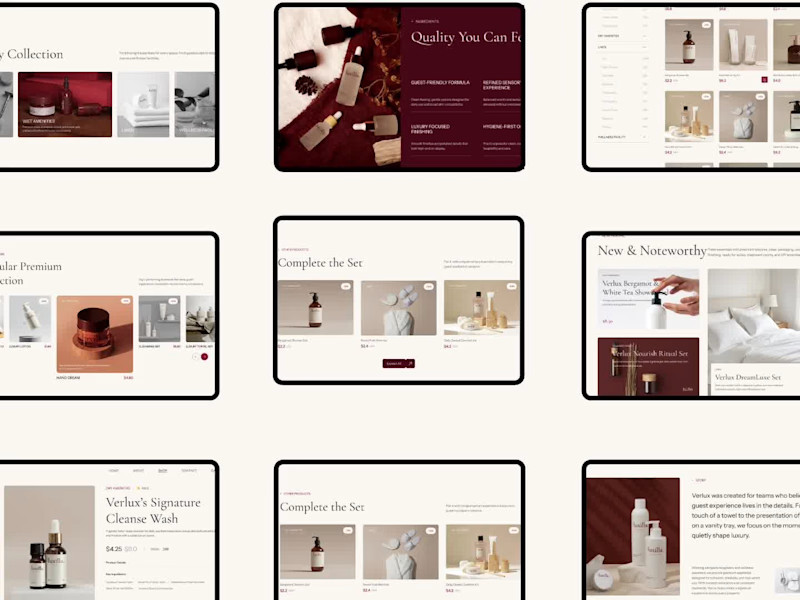
Verlux E-commerce Web Design for Hospitality
0
4
0
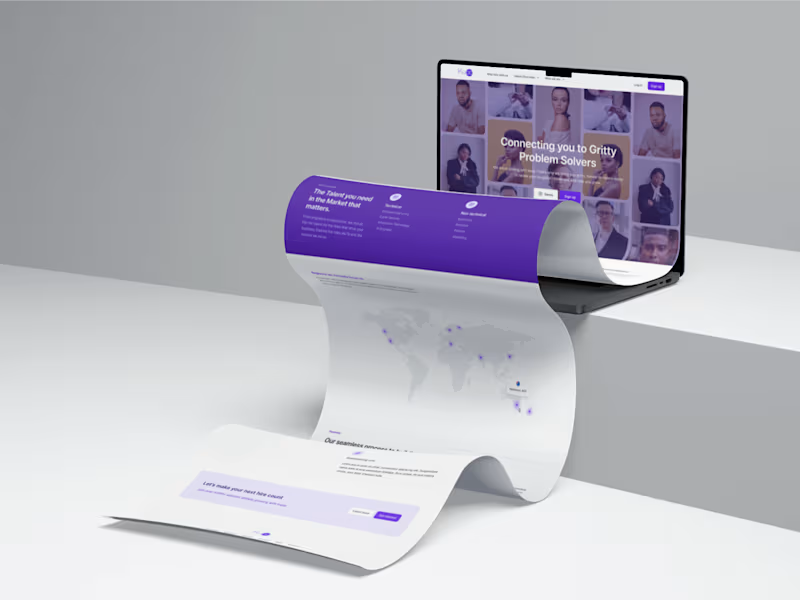
Kupa Global Website Redesign
0
41
AI Developer
(2)
Follow
Message
Goodspeed Studio
pro
London, UK
Website & Agent Experience Design | Framer Enterprise Expert
$1k+
Earned
2x
Hired
5.0
Rating
31
Followers
expert
expert
+1
Follow
Message
Website & Agent Experience Design | Framer Enterprise Expert
0
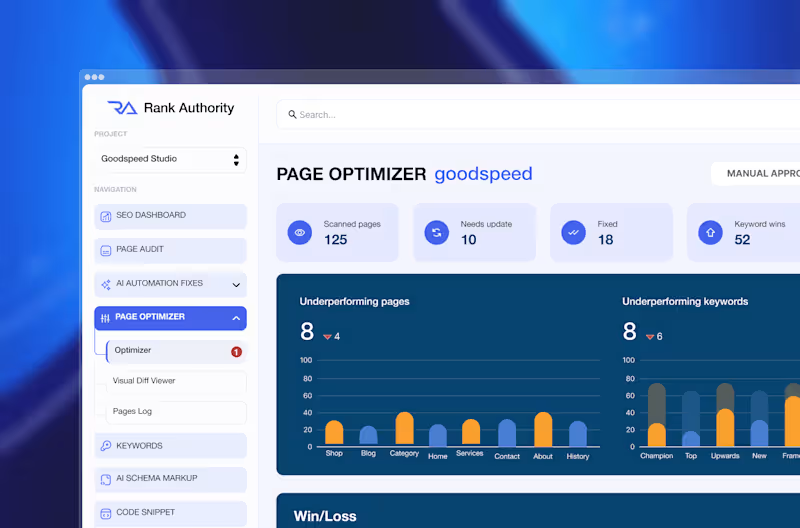
Rank Authority: AI SEO Platform Across 8 LLMs
0
7
0
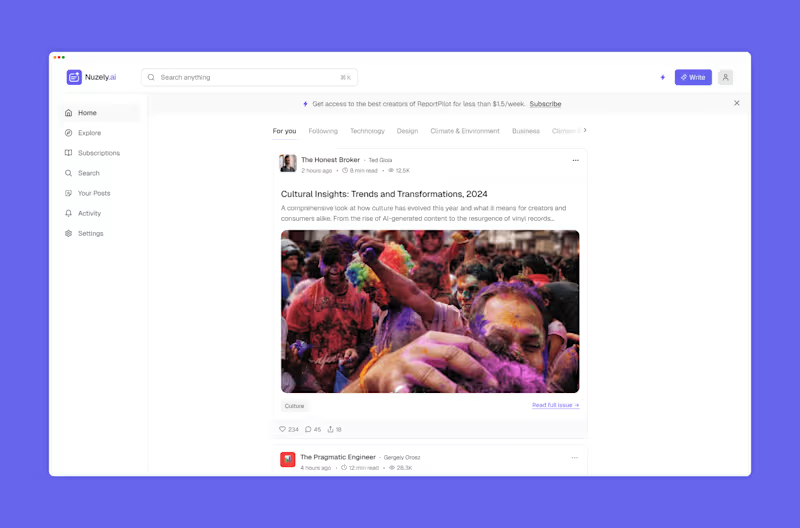
Nuzely: AI Newsletter SaaS, Prototype to Live
0
9
0
ProMagic: 100 Paying Magicians in 3 Months
0
4
0
Pockla: AI Marketing MVP, 1.6M GBP Raised
0
9
AI Developer
(9)
Follow
Message
Meddy ㅤ
London, UK
Creative code → Apps ✦ Research ✦ Events
$5k+
Earned
1x
Hired
103
Followers
Expert
Expert
Follow
Message
Creative code → Apps ✦ Research ✦ Events

0
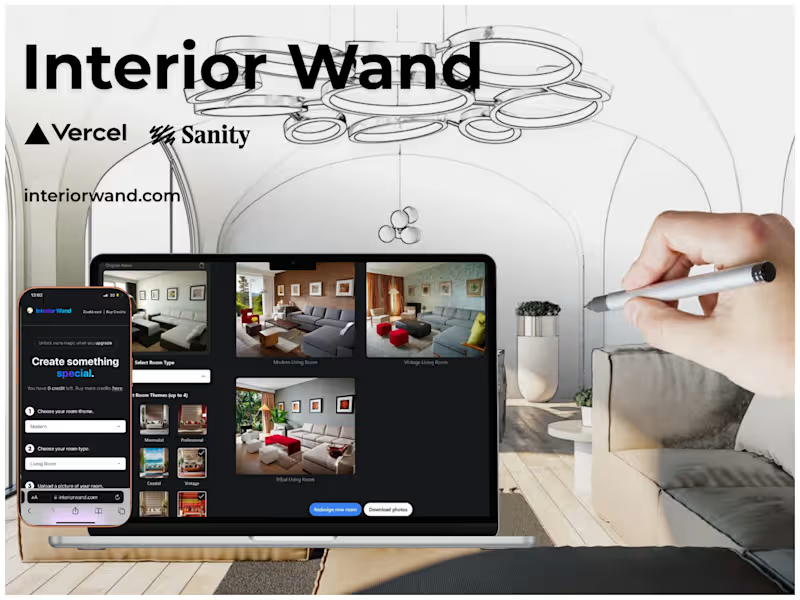
Development of Interior Wand AI Tool 2022
0
8
0
Memento Analytics Platform Development
0
29
7
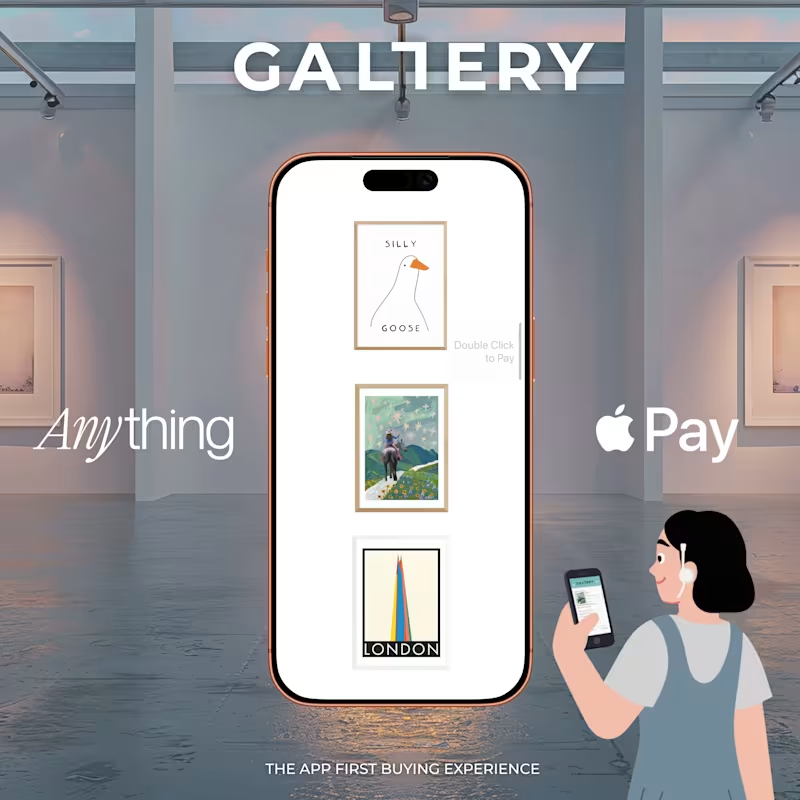
I built a way to sell physical products in an app that feels more like a gallery than a shop. 📱 What does it do? It’s a remix-able template for selling physical products inside an app. You browse through pieces in a horizontal carousel, then scroll vertically through a product to explore it through multiple images before buying instantly with Apple Pay. I designed it for galleries and artists first, but it works for anyone selling physical products creators, brands, influencers anything that needs to feel a bit more premium. Why I built this: I kept thinking about how intentional artwork is presented in physical spaces, and how transactional it feels online. This is an attempt to close that gap and making purchases feel as frictionless as possible. Another bonus to why people will use this app is that apple does not tax physical good transactions, so sellers can keep more of what they earn. 🎉 The template remix-potential? Works really well because users can swap in any product and it simply works! Art, jewellery, vinyls, collectibles, anything physical allowed on the app store. This was fun I plan on refining and making more templates so I would appreciate any comments and feedback Build Preview 👀 (https://www.anything.com/mobile-preview/68217499-f987-4843-8bcb-f7864c536abc)Build Link 🔗 (https://www.anything.com/build/aCF0mfmHSEOLy_eGTFNqvA?v=sBZM6bBFQ0CWHu4QlFbZpA)
7
297
44
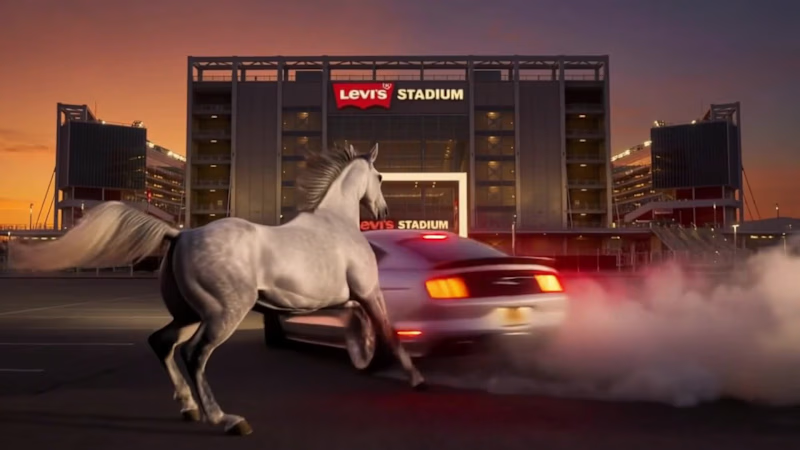
To mark 122 years of Ford Motors, this Super Bowl advertisement speaks directly to multi-generational audiences who value heritage, perseverance, and the powerful connection between sound and emotion. The story of the horse and carriage draws a parallel between the original Mustang and its modern counterparts, building towards anticipation before the unveiling of the new 2026 Mustang in Spring. The Location: Santa Clara, California played a huge role in the story as this year's Super Bowl is being hosted at the at Levi's Stadium. This made prompting the clothing easier, you'll notice each actor is wearing Denim. 'Horses dont Stop, they keep going' Brand: Mustang SFX: Morphic Images: Morphic Scripting: Morphic Voice: Eleven Labs Final: Premier Pro Each video was generated and sequenced entirely in Morphic *sound on*
24
44
2K
AI Developer
(2)
Follow
Message
Ashish Sandhu
London, UK
Fractional CTO / AI Specialist Award Winning AI Engineer
$5k+
Earned
1x
Hired
8
Followers
Follow
Message
Fractional CTO / AI Specialist Award Winning AI Engineer
3
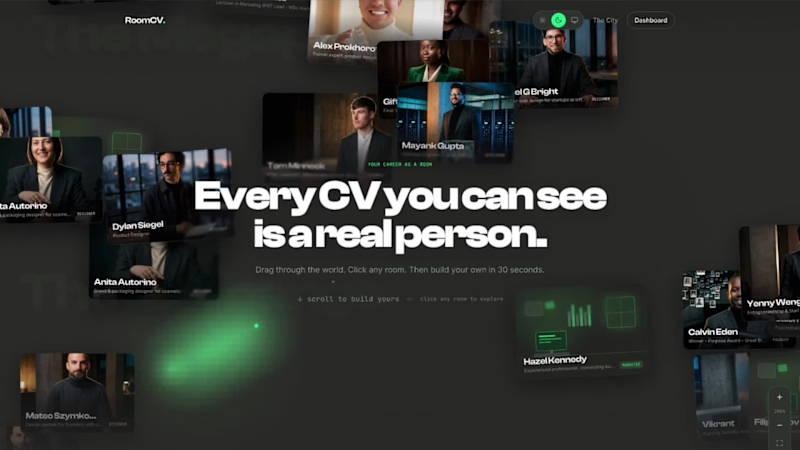
I've spent the last few days building something I genuinely wish existed years ago. When I was job hunting, I had a PDF. A white rectangle with my name, dates, and bullet points. The same format invented in 1482. I was competing with thousands of people who had the exact same white rectangle. I'm a builder. I ship products. I've worked with real companies, shipped real things, have real skills. None of that showed in a CV. It couldn't. A PDF wasn't built to show it. And building a personal website? That's a project in itself. Design it, code it, host it, maintain it. Most people never do. So their career stays a white rectangle forever. So I built RoomCV. (https://roomcv.figma.site/) You don't build anything. You paste your LinkedIn URL, your Contra profile, or upload your CV. In under 60 seconds, your career has a home on the internet. A real one. With your name on the door. Not a template you fill in. Not a prettier PDF. A room that reads your data and builds itself with all your pretty links. And then there are the portraits. The AI photoshoot is unlike anything else in this space. It runs a 3-stage pipeline (thanks to Figma Weave): Stage 1 - A casting director model analyses your reference photo and writes a precise physical description. Hair, skin tone, bone structure, build. This becomes a consistency anchor so every portrait is recognisably you. Stage 2 - A photography director model reads your actual CV. Your job title, your company, your career highlights, your personal note. It writes a bespoke scene brief the way a Vogue photo director would. A founder gets a quiet boardroom at night with a city skyline. A developer gets a dark server room with terminal green glow. A designer gets mood boards and soft daylight. Stage 3 - The image model takes that bespoke brief, your reference photo, and your character anchor and generates 6 editorial portraits. Hero. At work. Thinking. Off duty. Achievement. Environmental. Every portrait is specific to you. Because the AI read their actual careers before picking up the camera. The room is alive. People can visit your room at its permanent URL. They can leave signed notes in your guestbook. They can react with rockets, fire, or lightbulbs. You can see who's browsing right now, live presence, like a real room. Every visit is counted. The whole city of rooms is browsable and is a directory of real people's careers, each one visually distinct. Three visual themes: Cinematic - moody contrast, 35mm grain, deep editorial shadows. Brutalist - harsh direct light, raw concrete textures, technical glitch aesthetic. Minimal - soft diffused window light, high-key, warm neutrals, conversion-focused. The copywriting changes completely per theme too. Same person, three radically different editorial voices. Wieden+Kennedy wrote none of them — Gemini did, with a prompt that bans every CV cliché and demands specific references to real company names, real project names, real skills. What I used to build it: Figma Make - the entire app. Every component, every interaction, every route. Built in natural language, iterated in real time. Figma Weave - the portrait pipeline visualised as a node-based workflow. The casting director, the photography director, the 6 parallel image generation nodes. The hero background video on the landing page. The logo. Figma MCP - connecting the design token system into the Make build so the three themes stayed consistent with the Figma source of truth. Supabase - backend, auth, KV storage, private portrait bucket, signed URLs, edge functions. Gemini - character extraction, photography direction, copywriting, profile parsing, room generation from raw LinkedIn/Contra/CV data. The numbers that matter: 60 seconds from paste to published room. 6 portraits per person, all unique. 3 complete design systems per room. 0 templates. Every room is generated, not filled in. 1 permanent URL per person. Unlimited visitors, reactions, guestbook notes. Who this is for: Designers who are tired of Behance looking like everyone else's Behance. Developers whose GitHub is invisible to anyone who isn't technical. Founders who have a LinkedIn but not a story. Freelancers on Contra who want their profile to stop at the URL and start in the room. Anyone who has ever felt like their career deserved better than a white rectangle. Yesterday a dev called Andrei pasted his LinkedIn URL. 30 seconds later he had six editorial portraits and a career room that looked like the cover of Wired. He sent me a voice note. He said it was the first time his career had felt like his, and here it is for everyone to try. Try it. Paste whatever you have. LinkedIn URL, Contra URL, raw CV text, PDF. Your room is waiting. roomcv.figma.site (http://roomcv.figma.site)Figma Make: https://www.figma.com/make/3kpbdErsXVZqPSkZS2LdvY/Design-RoomCV-Creatively?t=ZnnNnUei4aE16P6e-1 Figma Weave: https://app.weavy.ai/flow/RK8qIG0eKBpyoJLOg4JgrC Figma Community: https://www.figma.com/community/file/1649649240602428392/roomcv?fuid=1004476920505329686 X: https://x.com/AshishSandhu/status/2067821599223316662 (https://x.com/AshishSandhu/status/2067821599223316662?s=20)https://x.com/AshishSandhu/status/2067824940154269961 Drop your room link in the comments. I want to see every single one. Built for the Figma Config Makeathon. Figma Make + Figma Weave + Figma MCP + Supabase + Gemini. #ConfigMakeathon #Figma #FigmaMake #AI #Portfolio #CareerDesign
2
3
231
0
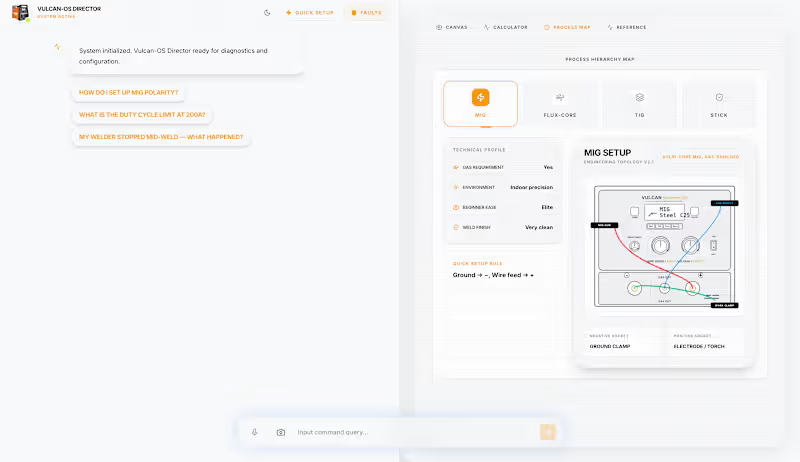
Development of Vulcan-OS: An AI Orchestration Layer
0
10
7
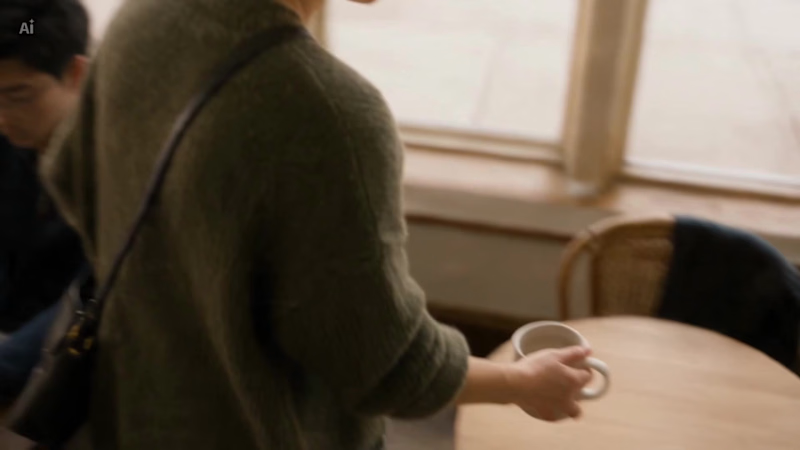
I created THE TABLE because the most uncomfortable human moments deserve to be witnessed without the mercy of a camera cut. We have all seen dramatic cafe encounters on film, but they are usually softened by edits and reaction shots. I wanted to create an experience that traps the audience in a continuous reality, making the viewer feel the tension of a silent conflict unfolding in real time. What if we watched a bizarre fracture between two people in a cozy space, and the camera simply refused to look away? That question became THE TABLE. The Production Workflow I had a vision but no traditional crew. CapCut Video Studio and the Seedance 2.5 model made a complex one-take sequence entirely possible. Prompt-Driven Choreography: I mapped out a 30-second physical space in a single text prompt. Every action, from the walk to the aggressive muffin snatch, was engineered to unfold sequentially. Unbroken Camera Control: To ensure the "one-take" rule was followed, I instructed the AI to use physical camera movements. Seedance 2.5 maintained the spatial consistency flawlessly. The Assembly: The magic of this workflow was the lack of assembly. The final output is a raw, continuous generation with no manual splicing. Platform Feedback Seedance 2.5 brilliantly held the entire world together. When the camera whip-pans back from the street to the interior at the end, Table 1 and Table 2 are exactly where they should be. It felt like directing a steady-cam operator on a live set. One honest piece of feedback: generating timed character interactions in a continuous 30-second shot requires immense trial and error. Optimized rendering costs for long-form visual storytellers would make a meaningful difference, also if specific editing can take place at point notes that will change massive things. Ultimately, Seedance 2.5 helped me protect the awkward silence at the end of the film. X: https://x.com/AshishSandhu/status/2090161080857223462?s=20
4
7
284
8
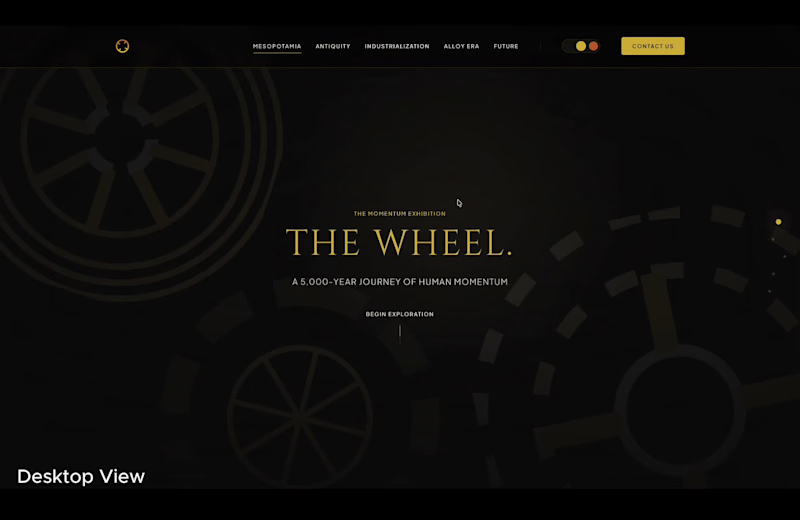
Reinventing the wheel 🛞 for Google. Designed with Google Stitch for all platforms Desktop, Mobile, and Tablets. I’m a engineer and founder with tech experience but not design, and going into this challenge, my real question was simple: Can an AI-native interface builder actually handle deep-time narrative storytelling and high-fidelity, scroll-linked interactions without turning into a complete mess? To stress test the absolute limits of the platform, I didn't feed it an established design, or any files right away. I wanted to see exactly how Stitch thinks, handles design drift, and iterates from scratch. I gave it a massive, conceptually complex prompt: Build a highly cinematic, ultra-polished, deep-time historical timeline mapping the evolution of the wheel, from primitive Mesopotamian stone discs to active, computational morphing hub systems in 2026. How Stitch Fit into the Workflow The streaming generation on the canvas is easily one of the most hypnotic interactions I've seen in a design tool. It genuinely feels like watching a remote design partner building on your screen through AnyDesk. Instead of staring at a loading spinner and waiting for a static layout, I was reacting to a living interface taking shape in real time. Instead of keeping things static, I ended up executing three distinct modes across this project to see how Stitch adapts to different workflow mindsets: I pushed a light but descriptive prompt system to build out a strict, zero-color, high-contrast monochrome design philosophy titled "Liquid Slate." Stitch completely conquered the blank page problem, mapping out an editorial-style landing page with absolute black layouts and deep-etched glass elements. The Codebase Sync via Antigravity (The Engineering Bridge) is where it killed it, To see if this could handle a real-world production loop, I leveraged the new MCP skills. I imported stitch into Antigravity straight from Stitch's HTML native canvas, synced those changes, and published a React Website in Minutes to Netlify which was bug free and ready for a Run. The motion authoring surprised me the most. I didn't have to jump out into a secondary motion app or wrestle with standard transition bugs, the native hover states, custom text blur modules (BlurInText), and smooth continuous wheel rotations were all handled seamlessly on the HTML canvas before exporting the build. New Features I Leaned On Streaming generations to canvas: Watched the entire layout materialize and iterated on components before they were even finished rendering. In-place AI edits via prompts + point-and-click: Controlled fine-grain text styles and layout spacing directly on the artboard. Redesign : Got the same design in 3 colours, just wow. Native motion, hover states, and shaders on HTML canvas: Authored complex scroll-linked component rotations and aesthetics. Antigravity Code Integration via MCP: Ran a perfect, bi-directional round-trip sync between my code editor and the visual design canvas. MCP Export: One-click, zero-friction final production deployment. Feedback on the Platform Google Stitch shifts the entire AI design paradigm because it collapses the classic "describe, wait, judge, re-prompt" delay loop into an interaction that feels like direct manipulation. In-place edits genuinely feel like real design work. Two things I'd love to see in future updates: Option to upload/generate videos: it makes it easier for a designer to have their backdrop beautiful just by adding or generating a video which Stitch can definitely add beautifully. A way to save a specific in-place edit style (like the exact blur, noise, and border-radius of my "Liquid Slate" glass cards) into a recipe that I can reapply to other sections instantly without describing it again. Stitch doesn't feel like an AI platform you have to constantly fight against, it feels like a living, interactive canvas that intuitively understands structural design system logic. Check it out: Live Site: https://contragoogle.netlify.app/ Stitch Project Space: https://stitch.withgoogle.com/projects/13302732653849354465 (https://stitch.withgoogle.com/projects/13302732653849354465)X: https://x.com/AshishSandhu/status/2062413585095995813?s=20
9
8
491
AI Developer
(2)
Follow
Message
Idris Lamina
pro
London, UK
AI Automation & Web Design | n8n · Vapi · Claude API
16
Followers
Follow
Message
AI Automation & Web Design | n8n · Vapi · Claude API
0
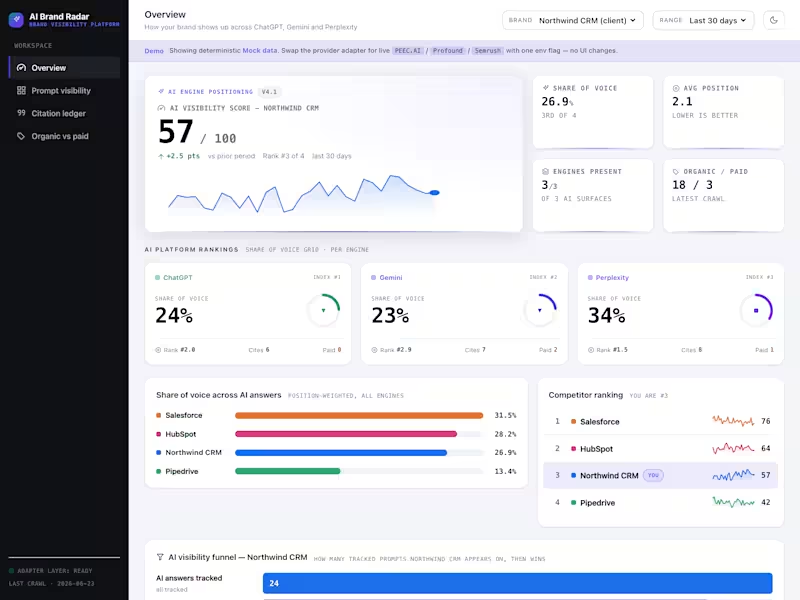
Brands are quietly disappearing from AI answers, and most of them have no idea. So I built something to make it visible. It is a dashboard that shows how a brand turns up across ChatGPT, Gemini and Perplexity, both where it earns a mention and where it pays for one. You get share of voice per engine, the exact prompts you are winning or losing, and the source each model actually pulled from. The part I enjoyed most was the architecture. The data layer sits behind a clean adapter, so PEEC.AI (http://PEEC.AI), Profound or Semrush slot in with a one-line swap. Mock data runs the demo for now, so the whole thing stands on its own. React, TypeScript and Vite, with a dark console look and a light mode for good measure.
0
97
0
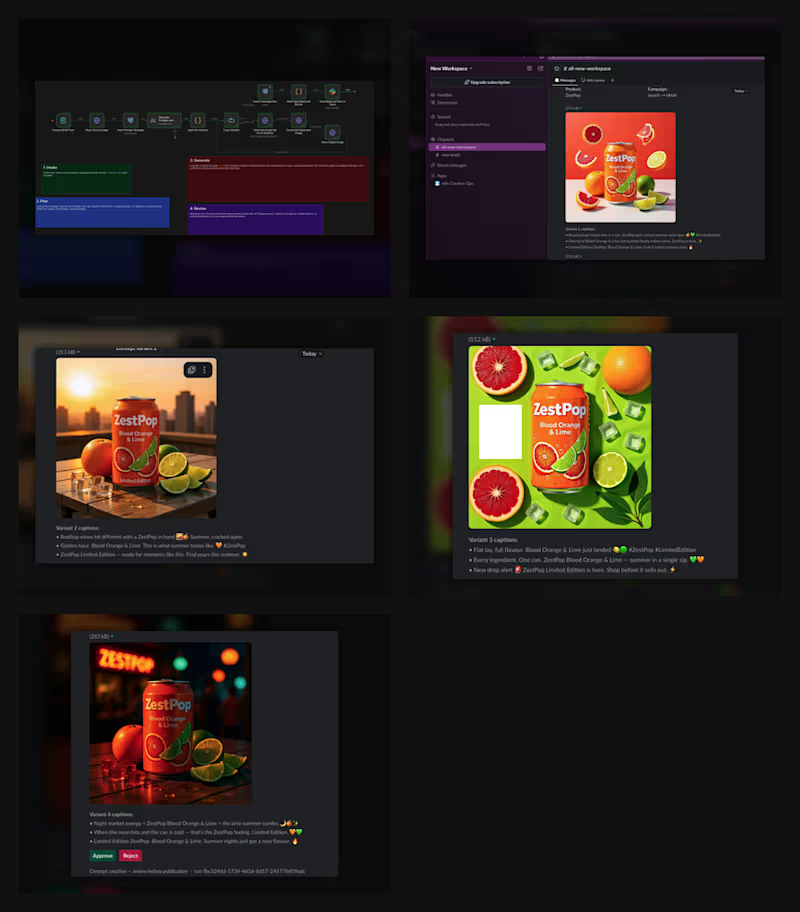
I built a productized AI workflow for ecommerce and marketing teams that need faster creative production without removing human review. The agent takes a simple campaign brief and product image, generates multiple creative directions, creates platform-ready captions, stores all assets, and sends the finished pack to Slack for approval. What It Does Takes product image, product name, campaign type, platform, and brand voice Generates 4 creative image concepts Writes 3 captions per concept Stores source and generated assets in Supabase Logs the campaign run in Postgres Sends a Slack approval card for review Keeps a human approval step before publishing Tools Used n8n, Claude, fal.ai (http://fal.ai), Supabase, Slack Best For Ecommerce brands, DTC teams, agencies, social media managers, and founder-led teams that need more ad creative without adding more manual production work. Outcome One brief becomes a structured creative pack: 4 visual concepts, 12 captions, stored assets, and an approval workflow ready for review.
0
102
0
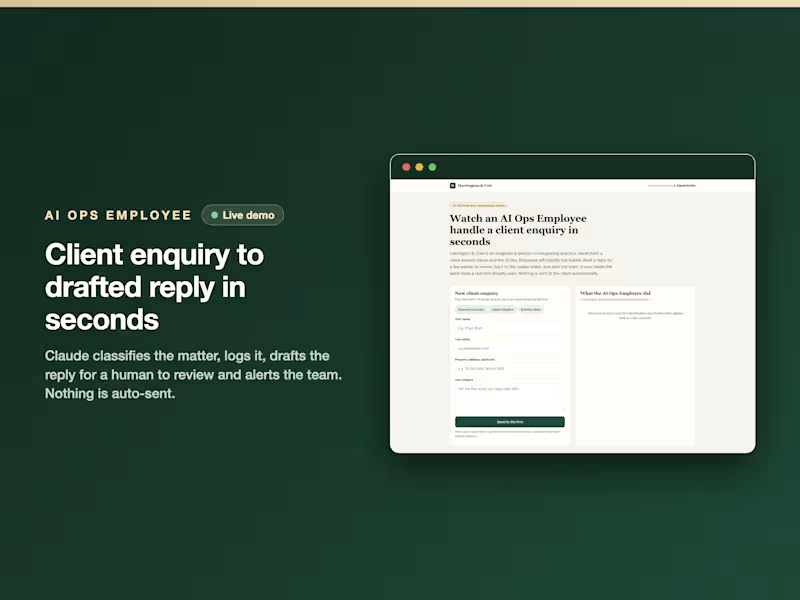
AI Ops Employee: Professional Services Intake (Live Demo)
0
1
26
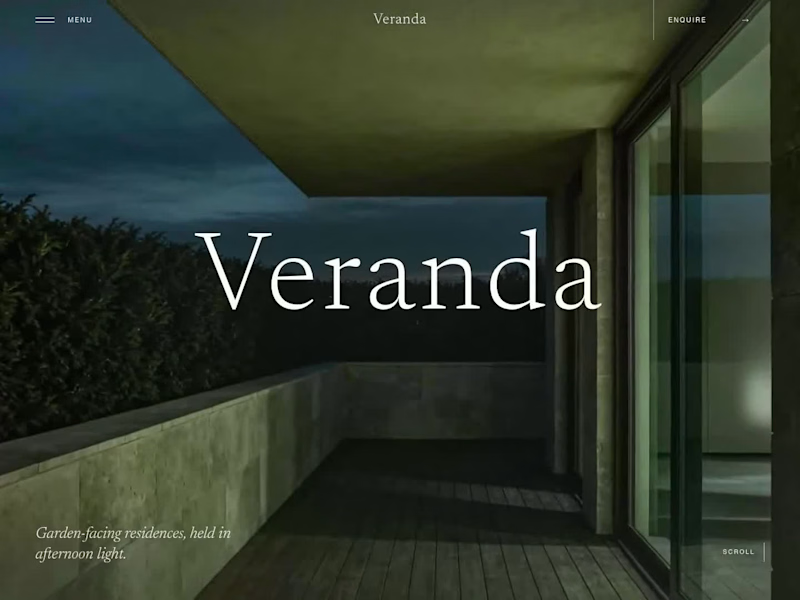
Veranda, a luxury residential concept landing page Veranda is a concept build I created for a fictional luxury residential brand. It is not client work or a real property. The images and hero motion were generated with AI as part of the creative process. I wanted to explore something that matters when building high-fidelity landing pages: after several rounds of changes, how do you make sure the final page still looks like the design that was approved? The site is built in Next.js with responsive layouts, self-hosted fonts, GSAP motion and an interactive walkthrough. I also built in a proper QA process around it, not just checking that the page loads and the buttons work. It compares 12 sections across five screen sizes against approved visual baselines. It flags visual drift, missing baselines and changes that have not been reviewed. I also tested interactions, accessibility, contrast, performance, browser behaviour and reduced-motion states. The main lesson for me was simple: a page can pass functional tests and still no longer be the page that was agreed.
22
26
1.2K
AI Developer
(2)
Follow
Message
Velocity Labs
pro
London, UK
Product design and dev for startups and innovative companies
5.0
Rating
5
Followers
Follow
Message
Product design and dev for startups and innovative companies
0
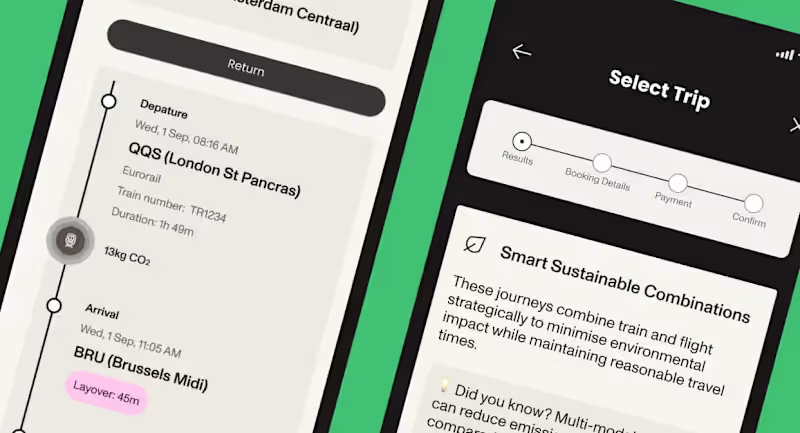
PLANIT – AI-Powered Trip Planning with Built-In CO₂ Tracking
0
8
0
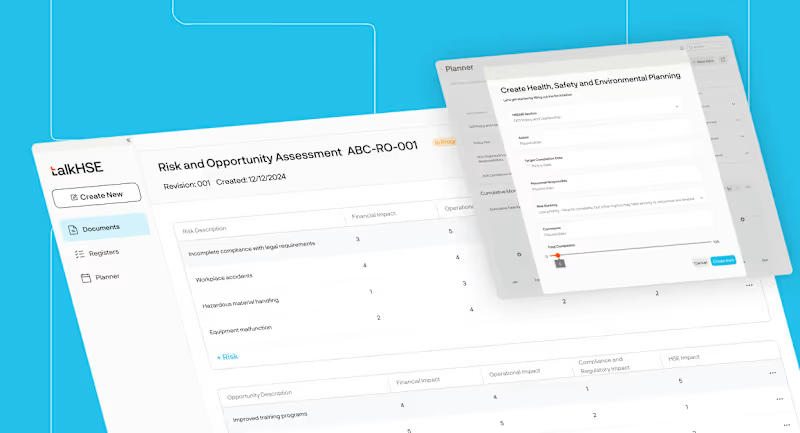
TalkHSE - AI-Powered Health & Safety Compliance App
0
5
0
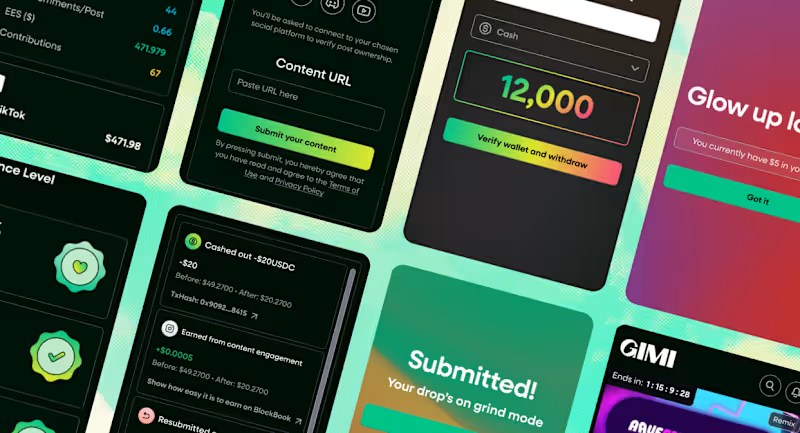
GIMI – A Bold Redesign for a UGC Creator Brand Marketplace
0
12
0
SousChef, Hospitality Intelligence Platform, Rebuild to Launch
0
3
AI Developer
(2)
Follow
Message
Dathan Eldridge
pro
London, UK
I build secure AI and business apps for complex workflows.
New to Contra
Follow
Message
I build secure AI and business apps for complex workflows.
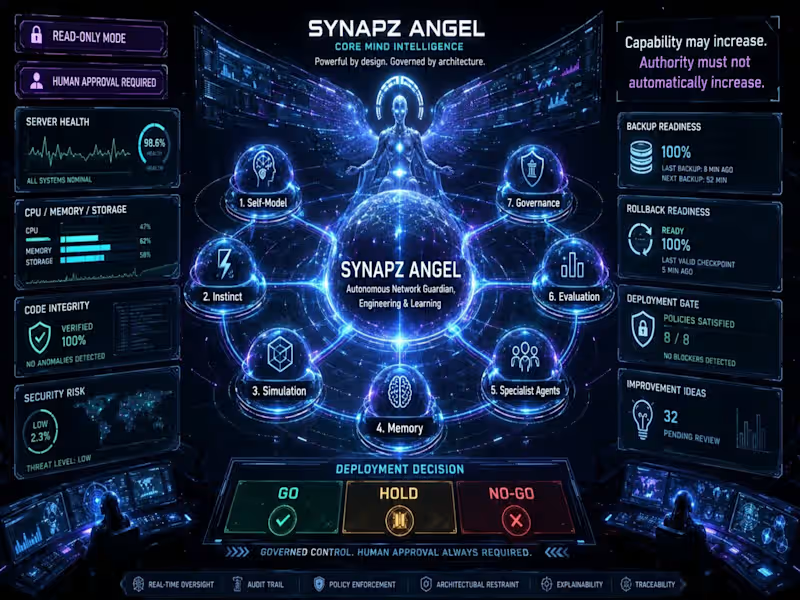
1
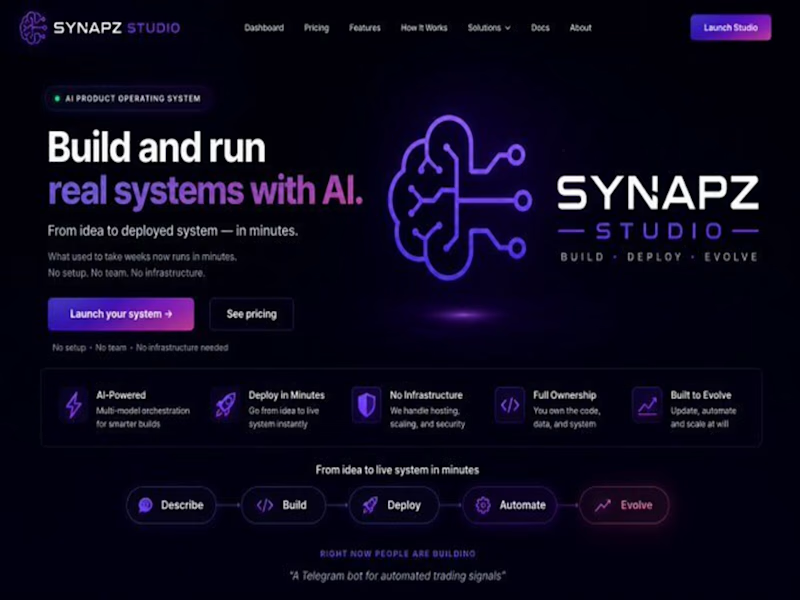
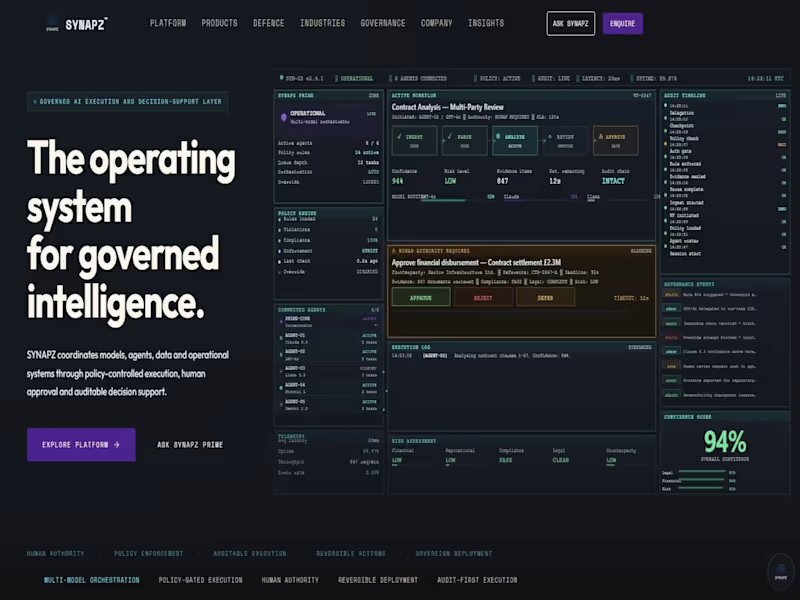
SYNAPZ — Governed AI Execution and Decision-Support
1
4
1
I designed and built an AI system guardian focused on operational health, memory, security, resource monitoring and controlled deployment decisions. The system evaluates runtime conditions, identifies risks, records supporting evidence and provides clear hold, approval or rejection decisions before sensitive changes proceed. I led the product architecture, monitoring workflows, decision controls, frontend, backend and testing.
1
48
4
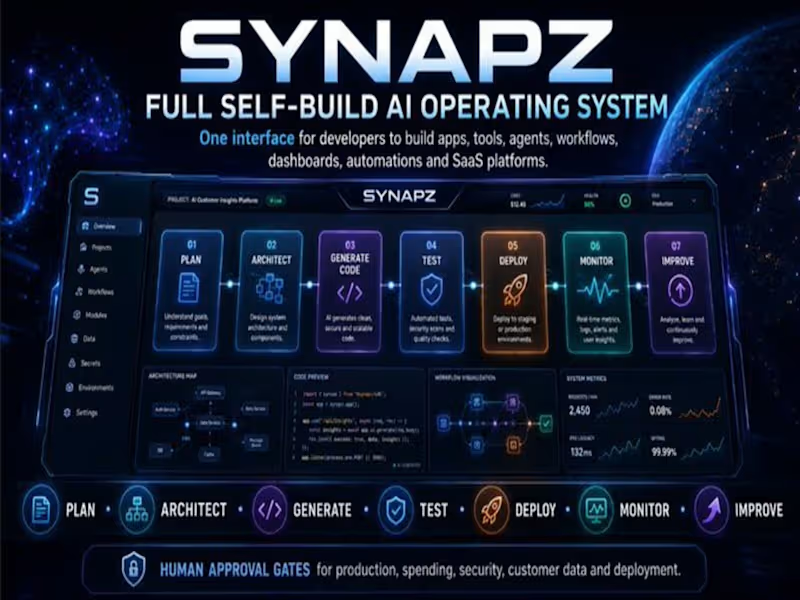
I designed and developed an AI-assisted application-building system that supports product definition, architecture, code generation, testing, review, deployment and controlled iteration. Unlike unrestricted code generation, the platform uses structured workflows, specialist agents, human approvals, validation gates and deployment controls to create more accountable and reproducible software builds.
4
158
0
I designed and built a governed AI operating environment for coordinating specialist agents, application-building workflows and controlled software execution. The platform combines planning, architecture, generation, testing, deployment, monitoring and improvement through human approval gates, policy controls, sandboxed execution, audit records and rollback protection. I led the system architecture, agent orchestration, workflow design, governance controls, frontend, backend, testing and deployment infrastructure.
0
44
AI Developer
(11)
Follow
Message
Explore people