Freelancers using spaCy in Mumbai
Freelancers using spaCy in Mumbai
Sign Up
Post a job
Sign Up
Log In
Filters
2
Projects
People
Anurag Nagare
Mumbai, India
I’m an AI & Machine Learning engineer with expertise in deve
Follow
Message
I’m an AI & Machine Learning engineer with expertise in deve
0
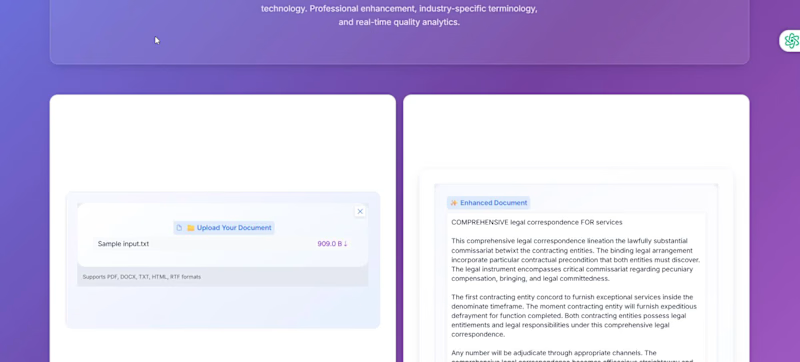
launched TextGenix Enterprise — an AI-powered intelligent document processing system! This platform enhances and transforms documents (PDF, DOCX, TXT, HTML, RTF) with context-aware vocabulary improvements, grammar validation, and industry-specific terminology (legal, medical, financial, technical). It comes with a sleek Gradio-based web interface featuring modern styling, interactive analytics dashboards, and real-time quality metrics like semantic preservation, grammar score, and AI confidence levels. If you’re looking to build your own AI-powered text/document platform, enhance business workflows with custom NLP models, or integrate analytics-driven AI solutions into your enterprise apps I can help.
0
85
0
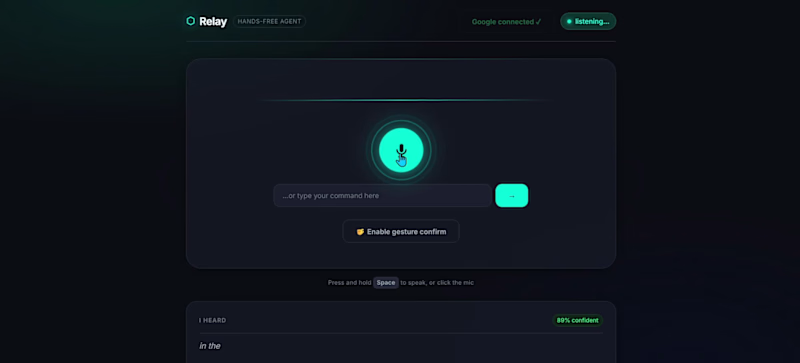
One Gate: Voice-controlled Gmail, Calendar, and Drive that can't fire the wrong thing Every "AI agent" demo shows a voice command turning into a sent email like magic, but almost nobody shows the part that actually matters: what stops it from sending the wrong thing. I built proof: an agent that runs your Gmail, Calendar, Contacts, and Drive by voice reply to a thread, schedule a meeting, archive an email, find a file hands-free end to end, but never fires anything irreversible without you saying so. The honest hard part isn't getting an LLM to sound smart, it's this: a transcript goes to LLM against a strict JSON schema and comes back as an ordered plan, every step tagged reversible or not and exactly one thing in the whole system is allowed to check that flag. Finding a thread, drafting a reply, creating a calendar event: those just run. The result covers real ground without ever feeling like it's guessing: forward or reply to email with the original quoted underneath, archive/label/trash, resolve a name to a real address through your Contacts first and your mail history as fallback, schedule an event that creates quietly and only emails the invite after a second confirmation, answer "what did John say" or "what's on my calendar Thursday" grounded in content actually fetched from your account not hallucinated. No backend, no server anywhere in the loop
0
31
0
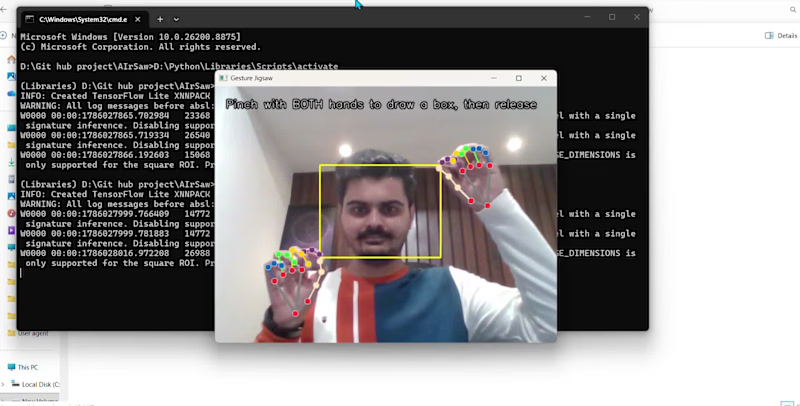
What every "AI gesture control" demo quietly leaves out Everyone films a hand waving at a screen and calls it AI. Almost nobody shows what's underneath that there's usually no gesture model at all. A "grab" is one distance crossing a line. Here's proof. I built a jigsaw puzzle you solve with your bare hands no mouse, no controller, no gesture classifier, no training.
0
63
2
Everyone's building AR filters and calling it "computer vision magic." Almost nobody's asking what's actually happening underneath — that most of these effects are just clever masking, not detection. Here's proof. I built an invisibility cloak that runs entirely in the browser, no green screen, no chroma key, no model training. https://github.com/AnuragNagare/Ghost-frame
4
2
275
spaCy
(1)
Follow
Message
Explore people