Freelancers using Spline in LisbonFreelancers using Spline in LisbonMeet "The Cutting Room Floor" - a nostalgic, early-2000s 3D hardware archive meant to preserve creative ideas that deserve a second life ✨
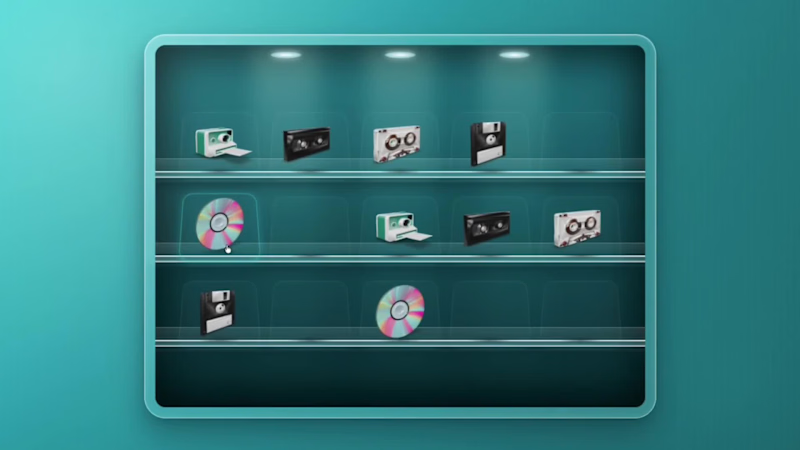
"The Cutting Room Floor" is a visual tribute to the nostalgia of early 2000s tech 💿
The current build features an interactive 3D display vault housing the generated creative assets, fully realized in a vibrant, glossy, vintage "Bondi Blue" iMac G3 aesthetic 💙
As for future plans, I want to work on an integration with a web backend (like Bubble) to turn this into a living community engine where users can submit their own half-finished projects and ideas directly onto the shelves 💡
I utilized Omma Studio to generate customized, low-poly 3D objects, and Omma Canvas to create the scene, featuring the cabinet with the thick horizontal glass shelves and top-down spotlights ⭐
Here's the live interactive build: https://omma.build/p/the-cutting-room-floor-ambient-archive-fw4i12
What I learned: one of my biggest takeaways from this project was decoding how to communicate with Omma when it comes to prompting. I typically talk to AIs casually, like I’m brainstorming with a friend, but I found Omma does better with direct, clear, non-ambiguous instructions 😜 Meet AURIC: turning anxious thoughts into 3D art
As a former art student living with anxiety, I’ve always found traditional journaling a bit daunting. So I wanted to build a sanctuary for the "thought dump" - a place where you can clear your mind and never look back.
AURIC is built 100% in Omma by Spline, and it doesn't just prompt you to write - it turns it into a unique, abstract watercolor relic.
Some of its key features include:
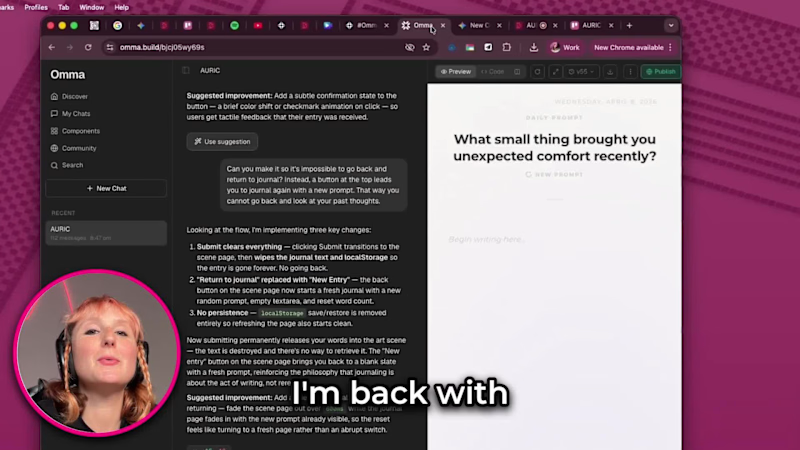
The "focus" UI: the interface provides daily prompts (with a re-roll feature), and when you start typing, the UI subtly fades away, leaving you alone with your thoughts.
The emotion assessment: once submitted, the app pulls the emotional tone and themes from your text to generate a specific watercolor palette.
The release: this isn't a database; it’s a release - once you hit submit, you cannot go back to read the full entry ever again - you are left with the art as a visual memory that represents your past without letting it define your future.
Interactiveness: using Omma’s 3D states, users can zoom into the abstract artwork and discover new things as they dive deeper - first, you'll see the individual characters you typed, and if you lean in closer, you’ll find a few fleeting words - the only fragments of the memory you get to keep.
Try it for yourself: https://omma.build/bjcj05wy69s
PS: I need your help! I recently evolved the final artwork from a structured geometric look to this abstract watercolor style. But which one do you like the best? Check the video for the comparison and let me know in the comments!