Vibe Coder Projects in LisbonVibe Coder Projects in LisbonAs freelancers, I think we can all agree that we're here to do the work, not to spend all day chasing client approvals and wondering what we should do next. Am I right?
So that was pretty much the inspiration behind my project for this challenge. I wanted something every freelancer out there could take and, within five minutes, make it their own and have something that makes both their lives easier and the clients' experience much more premium.
On your end as the freelancer, you get a project management system that organizes all the moving pieces of being a freelancer.
Client side, they get an easy way to check on project process and approvals, and overall just something that feels like a carefully crafted experience rather than just another Trello board.
What's more is you can actually fully white label it, adding your own logo, your brand name, your colors, everything. It looks like something you've built for yourself and nobody else.
Think of this as your very own white canvas. You can do anything with it. Literally, the sky is the limit here.
Here's the link to check it out: https://freelanceproject.created.app Meet AURIC: turning anxious thoughts into 3D art
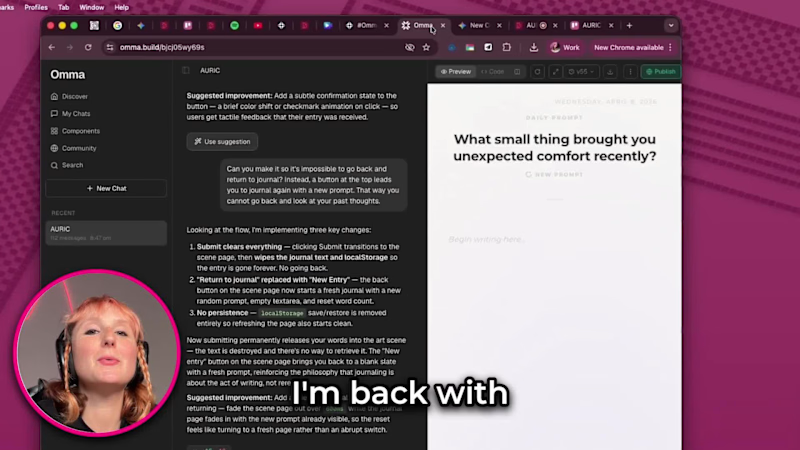
As a former art student living with anxiety, I’ve always found traditional journaling a bit daunting. So I wanted to build a sanctuary for the "thought dump" - a place where you can clear your mind and never look back.
AURIC is built 100% in Omma by Spline, and it doesn't just prompt you to write - it turns it into a unique, abstract watercolor relic.
Some of its key features include:
The "focus" UI: the interface provides daily prompts (with a re-roll feature), and when you start typing, the UI subtly fades away, leaving you alone with your thoughts.
The emotion assessment: once submitted, the app pulls the emotional tone and themes from your text to generate a specific watercolor palette.
The release: this isn't a database; it’s a release - once you hit submit, you cannot go back to read the full entry ever again - you are left with the art as a visual memory that represents your past without letting it define your future.
Interactiveness: using Omma’s 3D states, users can zoom into the abstract artwork and discover new things as they dive deeper - first, you'll see the individual characters you typed, and if you lean in closer, you’ll find a few fleeting words - the only fragments of the memory you get to keep.
Try it for yourself: https://omma.build/bjcj05wy69s
PS: I need your help! I recently evolved the final artwork from a structured geometric look to this abstract watercolor style. But which one do you like the best? Check the video for the comparison and let me know in the comments!