Freelancers using Easy Lens in Lahore
Freelancers using Easy Lens in Lahore
Sign Up
Post a job
Sign Up
Log In
Filters
2
Projects
People
Khizar Tariq
Lahore, Pakistan
Crafting interactive AR lenses and mobile games.
49
Followers
Follow
Message
Crafting interactive AR lenses and mobile games.
99
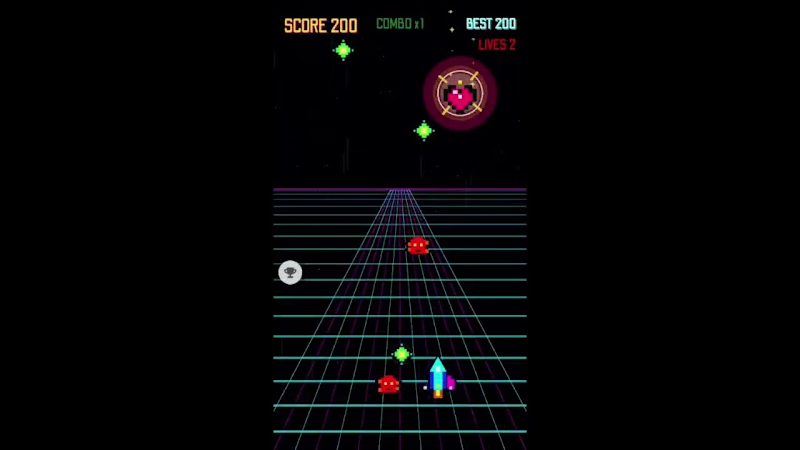
🕹️ What I Built I created Neon Byte Runner, a fast-paced retro arcade game Lens for Snapchat inspired by classic endless dodgers and 80s neon aesthetics. Built entirely using prompt-based iteration in EasyLens, the game includes: Procedural Pixel-Art Visuals: Glowing neon ships, data bugs, energy bytes, and background scanlines drawn in real time for crisp rendering across all screen sizes. Drag-and-Dodge Controls: Intuitive mobile steering where players dodge incoming "data bugs" and collect "energy bytes" for score multiplier points. Dynamic Damage System: A three-life mechanic where taking damage physically breaks off spaceship parts (wings and tail) with visual particle flares. Magical Heart Repairs: Rare falling heart powerups that grant an extra life and visually repair broken spaceship parts back onto the ship. Chiptune Audio & Global Leaderboard: Custom-generated arcade music and sound effects paired with an integrated HUD and leaderboard to drive replayability. 💡 Why I Built It Reimagining Classic Arcade Mechanics for AR: I wanted to capture the instant-play energy of old-school arcade cabinets and adapt it into a social, mobile-first Snapchat Lens. The goal was to create a game that takes seconds to learn, but offers enough depth and escalating difficulty to keep players saying, "Just one more run." Visual & Emotional Damage Feedback: Instead of relying on a standard health bar, I wanted players to feel the stakes. Making the ship parts physically break off and scatter across the screen creates an immediate, dramatic feedback loop when you make a mistake—and grabbing a rare heart to repair your ship feels genuinely rewarding. Pushing the Boundaries of Prompt-Based Game Design: As a developer, I wanted to explore how far prompt engineering inside EasyLens could go. I set out to prove that you can build complete, highly polished game systems—including state management, procedural rendering, sound synthesis, and dynamic damage states—purely by guiding AI with precise multi-step prompts. ✨ How EasyLens Made It Possible Using EasyLens, I didn't need to hop between traditional 3D software, external audio workstations, or manual script compilers. I iterated through targeted prompts to handle: Generating procedural visual assets on the fly. Setting up custom arcade music and dynamic sound triggers. Fine-tuning game controls, collision boxes, and damage states. EasyLens handled the heavy lifting, allowing me to focus on game feel, pacing, and player experience
36
99
8.4K
0
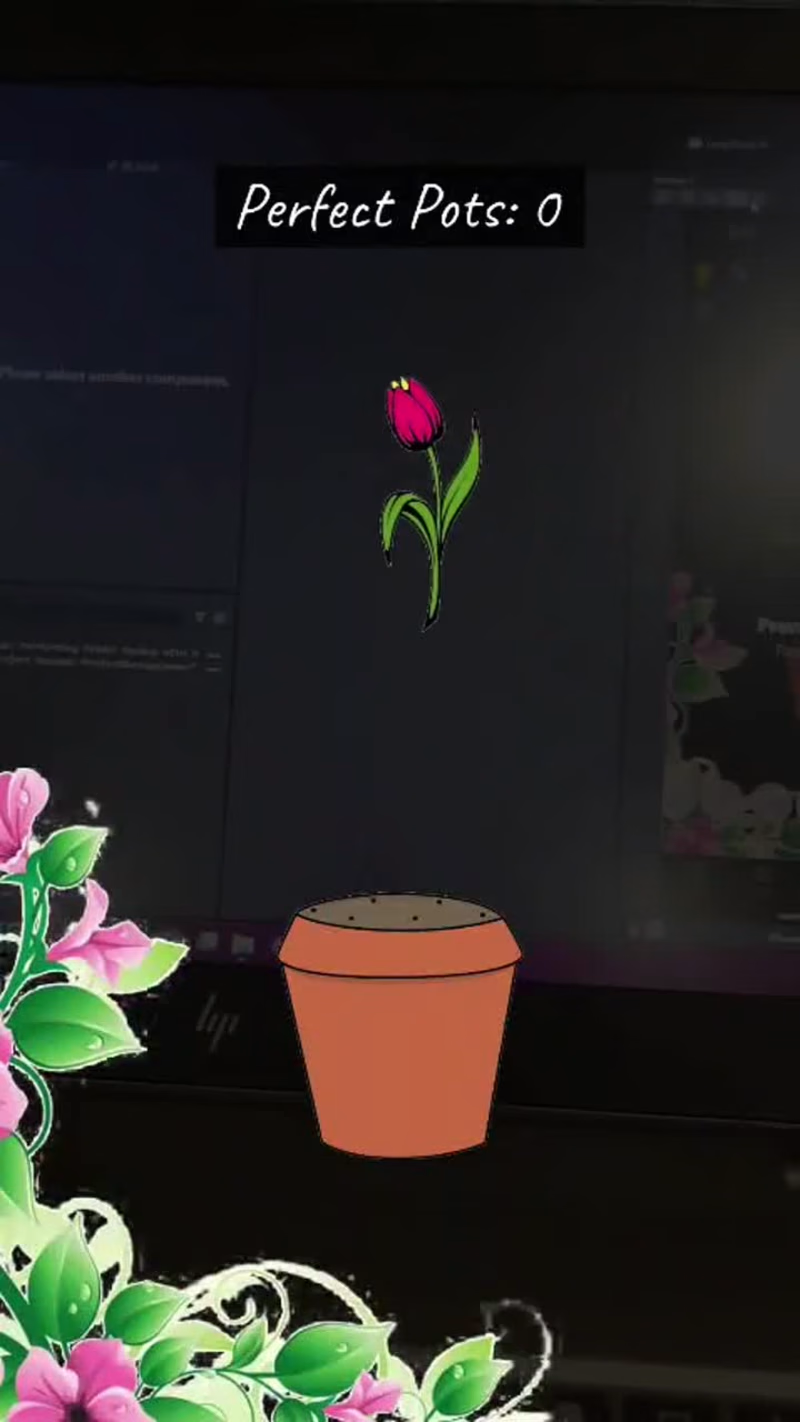
Pot a plant by tapping, each successful pot will increase the movement speed. Stay on top of leaderboard.
0
384
0
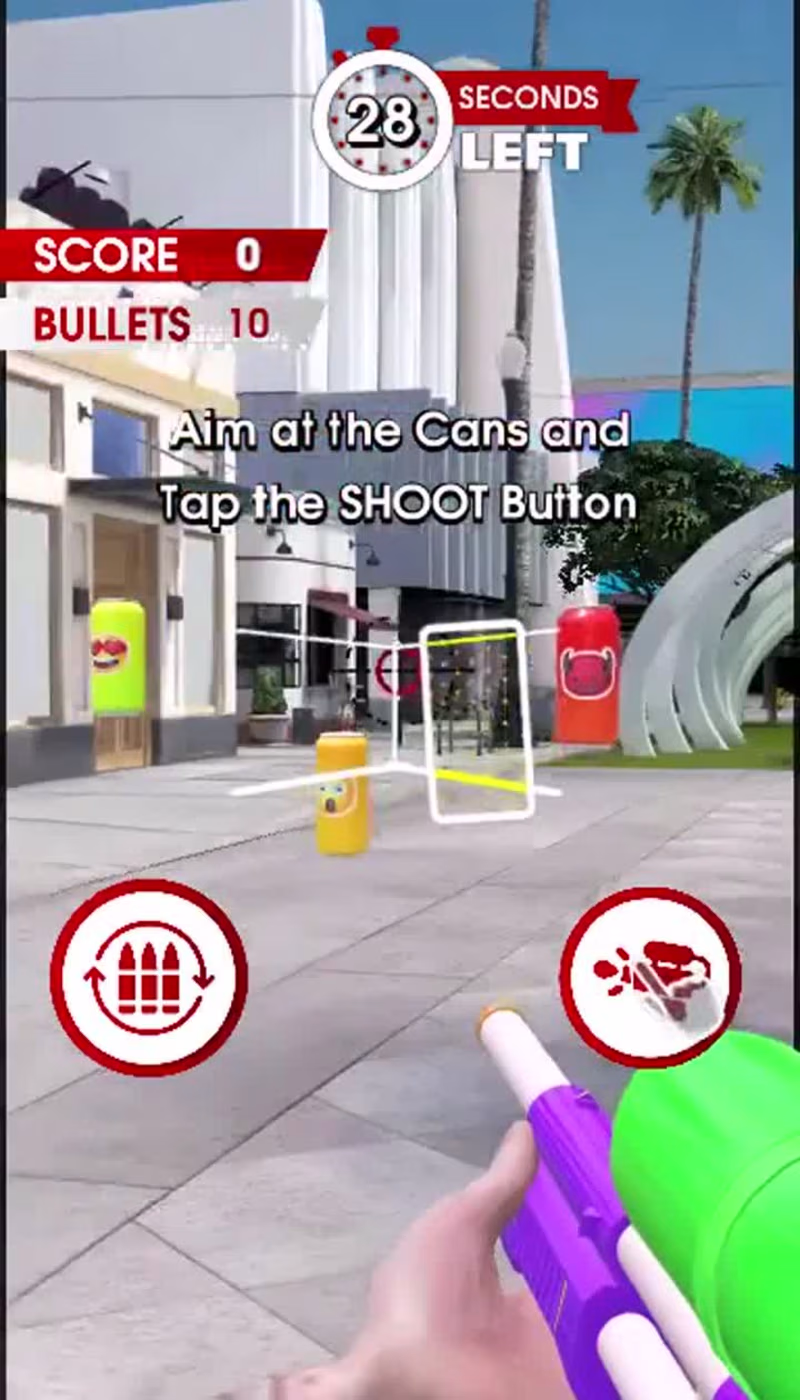
Can Smash AR is a first-person shooter that spawns floating, emotive soda cans around the user in 360-degree Augmented Reality. Immersive Aiming: The player must physically turn and look around to find targets floating in the air. The gun tracks with the device's movement, mimicking a real weapon. Global Competition: A Real-Time Leaderboard tracks the highest scores globally. Players aren't just shooting cans; they are fighting for the top spot against other friends in real-time. Resource Management: It's not just about tapping fast. The player has a limited clip of 10 bullets. When empty, they must hit the "Reload" button, triggering a realistic weapon sway animation that adds tension to the gameplay. Dynamic Scoring: Different targets offer different rewards (e.g., standard cans vs. special bonus targets) with visual pop-ups like "+2" for high-value hits.
0
352
1
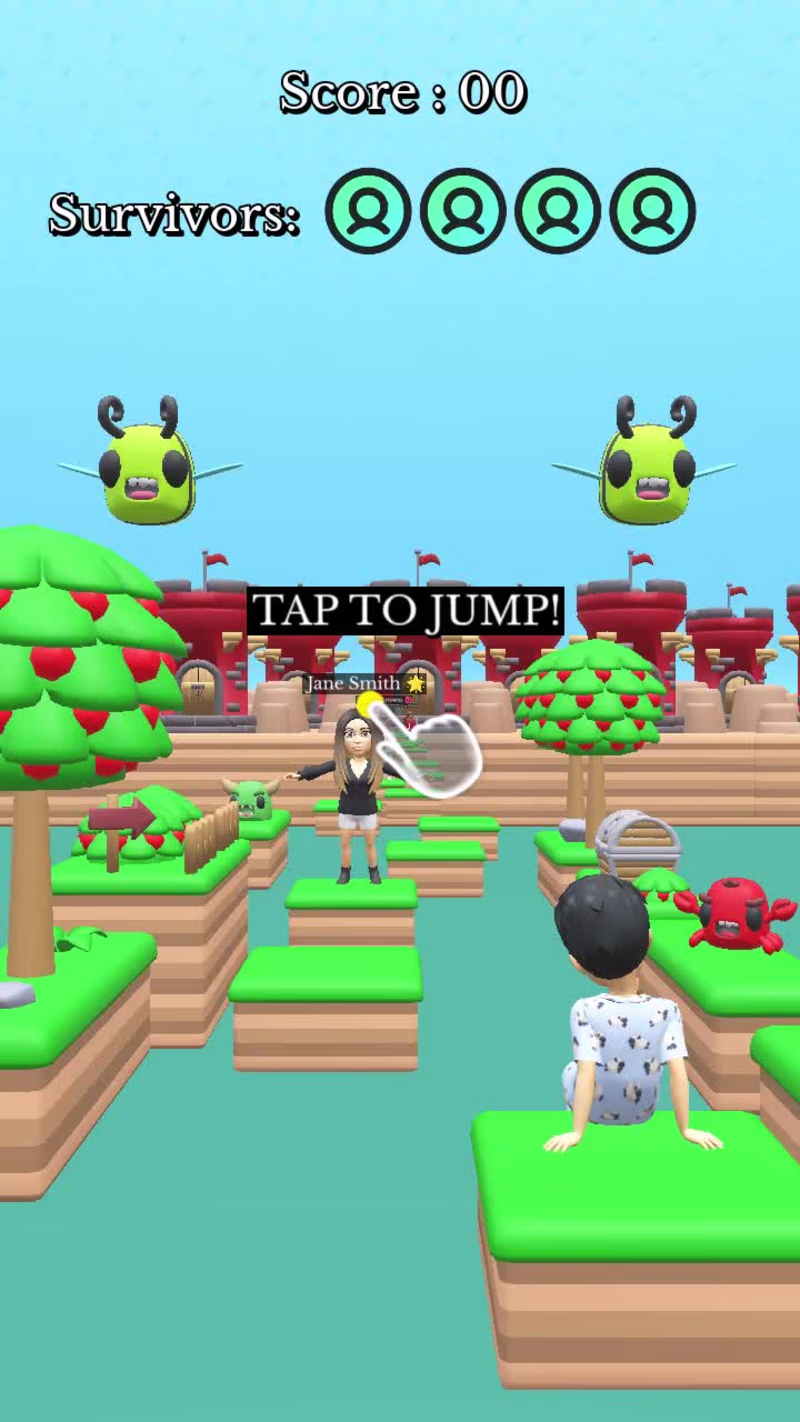
Don't Fall! is a precision-based AR platformer where the environment is procedurally populated by the player's actual Snapchat friends. Dynamic Gameplay: As the player navigates the 3D obstacle course, the game fetches random profiles from their friend list and places them on "safe" tiles. The Rescue Mechanic: When the player successfully lands on a tile occupied by a friend, that friend is marked as "Saved." High-Stakes End Screen: If the player falls, the game ends. A dynamic "Survivor Status" board appears, listing exactly who was saved (with a celebratory Bitmoji) and who was left behind, encouraging the user to try again to get a "perfect run."
1
467
Easy Lens
(1)
Follow
Message
Explore people