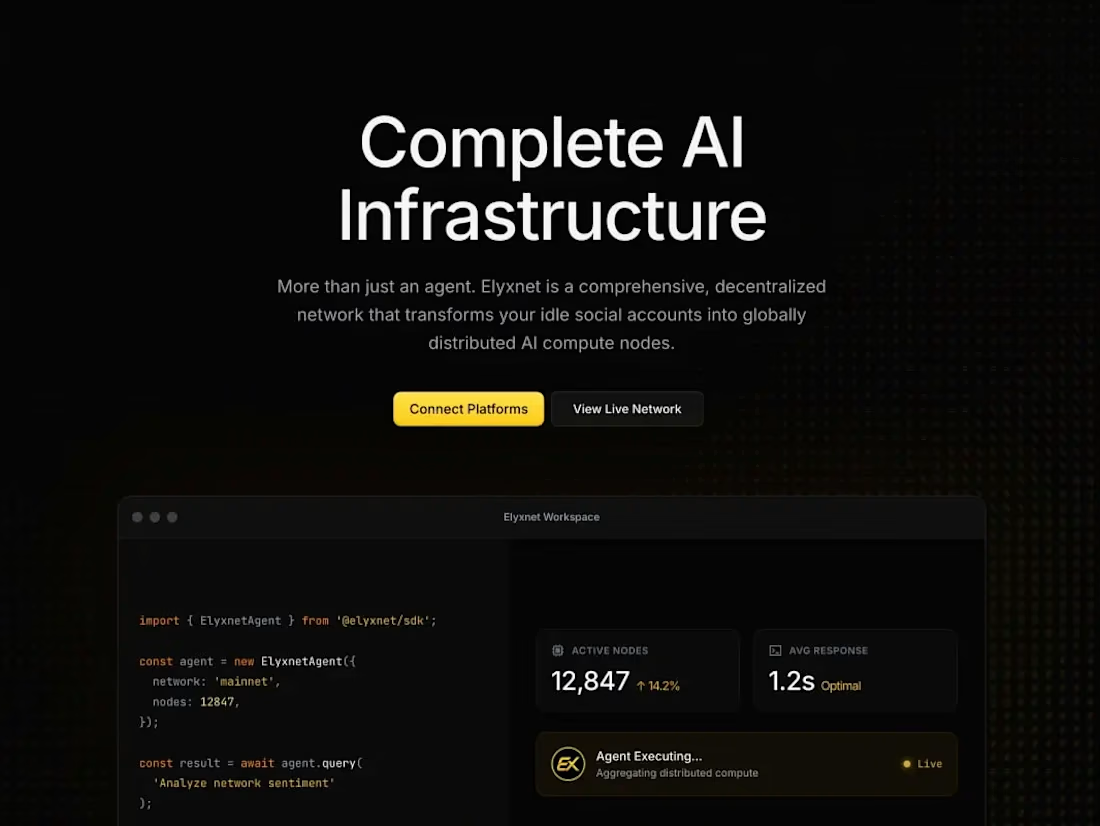
Projects using React in JaipurProjects using React in JaipurAn exploration of how a strong hero section can establish the entire mood of a digital experience.
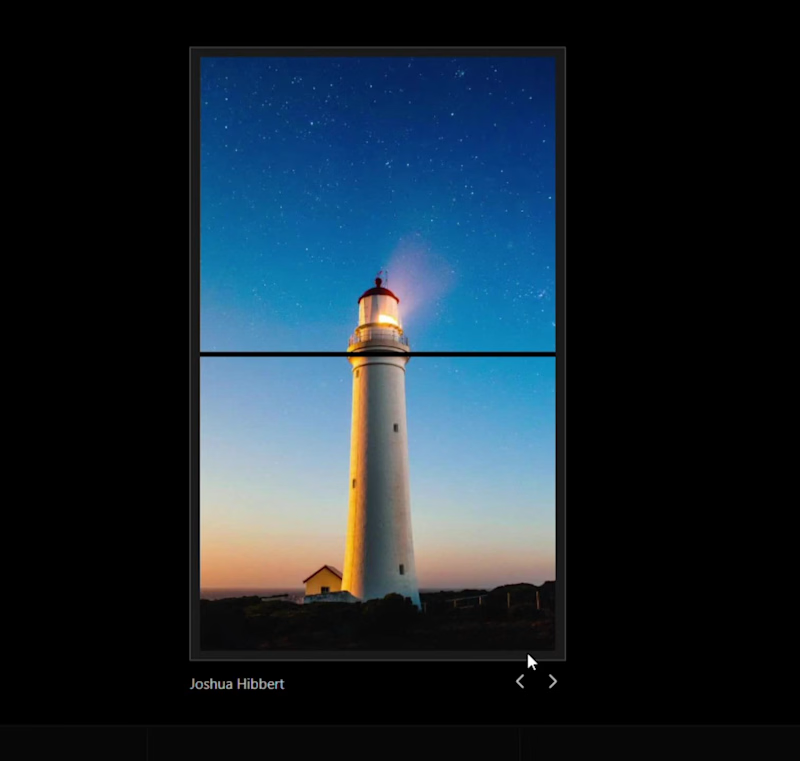
For this project, I wanted to blend classical imagery with a more contemporary, cinematic web direction, large editorial typography, restrained UI, immersive motion, and a hero that immediately sets the visual language for everything that follows.
I designed and developed the experience while experimenting with Midjourney × Krea during the visual exploration process, then carried that direction through the interface, interactions, and final build.
A study in art direction, web design, motion, and development and how new creative tools can make the path from an early visual idea to a working experience significantly faster.
Role: Creative Direction, Web Design & Development
Exploration: Midjourney, Krea
Build: Next.js
Still exploring where this visual language can go. Title: Cognitome — Gamified Cognitive Assessment Platform
Description:
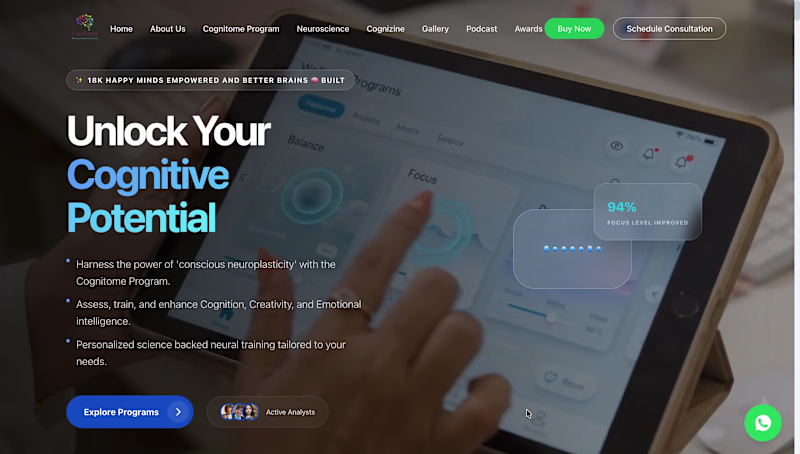
A web platform that delivers validated psychology experiments as playable browser tests, built for a research and assessment client based in Dubai.
It implements eight standard cognitive paradigms — Stroop, Numerical Stroop, Flanker, Corsi Block, Attentional Blink, the Attention Network Test, the Implicit Association Test, and the Wisconsin Card Sorting Task. Each one runs as a guided flow: instructions, a worked demo, a practice round, then the timed run, ending in a results breakdown. Every trial produces a metrics record, and effect scores are computed from those rather than from summary averages, so the output is analysable rather than just a number on a screen.
Administrators pick which experiments a participant should take, set an expiry, and the system generates an access-coded link. Participants open the link and begin — no account, no signup — and results are captured and stored on completion. That mattered because research participants abandon anything that asks them to register before they've seen the task.
The genuinely hard part was timing. These paradigms measure differences in reaction time that are often only tens of milliseconds wide, and a browser is a hostile environment for that — variable frame rates, input latency, background tab throttling. Getting stimulus presentation and response capture accurate enough for the effect sizes to mean anything drove most of the frontend architecture. Any of these tests is easy to build badly and the result looks identical until you check whether the numbers replicate known findings.
React 19 with Vite and Tailwind on the frontend, Node.js and MongoDB behind it for session generation, access control and result storage.