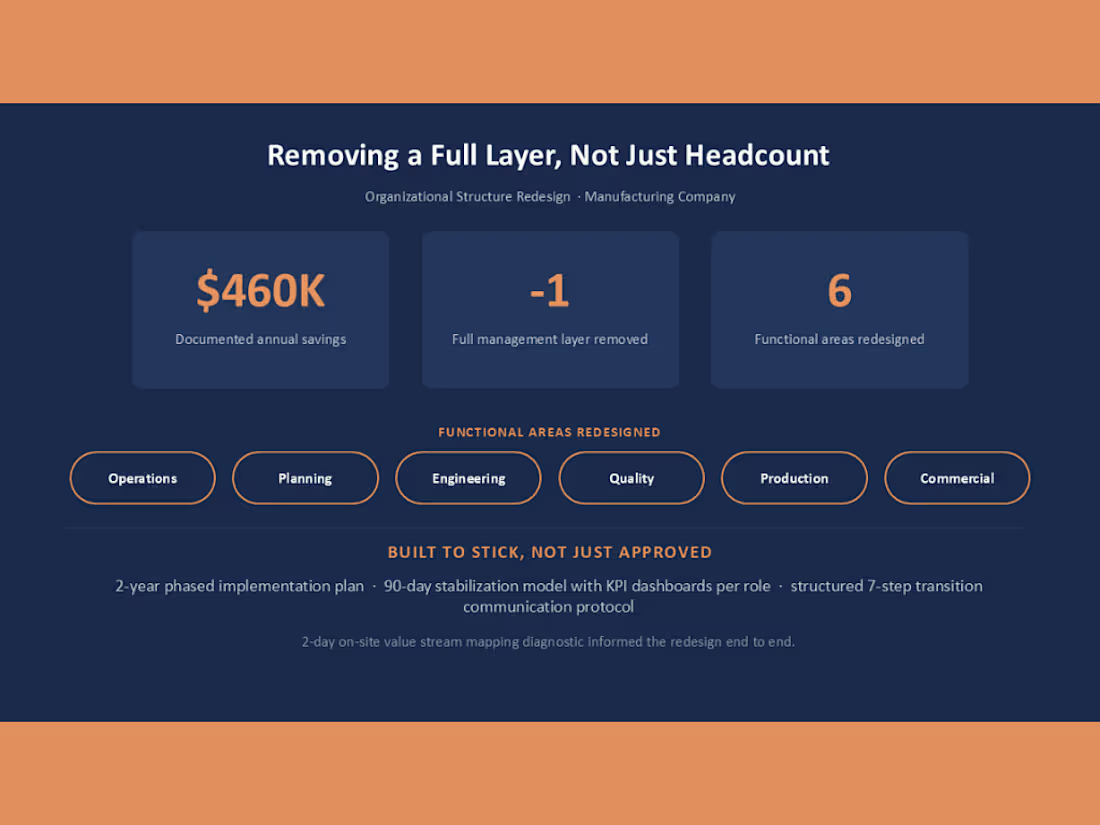
Projects using Mural in Guatemala CityProjects using Mural in Guatemala CityCase Study: Removing a Full Layer — $460K in Annual
Savings, With a Transition Plan That Actually Sticks
The Situation
A specialty manufacturing company was carrying too many management layers and uneven spans of control across its plants, with handoffs between Commercial, Planning, Production, and Quality creating rework and slow response times to customers.
My Role
I led the organizational structure redesign, spans & layers , and built the full change management plan to implement it, from org chart to the individual conversations that make a reorg land without chaos.
The Approach
A 2-day on-site collaborative session mapped the complete customer-to-delivery value stream, giving us a real diagnostic of where time, rework, and quality impact were coming from, not assumptions. That diagnostic, combined with headcount and reporting-line analysis across 6 functional areas (Operations, Planning, Engineering, Quality, Production, and Commercial), produced a set of structural hypotheses that were tested and refined with leadership before finalizing the new design.
What Changed
Eliminated one full layer while improving spans of control, creating room for growth instead of just cutting.
Consolidated supervisor roles with thin direct-report counts across two plants.
Added a dedicated Quality Management System specialist.
Strengthened the production scheduler role and profile
Integrated Customer Service into the planning function to simplify communication and cut cross-functional rework
Results
~$460,000 in documented annual savings from the redesigned structure
A future-state value stream map targeting reduced lead time, less waste, and better quality outcomes across the full customer request-to-delivery flow.
Why the Redesign Sticks
Most org redesigns fail at the handoff between "new chart" and
"new reality." This one shipped with a 2-year (2025–2026) phased
implementation plan, a 90-day stabilization model with a KPI dashboard for
every transitioning role, and a structured 7-step communication protocol —
ensuring every affected person, from the outgoing manager to the new direct
reports, hears the change directly and in the right order before it becomes
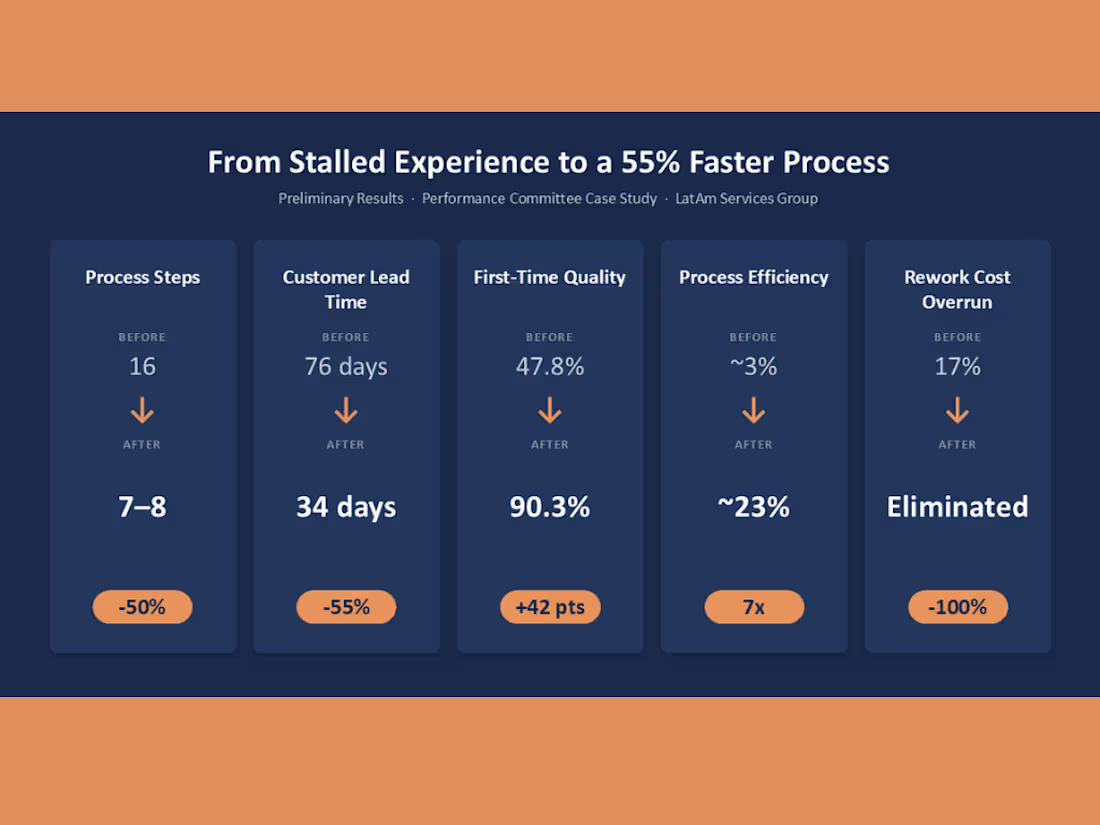
public. Case Study: Turning a Stalled Experience Into a 55%
Faster Process — In 90 Days
The Situation
A mid-sized LatAm memorial & cemetery services group (500+ employees) had
no function responsible for planning, measuring, and improving processes
end-to-end. Problems were identified, "solved," and measured by the
same team that owned them — with no line back to the company's four strategic
KPIs (operating profitability, NPS, eNPS, brand positioning). A performance
committee had been created on paper but needed activation.
My Role
I joined as the external member of the newly formed committee, not as an
outside auditor, but as the operator who runs the cadence: monthly sessions,
bi-weekly follow-up, and the discipline to turn diagnostics into decisions
Executive Direction can actually act on.
The Approach
Rather than mapping every process in the organization first , a path that risks
a year with no visible result , we picked one high-impact, cross-functional
process, solved it completely, and used it to install the method. The process
chosen: plaque fulfillment, selected because of its direct link to complaints
and NPS, its cross-departmental nature, and a scope small enough to resolve in one work cycle.
What the Diagnostic Found
35% of all company complaints traced back to this single process
First-Time Quality of 47.8% , meaning more than half of all cases required rework
76-day customer wait time on the fastest path, against a 30-day promise
17% cost overrun from rework and process loops
A quality control step that verified the vendor's paperwork, not the customer's actual request, a control that couldn't catch its own root cause
What's Next
The redesign cuts lead time in half without touching the vendor side, the remaining lever requires a leadership decision on sourcing. The committee is now taking three decisions to Executive Direction (sales channel redesign, vendor diversification, and a low-cost operational fix worth ~8x its investment in avoided losses), while queuing the next end-to-end process for the following cycle, proving the method scales, not just solves one problem.