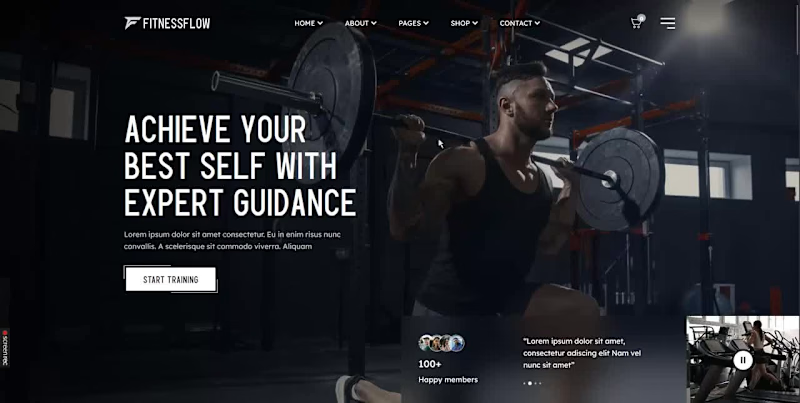
Excited to share that we’ve recently completed the development of a modern fitness website designed for gyms, personal trainers, and fitness brands looking to build a strong online presence.
💪 Project Highlights:
• Clean and modern UI/UX design
• Fully responsive across all devices
• Trainer profiles and fitness program sections
• Membership and contact features
• Optimized for speed and performance
The goal was to create a website that not only looks great but also helps fitness businesses engage members, showcase services, and grow their brand online.
If you’re looking to build a fitness, gym, or wellness website - sass, feel free to reach out. I'd be happy to help bring your idea to life.
4
5
263
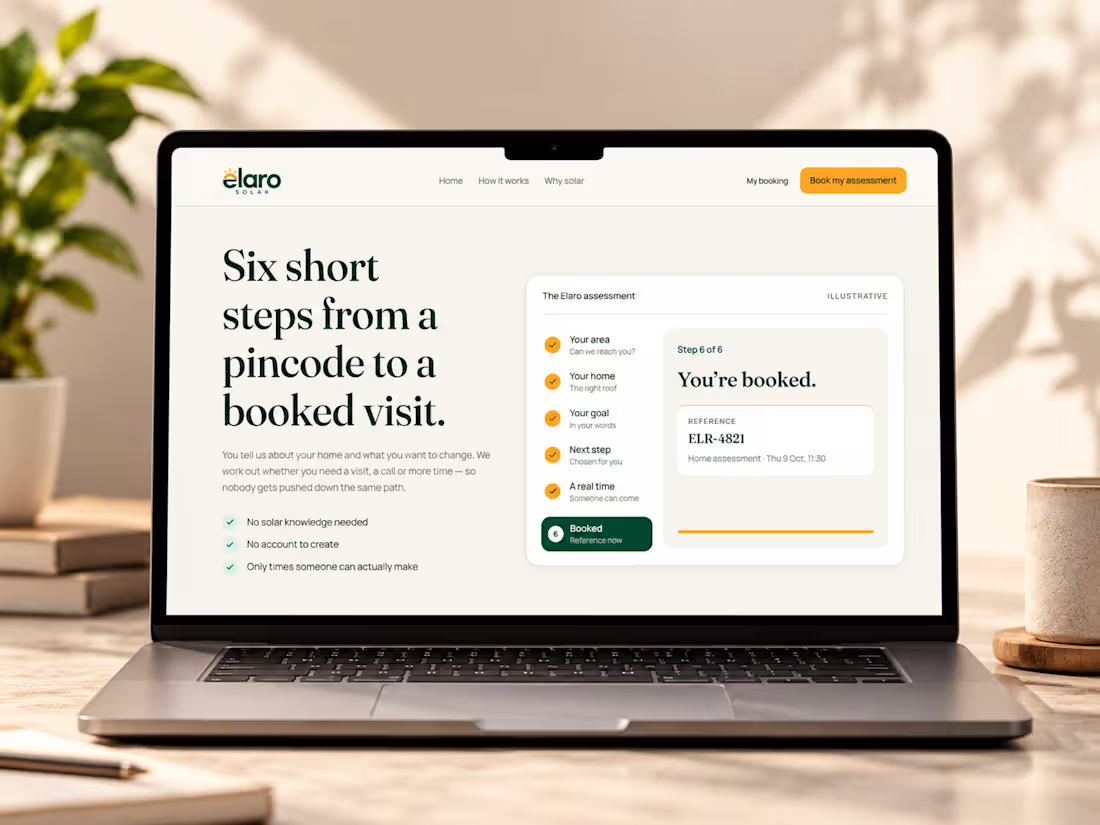
Elaro Solar - From solar enquiry to a meaningful next step
Business: Elaro Solar | A small residential rooftop solar installer serving Pune, with a lean field team and a mix of homeowners who range from “I want solar now” to “I’m still comparing my options".
Location: Pune, India
Approach: Front door + follow-through
💯 The problem
For a homeowner, going solar starts with a simple question. For the installer, turning that interest into a real appointment means figuring out whether the home is serviceable, understanding what the homeowner actually needs, finding the right time, assigning the right specialist, and knowing what happens after the visit.
I wanted to remove that operational friction without building another generic booking form or another all-in-one solar CRM.
🧠 The solution
Elaro turns an uncertain solar enquiry into a structured, confirmed appointment, and keeps the work moving afterward.
The homeowner goes through a short, contextual assessment instead of a long form. Questions are introduced only when they change the next decision. Serviceability, home details, ownership, goals, and timing determine whether the customer gets :
- a home assessment
- a phone consultation, or
- a learning path.
The calendar is not just a list of available times. It uses a mechanism that considers technicians' capability, working hours, appointment duration, service area, scheduling buffers, and conflicts before confirming a slot.
On the owner side, the model is deliberately simple:
Customer → Home → Job → Appointment
That lets the team see the customer relationship, the work being done, and the appointment itself as separate but connected things. A completed appointment can create the next action instead of becoming a dead end.
🙌 The part I pushed further
I kept asking: what happens when this customer comes back months later?
Elaro remembers the home and the work associated with it. After phone verification, it can recognise a previously assessed home, reconnect the customer with the appropriate job, and let them move forward without repeating the entire process.
When the system isn't certain that it's the same home, it asks instead of guessing.
Elaro remembers the work that happened, not just the appointment that happened.
That also meant solving the underlying rules for matching homes, preventing duplicate open jobs, safely reopening previous work, and keeping the customer and owner experiences in sync.
🚀 How I approached it
The build started with competitor and workflow research rather than UI. Existing solar products already cover areas such as bill analysis, satellite roof design, proposals, and payments, while established intake flows can become lengthy and information-heavy.
So I deliberately focused on the layer before and around the appointment.
I mapped the journey, defined the system model and interaction rules, designed the visual system, considered accessibility across the experience, and then implemented and tested the product iteratively in Lovable.
🎉 What I built :
A complete customer-to-owner experience spanning:
Intelligent assessment → serviceability → appointment routing → constraint-based scheduling → specialist assignment → Jobs & Appointments → follow-through → returning customer → Home Memory → Solar Journey
See it in action here: https://elarosolar.lovable.app/
🙌 Owner Team sign-in
email: owner@elarosolar.example
password: ElaroDemo2026
2
4
462
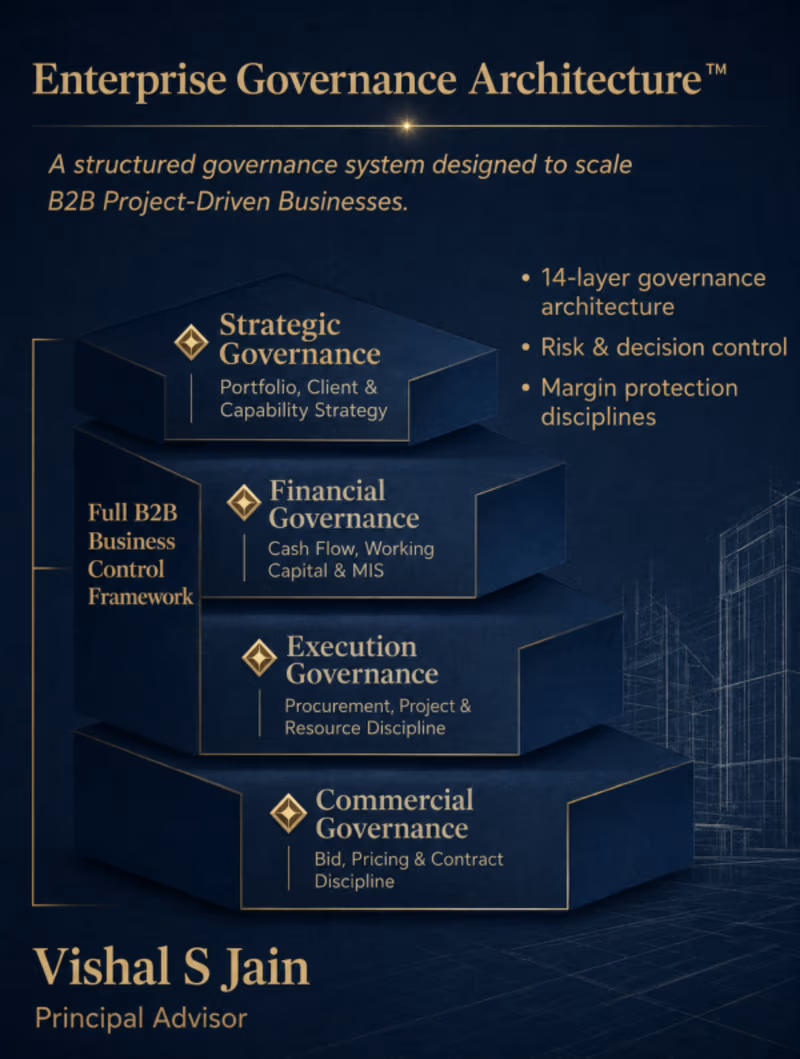
Enterprise Governance Architecture™ (EGA) is a structured operating-control framework designed to help project-driven and execution-heavy B2B businesses scale without losing profitability, control, execution discipline, or decision clarity.
It is not just “governance” in the corporate compliance sense.
It is a business operating architecture that integrates:
Strategy
Commercial controls
Financial discipline
Execution systems
Risk governance
Decision-making hierarchy
Margin protection mechanisms into one connected framework.
0
42




What Veeba Teaches Founders About Product-Market Fit
Post : Most founders treat product-market fit as a one-time milestone.
Veeba’s growth story shows that product-market fit is often discovered through disciplined market listening. The business did not try to serve
everyone immediately. It recognized the opportunity in B2B food-service, developed products for real operational needs, and built trust through consistency before expanding into retail.
The strategic lessons are relevant for founder-led businesses:
Start with a clearly defined customer problem.
Build credibility in a focused market.
Use customer behaviour to guide product development.
Create operational consistency before scaling distribution.
Expand only after the business has earned repeat demand.
Growth is not simply about reaching more customers. It is about finding the market where your strengths create the strongest commercial fit.
For MSME founders, the question is not only, “How do we sell more?”
It is also:
“Where can we become the most trusted solution?”
Read the full article on Substack:
https://aviksah.substack.com/p/from-failure-to-fmcg-giant-the-untold
Project Type Self-initiated / Personal Brand Project ,Role: Content Strategist | Brand Positioning and Authority-Building Architect . The project demonstrates my approach to content strategy, personal branding, founder positioning, and authority-building systems .
0
65

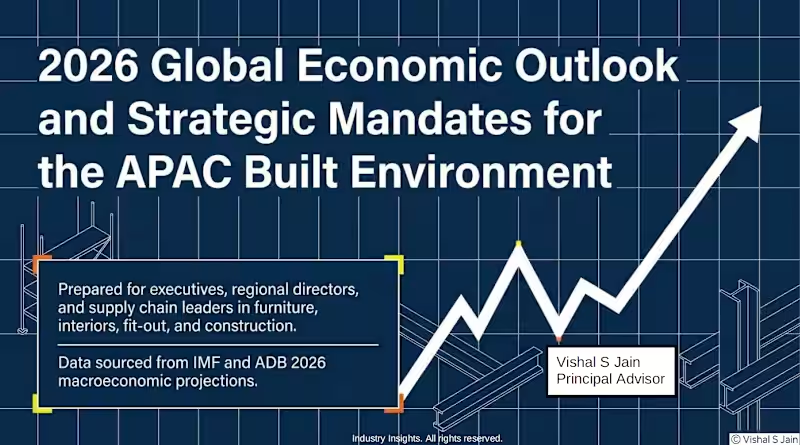
The global economy is entering a higher-risk, higher-cost, and more selective growth phase.
With slower global growth, energy volatility, geopolitical tensions, and tighter financial conditions, businesses across the built-environment sector are beginning to feel direct pressure.
For India & Asia:
• Inflation, energy costs, and currency pressure remain key risks.
For UAE & GCC:
• Growth opportunities continue, supported by infrastructure, real estate, and non-oil expansion — but with rising governance and execution expectations.
For Furniture, Interiors, Fit-Out, EPC & Construction businesses, the impact is clear:
• Raw material volatility
• Freight escalation
• Working capital stress
• Fixed-price contract risk
• Margin pressure
• Slower decision cycles
In this cycle, growth without governance becomes financially dangerous.
The future winners in the built environment may not necessarily be the fastest-growing companies — but the most commercially disciplined ones.
Check Strategic Advisory Report:
“2026 Global Economic Outlook and Strategic Mandates for the APAC Built Environment”
0
44