Freelancers using Altium Designer in China
Freelancers using Altium Designer in China
Sign Up
Post a job
Sign Up
Log In
Filters
2
Projects
People
simon chen
China
IoT Architect | 15+ Yrs | Prototype to Mass Production
New to Contra
Follow
Message
IoT Architect | 15+ Yrs | Prototype to Mass Production
0
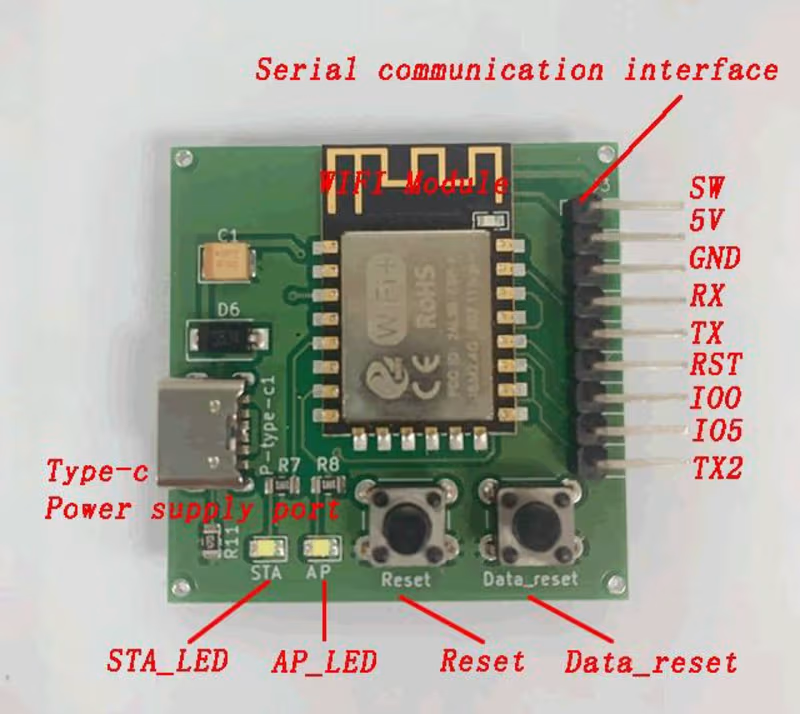
ESP8266/ESP32 Industrial-Grade Wireless Serial Port Bridge (Wi-Fi/UART) Overview: Developed in 2019 and in mass production for over 7 years, this high-reliability Wireless Serial Port Bridge enables seamless bidirectional transparent transmission between UART and Wi-Fi. It is a mature "wireless cable" solution widely used in industrial automation for remote equipment monitoring and long-distance debugging. ► Skills used: ● Systems architecture ● PCB design (Altium/KiCad) ● ESP8266/ESP32 development(C/C++) ● VUE UI(HTML5/Javascript) ► Key Engineering & Product Features: ● App-Free Browser Interaction: The system utilizes WebSocket for real-time communication. Users don't need to install any apps or drivers; any device with a Web Browser and Wi-Fi can perform long-distance debugging on serial-based hardware. ● Remote Debugging via VPN: While primarily a local wireless bridge, the architecture supports Remote Debugging over a VPN, allowing engineers to troubleshoot any MCU/equipment which having UART/Serial from anywhere in the world. ● Zero-Code Configuration: Built-in Web Server for instant network setup and parameter adjustment without AT commands. ● Rapid Provisioning: Integrated WeChat Airkiss protocol for one-click Wi-Fi configuration via smartphone. ► Industrial Reliability: ● Self-Healing Logic: Hardware watchdog and automated reconnection protocols ensure 24/7 stability in noisy electrical environments. ● Dual Power Interfaces: Supports both USB Type-C (5V) and direct pin-header (5V/GND) inputs for easy integration into existing panels. ● Visual Diagnostics: Dual LED indicators for real-time status monitoring of AP and STA connections. ► Proven Market Longevity: ● Mass-Produced Since 2019: Over 7 years of field-tested reliability in diverse industrial and commercial sectors. This is a battle-hardened solution, not a prototype. This project demonstrates my ability to design long-lifecycle industrial tools. I specialize in creating hardware that is not only powerful but incredibly easy to deploy. By leveraging the Pearl River Delta supply chain, I take mature designs from 2019 and maintain their market relevance through continuous firmware optimization.
0
76
1
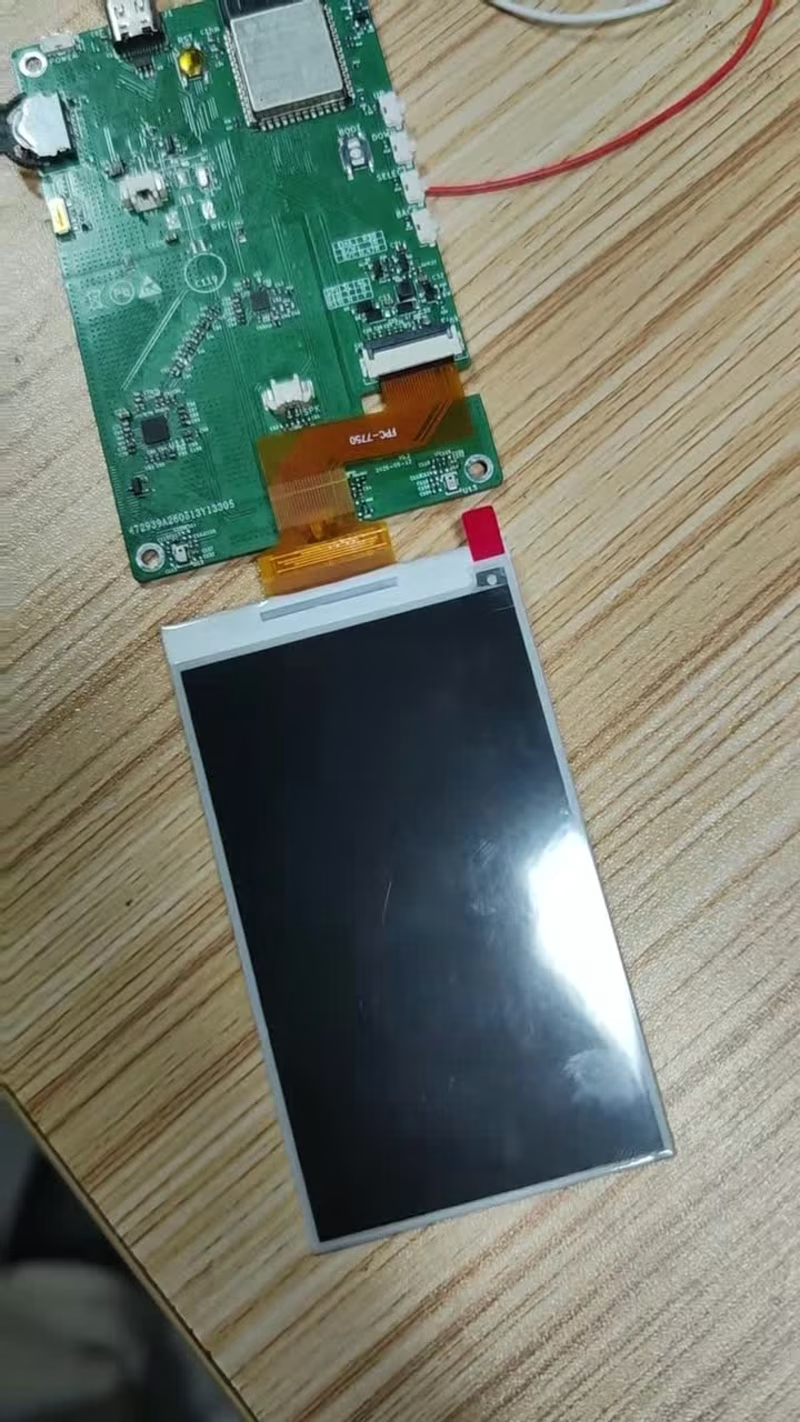
Another new board works with E-ink.
1
108
0
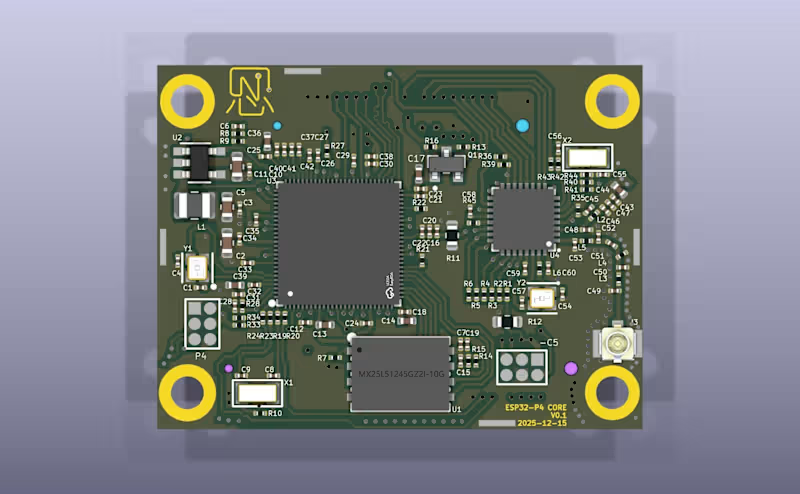
ESP32-P4 SOM: Dual-Core AIoT Hub with Advanced Multimedia Overview: The ESP32-P4 SOM is a flagship, low-power, cost-effective computing core launched in 2026. Featuring a unique ESP32-P4 + ESP32-C6 dual-chip architecture, it bridges high-performance application processing with advanced WiFi 6 and Bluetooth 5 (LE) connectivity. This "Minimum System" is engineered into a compact 40x30mm footprint, providing a ready-to-use engine for the next generation of smart multimedia devices. ► Skills Used: ● Dual-SoC System Architecture (P4 + C6) ● DFM & Yield Optimization ● EMI/EMC Engineering ● BOM Optimization ● Firmware Development(C/C++). ► "One Board, Triple Mounting Options": Designed for maximum versatility across different development phases and deployment environments: ● Flexible Integration: A single PCBA design supports three mounting configurations: Dual BTB connectors, Single BTB, or LGA (Land Grid Array). This allows developers to switch between easy-to-swap modules for prototyping and low-profile, vibration-resistant mounting for mass production. ● Rapid Development Ecosystem: By routing up to 80 GPIOs to the module interface, clients only need to design a simple 1-4 layer carrier board. This drastically shortens the R&D cycle and reduces hardware validation costs. ● Highly Integrated Design: Despite its small size, the module houses the SoC, PSRAM, Flash, PMIC, and the ESP32-C6 communication co-processor, complete with reserved shielding for superior EMI performance. ► Key Engineering & Product Features: ● Network Versatility: In addition to WiFi 6, the module provides a dedicated Ethernet extension interface, ensuring high-speed and ultra-stable wired connectivity for industrial environments. ● High-Speed Multimedia: Native support for MIPI DSI (Display) and MIPI CSI (Camera), enabling high-definition visual interfaces and real-time image processing. ● Advanced Audio & Storage: Integrated voice input and audio output interfaces for interactive systems, plus high-speed TF card support for localized data storage. ● Connectivity-Rich: Powered by the ESP32-C6 co-processor to provide stable WiFi 6 and BLE connectivity, ensuring the P4 main processor remains dedicated to heavy computational tasks. ● Massive I/O Capability: With 80 GPIOs available, the module can control complex arrays of sensors, actuators, and peripheral devices simultaneously. ► Target Applications & Solutions: ● Smart Security: Advanced Access Control Systems utilizing MIPI camera input and local processing. ● Voice AI: Smart AI Speakers with high-fidelity audio I/O and localized voice recognition capabilities. ● Industrial HMI: Low-cost Human-Machine Interfaces that require fluid graphical displays and low power consumption. This ESP32-P4 SOM represents the pinnacle of "Efficiency Meets Performance." By decoupling the high-speed processing core from the carrier board, I provide a pre-verified, mass-production-ready platform that allows you to deploy complex, multimedia-rich AIoT solutions with unmatched speed and technical confidence.
0
115
0
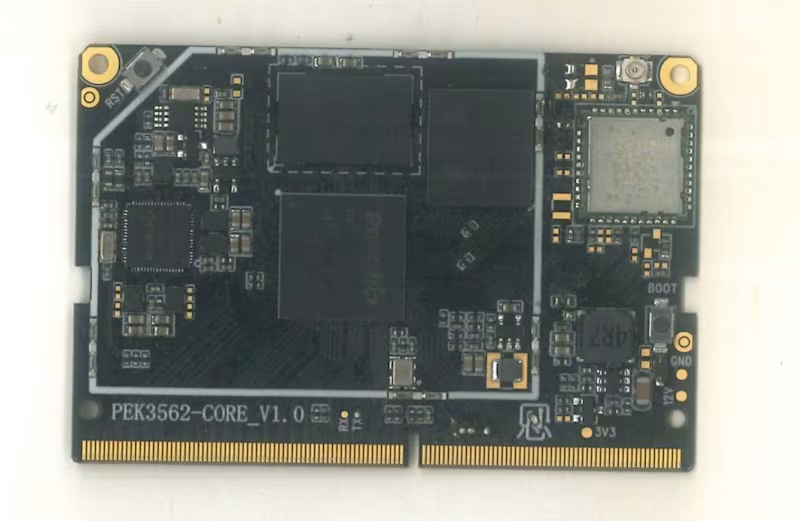
RK3326s SOM: Modular "Minimum System" for Rapid Deployment Overview: The RK3326s SOM is a highly integrated, 6-layer System-on-Module designed to function as a complete, "plug-and-play" computing core. By utilizing a 260-pin DDR4 SO-DIMM interface, this module eliminates the need for secondary reflow soldering—a common cause of defects in LGA-based modules—while enabling rapid assembly and field-swappability for industrial and consumer applications. ► Skills Used: ● High-Speed Systems Architecture. ● PCBA design (Altium/KiCad) ● Linux Kernel/APP development(C/C++) ● DFM & Production Optimization ● EMI/EMC Engineering ● BOM Optimization ► "One Core, Infinite Carrier Boards": The modular design is engineered to slash development cycles and R&D costs for new product categories: ● Full GPIO Breakout: All essential I/Os are routed to the SO-DIMM interface, allowing clients to develop simple 1-4 layer carrier boards for specific projects. ● Elastic Material Compatibility: Pre-engineered to support 10+ WiFi modules, DDR3/LPDDR3 DRAM, and EMMC/NAND Flash variants, ensuring a resilient supply chain against component shortages. ● Streamlined Production: Avoids the "Double-Reflow" trap, significantly lowering the barrier for entry for smaller factories and reducing the scrap rate during mass production. ► Key Technical Features: ● Ultra-Fast Boot: Optimized Linux kernel achieving a 18-second cold boot time. ● Memory Efficiency: Stable and fluid operation on configurations as low as 512MB DRAM + 1GB EMMC. ● Ruggedized Layout: Built-in immunity to high-frequency interference, ideal for smart kitchen appliances and industrial environments. ● Dual-OS Support: Native compatibility with both Android and Linux, providing flexibility for diverse UI and logic requirements. ► Scalability & Proven Success (Mass Production): ● Industrial Automation (ESOP): Deployed as the central processing unit for factory-wide Electronic Standard Operating Procedure systems. ● High-End Consumer Tech (LG DUOBO): Trusted as the core compute engine for premium smart devices. ● Smart Kitchen Appliances: Successfully integrated into high-power microwave steam ovens, leveraging its radiation-resistant design. This SOM represents my commitment to "Zero-Defect Manufacturing." I provide a hardware core that is not only powerful but also audited for production reliability, allowing you to focus on your product's unique features while I handle the complexities of the underlying architecture.
0
113
Altium Designer
(1)
Follow
Message
Explore people