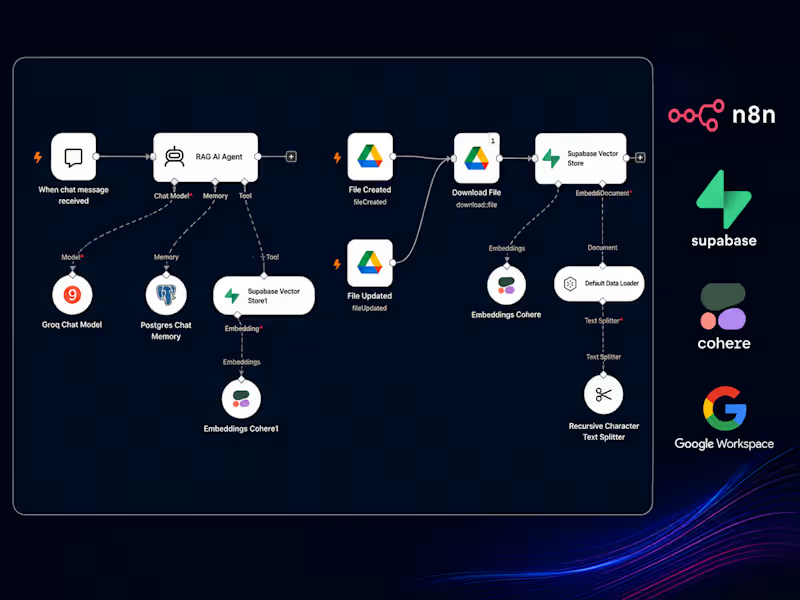
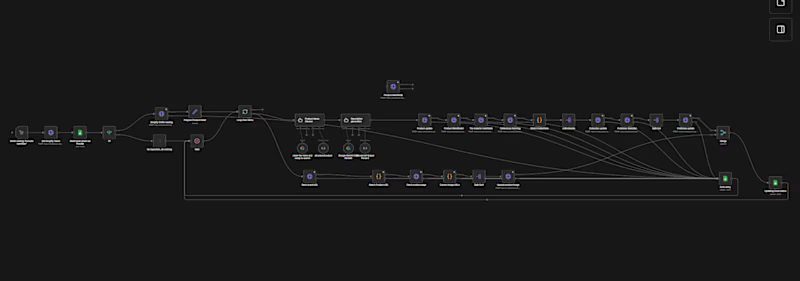
Projects using N8N in BengaluruProjects using N8N in BengaluruBuilt a retrieval-augmented generation chatbot for a blockchain/digital ecosystem client whose product documentation was scattered across files, leaving users and internal teams with no fast, reliable way to get answers. The bot pulls strictly from the client's own docs — a Google Drive folder acts as the single source of truth, where any file created or updated is automatically downloaded, chunked, embedded with Cohere, and upserted into a Supabase vector store, so the knowledge base stays current without manual re-indexing.
The chat agent, running on a Groq-hosted LLM for fast responses, is instructed to always query the vector store first, optimizing each user question into a targeted search before answering — and it's explicitly constrained to respond only from retrieved data, admitting when nothing relevant is found rather than guessing.
Postgres-backed chat memory keeps context across a session, so it handles natural follow-ups instead of treating every message as a fresh conversation. The result: a self-updating support assistant that answers accurately and never fabricates product details. AI-Powered Payments Platform — Operational Command Center for JP Morgan
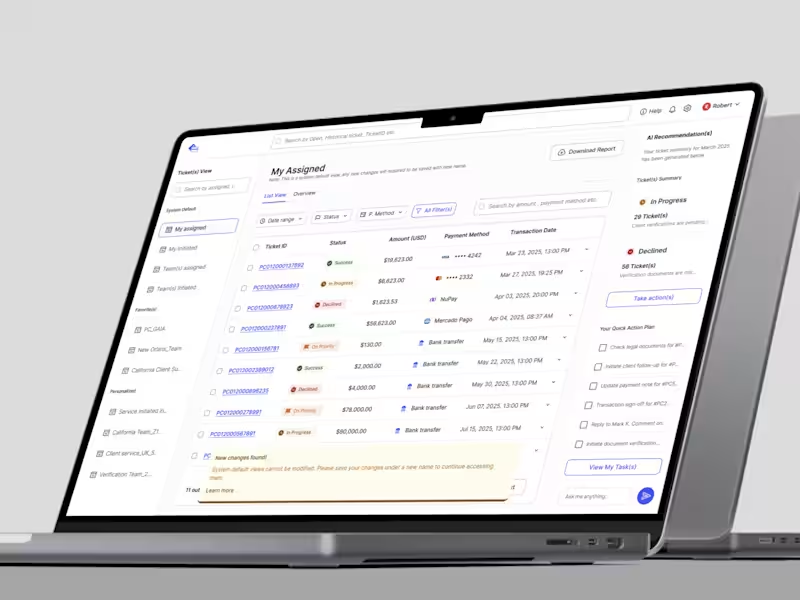
About: JP Morgan's Payment Blotter was doing its job managing high-value institutional transactions across multiple teams but nobody could actually see what was happening. Layered permissions, fragmented listing logic, and role-based visibility rules that had accumulated over years meant the system provided data but not clarity. Operations associates, client service teams, and back-office stakeholders were all looking at the same platform and interpreting it differently. In a compliance-driven, time-sensitive environment, that ambiguity isn't a UX problem it's operational risk.
What I did: I was the sole designer on a 9-person cross-functional team, responsible for auditing the entire workflow architecture, untangling role-based logic inconsistencies, and redesigning the blotter into a structured operational workspace while simultaneously laying the AI foundation for future enhancements. 12 stakeholder interviews across 4 service locations in US and UK. 3 sprints. One mandate: make a dense enterprise system behave predictably without stripping the depth that power users depend on.
The key insight that drove every decision: in enterprise financial systems, clarity and consistency drive operational performance more than feature depth. The redesign surfaced role-aware access transparently, embedded ticket handling directly into contextual views, and simplified payment state logic so users could identify state faster, understand their access, act from the listing view, and share context without exporting.
Post Launch: Launched and awarded in 2025. Ticket actions down to under 3 minutes. Processing time under 4 minutes. Task satisfaction at 75–80%. Ticket volume per team brought under 2,000. A payment blotter that finally worked like a command center.