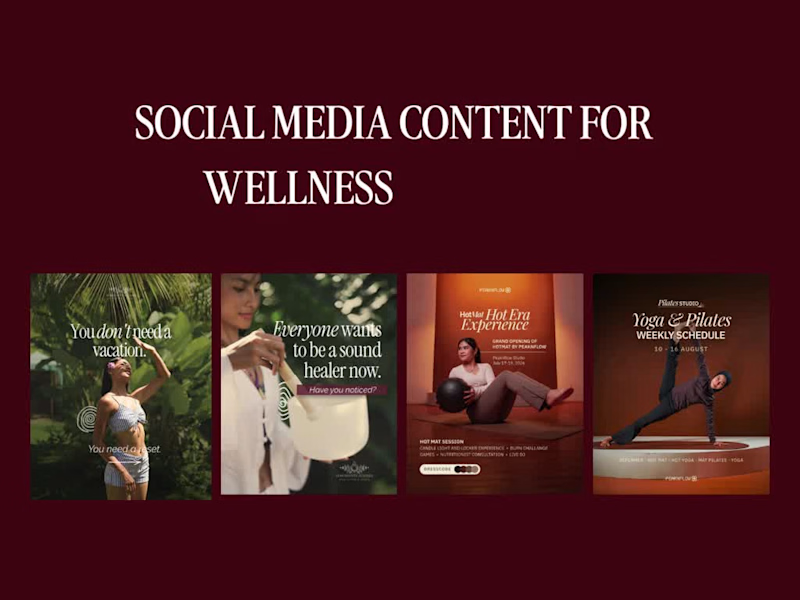
Projects using Instagram in BatuProjects using Instagram in BatuThis brand came to me with an aesthetic feed, but it wasn't cohesive and didn't have the right strategy behind it to grow.
I rebuilt from the ground up, researching competitors and creators in her space and breaking down what actually worked into 7 components: Topic, Hook, Value, Format, CTA, Editing, and Structure/Angle.
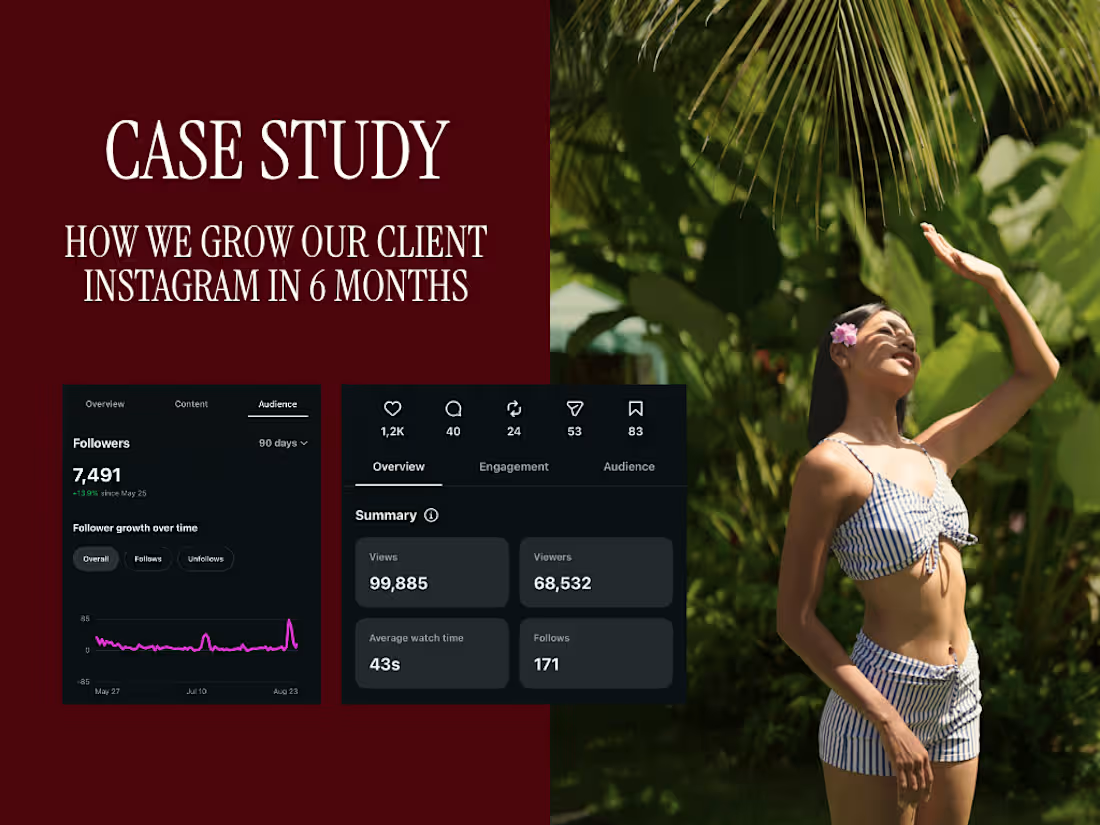
From there I revamped her content end to end, wrote the scripts and shooting briefs, she filmed, and we edited and published. In 90 days: 300,942 views, +915 net followers (+13.9%), and 81.7% of reach from non-followers, meaning we weren't just talking to her existing audience, we were building a new one. Two Reels went viral in the process: one hit 130.6K views and 102.9K accounts reached with 1,618 new follows off a single post, the other hit 99.9K views across 68.5K accounts with a 43s average watch time.
Every brand grows at a different pace, results here reflect this specific account and its starting point, not a guarantee. CASE STUDY 1 : Luxury Hotel, Ubud, Bali
The brief :
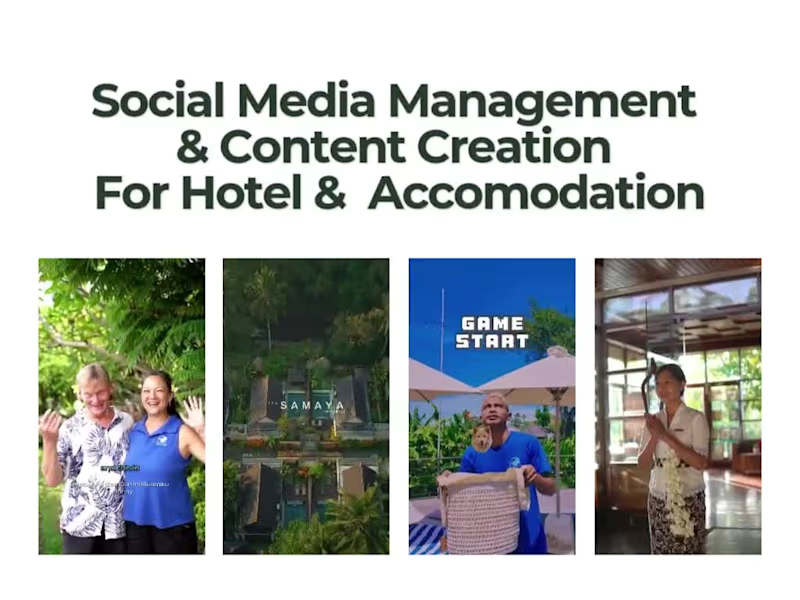
A five-star sanctuary in the Ubud jungle. Architecturally stunning. Feed felt like a brochure. Guests were finding them through travel agents and OTAs, not Instagram.
The problem :
Luxury was being shown. Not felt.
Wide shots of villas. Empty rooms. Aerial drone footage. Nothing that made a UHNW guest think "this is mine."
The shift :
We stopped photographing the property. We started photographing the experience of staying in it.
→ Quiet content. Hands, light, ritual.
→ Less captions. More mood.
→ One Reel per week, not five.
→ Stories built around guests, chefs, and the head florist, never the brand.
The outcome :
- Engagement quality up significantly (saves and shares, not likes)
- DM inquiries from international guests now a weekly occurrence
- Featured organically by two luxury travel curators
- Direct bookings via Instagram climbing month over month
The principle :
Luxury isn't louder. It's slower.
CASE STUDY 2 : Boutique Hotel, Munggu, Bali.
The brief :
An adults-only boutique hotel and retreat venue, 300m from Munggu Beach. Owned by a couple.
The product is rare in Bali: Canggu access without Canggu noise. The challenge: most people scrolling Instagram for "Canggu" don't know Munggu exists.
The problem :
Spaces was being positioned the way every Canggu hotel is pool shots, smoothie bowls, design details. But Spaces isn't competing with Canggu. It's the answer for people tired of Canggu.
That story wasn't on the feed.
The shift :
We rebuilt the content around one idea: slow Canggu.
→ Mornings at Spaces vs. mornings in central Canggu, visual contrast as a hook.
→ Retreat-host storytelling, since groups book the whole property.
→ Owner-led content builds trust no stock reel can.
→ Bahasa + English captions to capture domestic retreat organisers too.
The outcome :
- Follower growth multiplied within the first quarter
- Save rates climbing, guests using the feed as a trip-planning tool
- Inbound retreat inquiries via DM, not just rooms
- A clearer brand line in market: not another Canggu hotel
The principle :
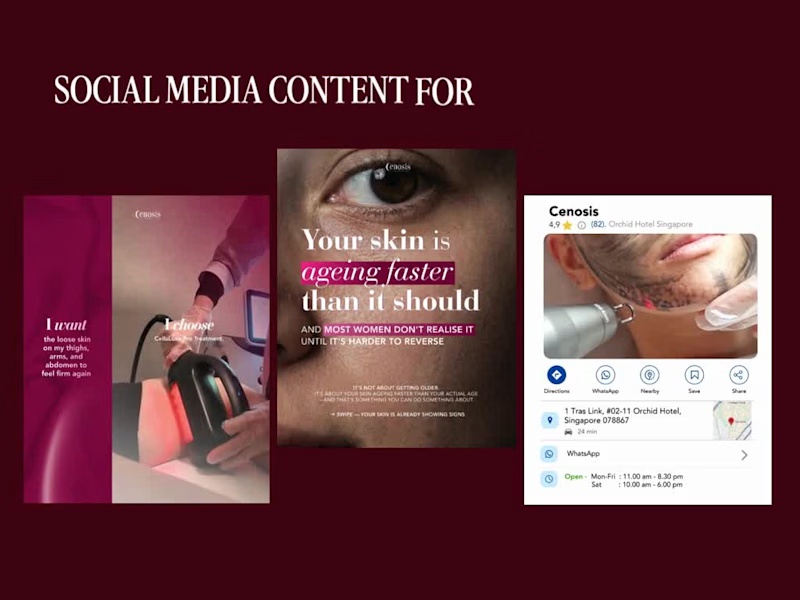
The fastest growth comes from positioning, not posting more. How we generated 602 qualified leads for a Singapore beauty clinic in 90 days at $13.95 per lead
A full-funnel system combining organic content and Meta Ads, built specifically for the wellness industry.
Client: Aesthetic clinic, Singapore
Timeline: 3 months
Ad spend: $8,401.79 SGD
Cost per lead: $13.95
Industry CPL benchmark: $25 to $40
The challenge — visibility without a system
The clinic was already doing strong treatments and had a loyal returning customer base. Reviews were solid. The team was experienced. But growth had plateaued for over a year and the founder couldn't figure out why.
When we audited the business, three patterns showed up immediately.
Walk-ins and word of mouth were unpredictable. Some weeks fully booked, other weeks half empty chairs.
Their Instagram had followers but barely any engagement. Almost zero of those followers were converting into bookings.
They had tried boosting posts and running random Meta Ads before. Cold leads came in, but most ghosted after the first WhatsApp.
In short, the clinic had visibility but no system to turn attention into appointments.
Our diagnosis — most clinics leak leads two ways
After working with multiple wellness businesses, we have seen the same two failure patterns repeat.
The first is running Meta Ads with no organic presence. A cold lead clicks the ad, checks the Instagram, and sees a stale or unprofessional page. Trust drops. The lead disappears before they ever message.
The second is posting organic content religiously but never putting paid spend behind it. Reach stays small. The audience never grows past existing followers. The same 200 people see every post.
Both approaches leak leads. Neither one alone moves the needle.
The fix is a full-funnel system where organic builds trust and ads generate volume. They feed each other.
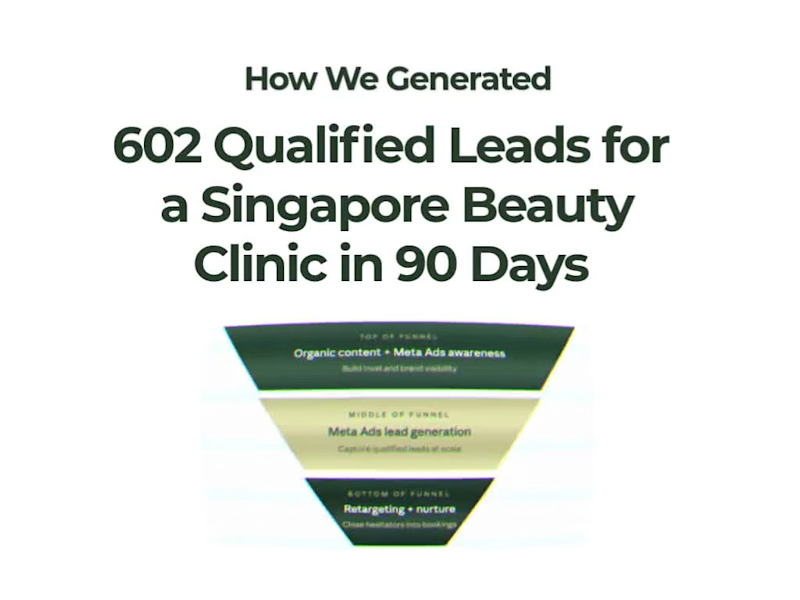
The strategy — a 3-layer funnel
We deployed organic and paid as one connected system, not two separate efforts.
Top of funnel — Organic content for trust
Weekly content pillars covering treatment education, before and after results, behind the scenes at the clinic, and founder authority content.
The goal here was not virality. It was making sure that when a cold lead from Meta Ads landed on the page, they saw a clinic that looked active, credible, and modern.
Middle of funnel — Meta Ads for lead generation
Targeted campaigns aimed at Singapore women aged 25 to 45 with interests in skincare, aesthetics, and premium wellness.
We split tested across three angles. Problem-aware (skin concerns, aging, confidence). Result-aware (before and after, treatment outcomes). Offer-aware (first-trial pricing, consultation packages).
Each ad pushed traffic to a low-friction lead form. Name, contact, treatment of interest. That is it.
Bottom of funnel — Retargeting and nurture
Anyone who engaged with organic content or clicked an ad but did not convert was retargeted with social proof. Real testimonials, real results, real clinic footage.
This is where most clinics lose money. They generate leads but never close the loop on the ones who hesitated. Retargeting is the cheapest, highest-converting layer of any funnel and most agencies skip it entirely.
The execution — optimized weekly, not quarterly
Month 1 — Foundation
We rebuilt the content system, set up tracking pixels properly, and launched the first round of test campaigns. Lead flow started slow as we collected data on which angles converted.
Month 2 — Optimization
We killed underperforming ad sets, doubled down on the angles converting at the lowest cost, and increased posting frequency on organic. Cost per lead started dropping fast.
Month 3 — Scale
With clear winners identified, we scaled spend on the best performing ads while keeping organic consistent. Lead volume compounded week over week.
Most agencies set campaigns and check them monthly. We optimize weekly. That single difference is why our clients hit numbers that others cannot.
The proof — real numbers from the Meta Ads dashboard
$8,401.79 total ad spend
602 website leads
$13.95 cost per lead
90 days end to end
The Singapore aesthetics industry averages $25 to $40 per lead. We delivered 2 to 3 times cheaper, with leads that were qualified, treatment-specific, and ready for the clinic's consultation team to convert.
This was not vanity reach. This was not a viral spike. This was a repeatable system delivering booked consultations, week after week.
Why this worked
Three reasons.
The organic and paid layers worked together instead of in isolation. Cold leads from ads landed on a page that built trust instantly.
We did not chase vanity metrics. No one cares about reach if it does not turn into bookings. Every piece of content and every ad was tied to lead generation.
We optimized weekly. Most agencies set and forget. We kill what does not work fast and scale what does.
What this means for your business
If you run an aesthetic clinic, medspa, IV drip studio, or wellness business, the same system can be deployed for you.
The bottleneck for most clinics is not the treatments. It is not the pricing. It is the lead pipeline.
Fix the pipeline, fix the business.
We work with a small number of wellness clients at a time so we can give each business the same depth of attention this Singapore clinic received. If you are interested in seeing whether this is the right fit, the next step is a free strategy call.