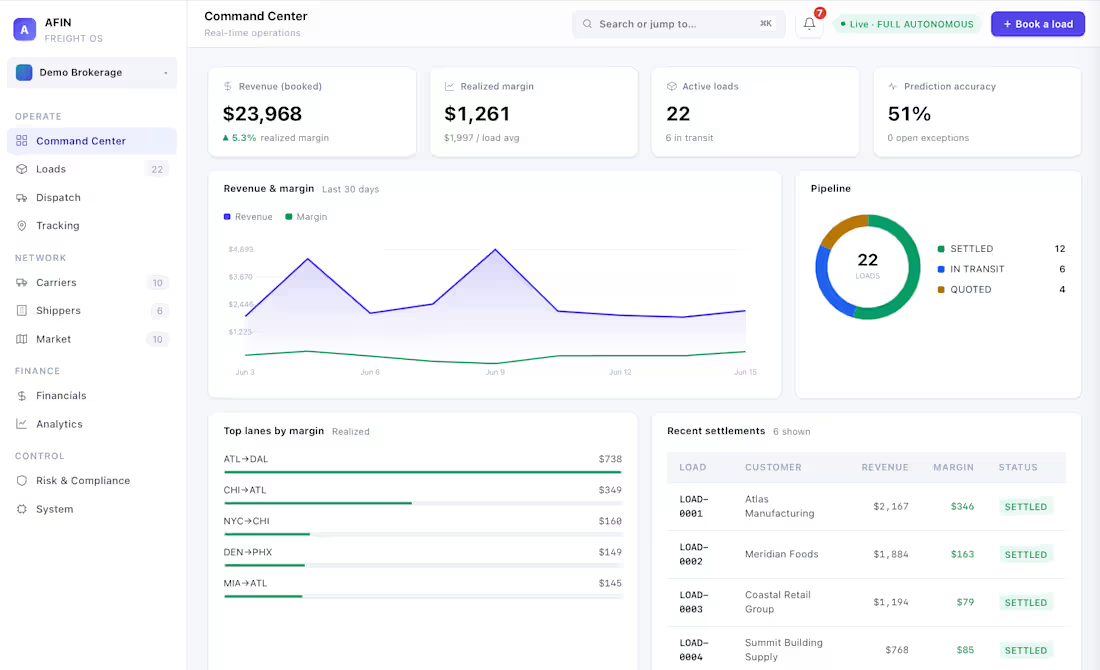
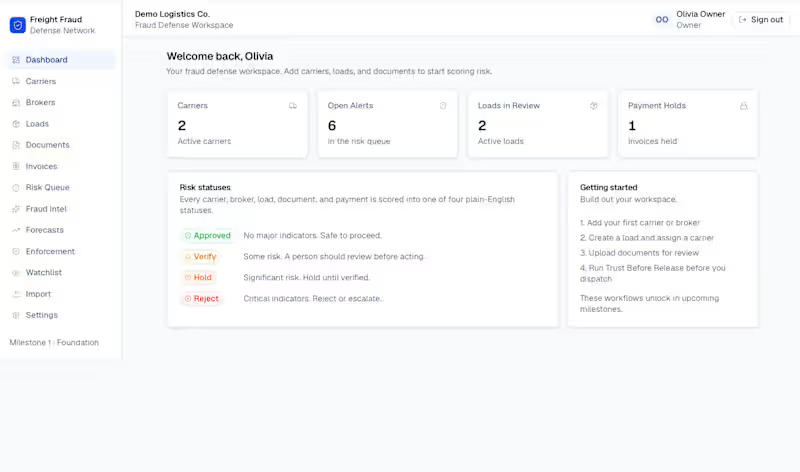
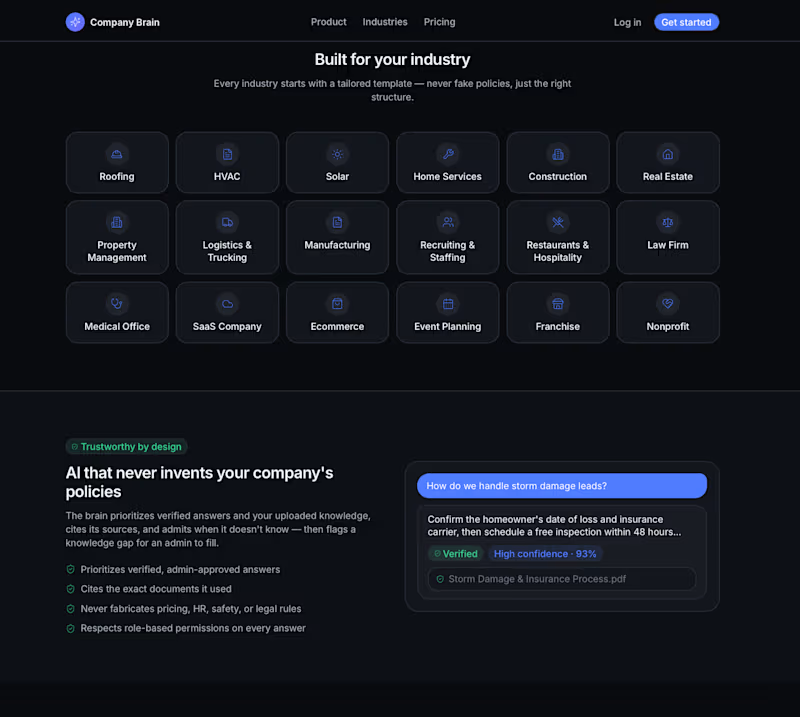
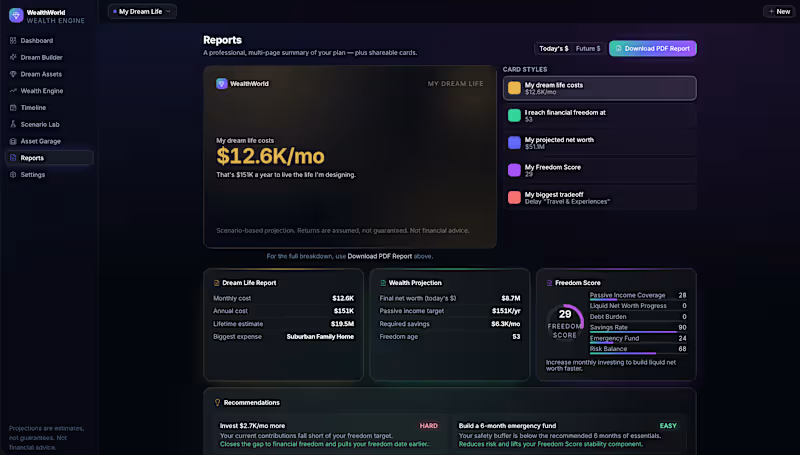
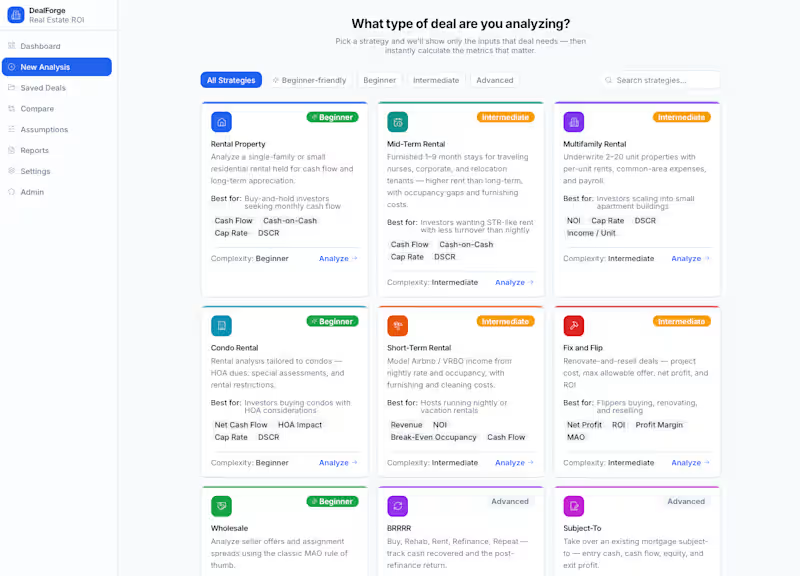
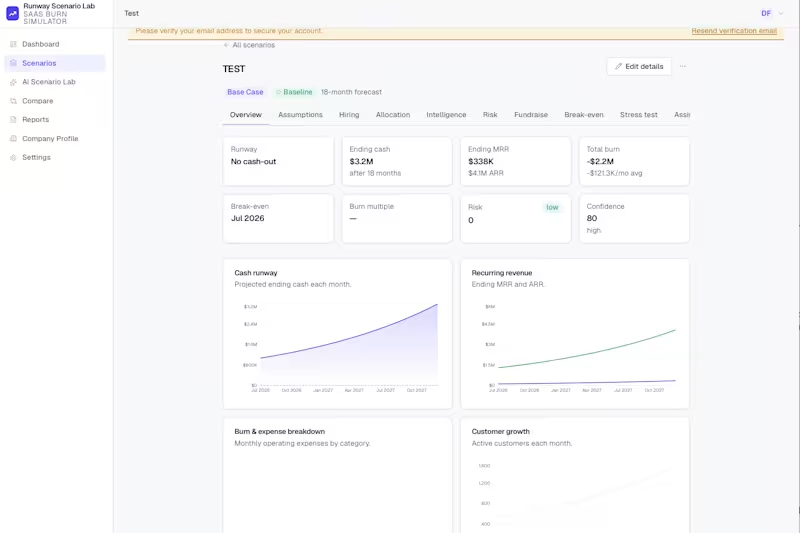
Projects using Sentry in BaltimoreProjects using Sentry in BaltimoreAFIN models the freight economy as a continuously evolving, event-driven graph of loads, carriers, lanes, shippers, and shipments. A set of specialized engines handle load acquisition, market intelligence, carrier intelligence, pricing and margin optimization, negotiation, dispatch, tracking, risk and compliance, and financial settlement. A Master Control orchestration layer governs which engine acts and resolves conflicts under a fixed hierarchy of safety over financial accuracy over optimization over speed, with graduated autonomy from manual to fully autonomous. The system boots through a defined activation sequence, proves the flow with an end-to-end demo that carries a load from acquisition through settlement, and handles fraud-detection, disruption self-healing, and global risk-override scenarios. State is durable via SQLite, and external services sit behind adapter interfaces with offline mocks so the core runs fully offline on deterministic formulas. Freight Fraud Defense Network scores brokers, carriers, documents, emails, domains, loads, invoices, and payment changes for fraud risk, then gives teams a simple, explainable decision before they release freight or pay. Each evaluation produces a 0-100 score, a status (Approved, Verify, Hold, Reject), a confidence level, plain-English reasons, a recommended action, an evidence list, and an audit trail. Risk is assessed across multiple categories including company identity, email and domain, document authenticity, load behavior, payment and invoice, and network relationships between entities. It is designed to feel like a clean security command center for non-technical operations users rather than a complex compliance tool. A company picks its industry, enters basic profile information, and uploads documents, website URLs, and video transcripts. The system builds a knowledge base and generates a modular company dashboard: a chatbot that answers from company knowledge with source citations and confidence, an SOP library, a training center, a company wiki, an employee help desk, verified answers, a knowledge-gap detector, and manager analytics. Role-based permissions control what each employee can see, and the AI is instructed never to invent company-specific policies. Predictive Wealth Engine (WealthWorld) pairs a visual, game-like dream-life builder with a serious financial simulation engine. Users configure lifestyle assets (homes, cars, boats, planes, travel, family, luxury) with a 3D configurator and select wealth strategies (index funds, retirement accounts, real estate, business, alternatives), then simulate net worth, cash flow, passive income, and a Freedom Score across base, optimistic, conservative, and stress cases. A timeline shows milestones, Scenario Lab compares futures side by side, and shareable cards and PDF reports surface results like when a dream life becomes affordable. Users enter a SaaS financial baseline (cash, MRR/ARR, margin, expenses, churn, headcount) and generate baseline and custom scenarios across 12-36 month forecasts. A centralized engine computes monthly cash, MRR/ARR, burn, runway, CAC payback, LTV:CAC, burn multiple, and break-even for each scenario, with deterministic risk and confidence scores. Users adjust assumptions and hiring plans with live recalculation, compare 2-4 scenarios, run a fundraise-timing predictor, a break-even path finder, and stress-test mode, then generate editable board reports exportable to PDF or share links. An AI decision assistant explains scenarios using only calculated outputs.