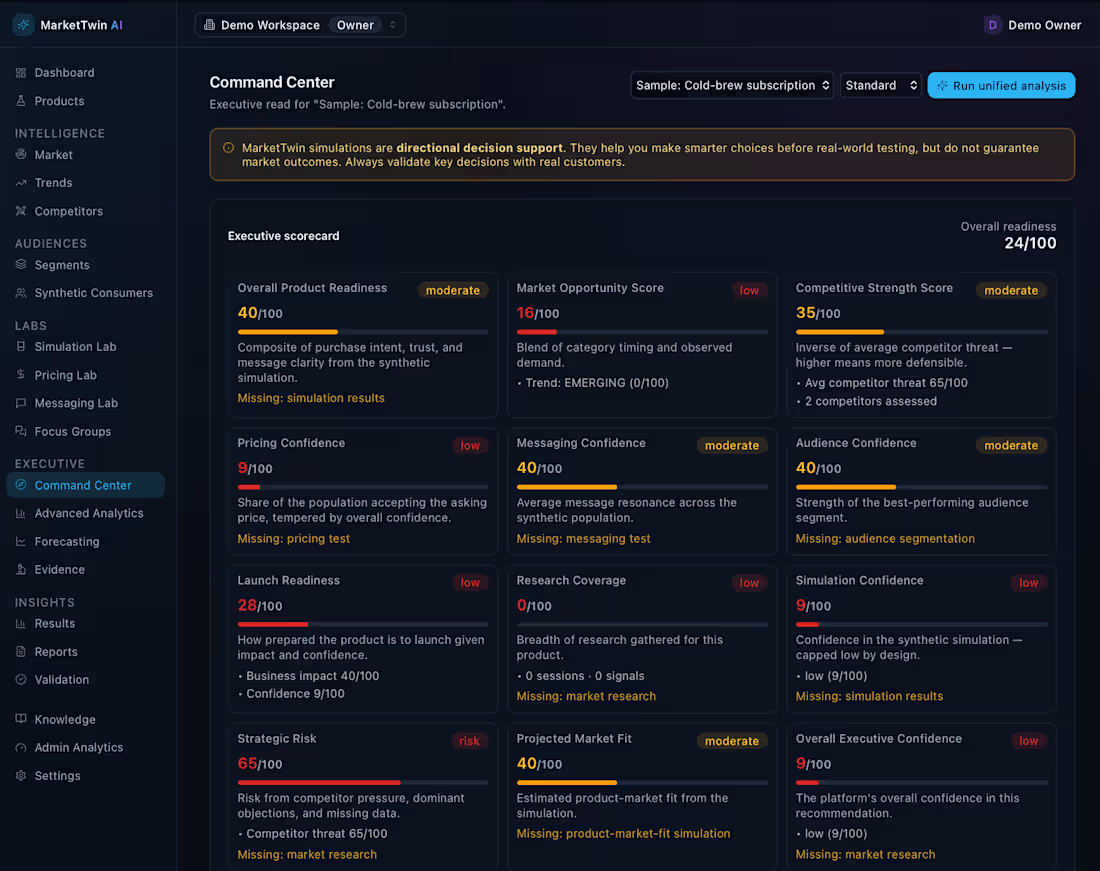
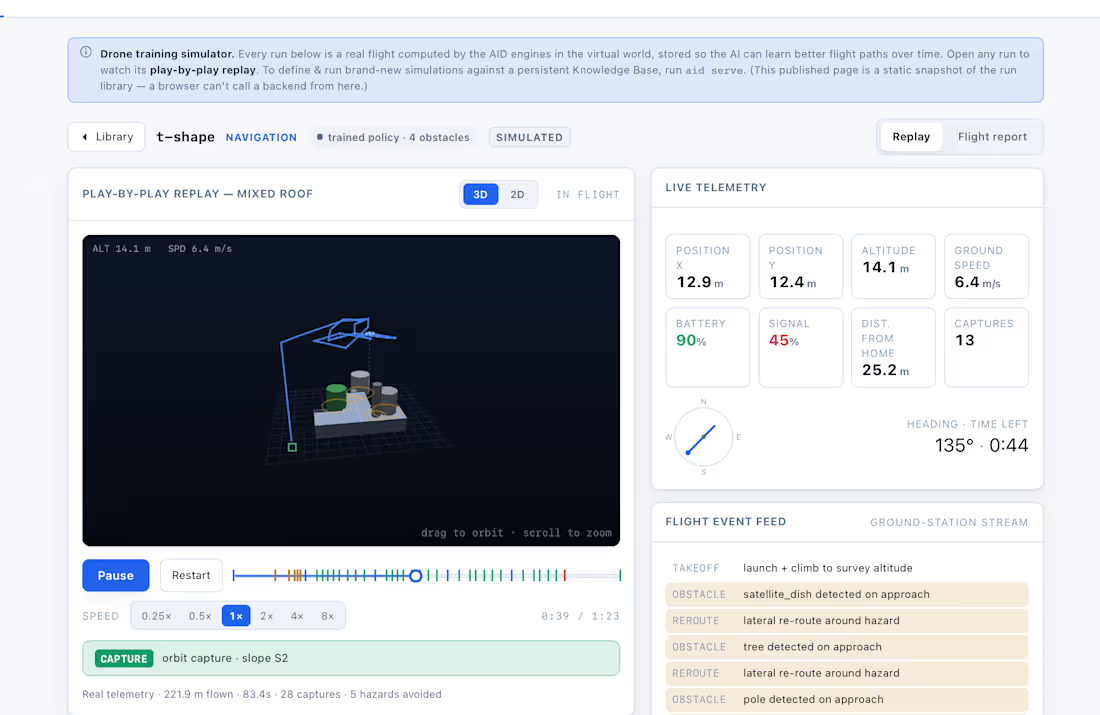
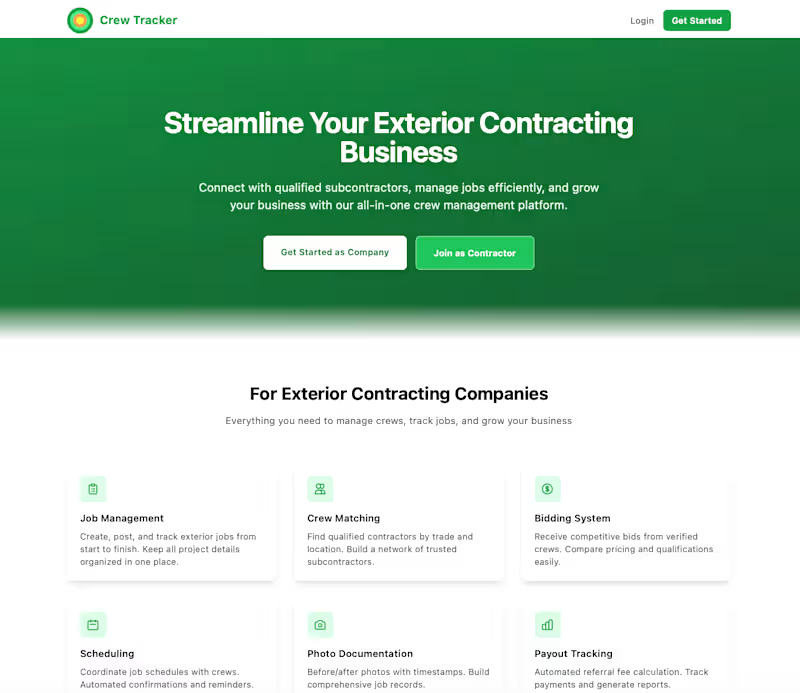
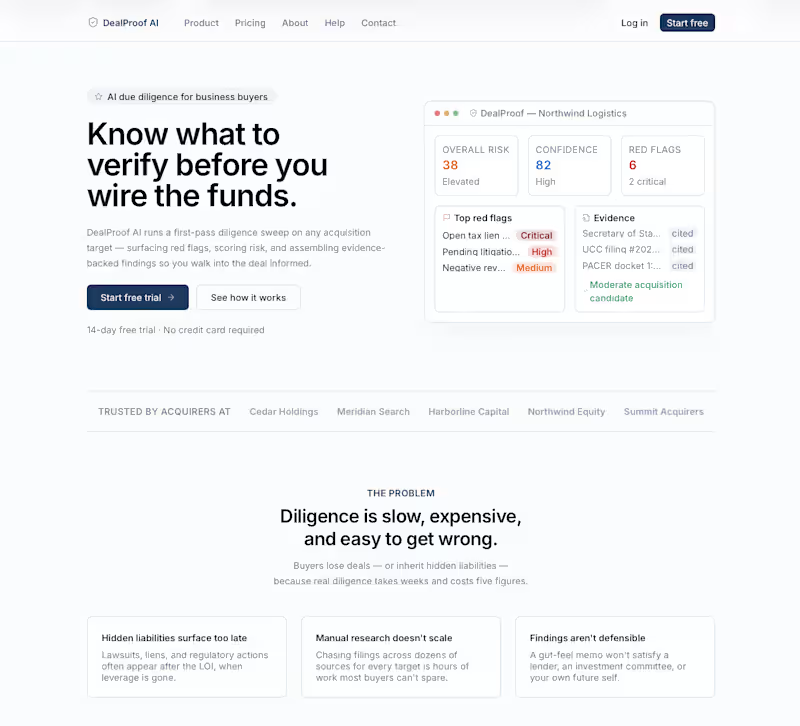
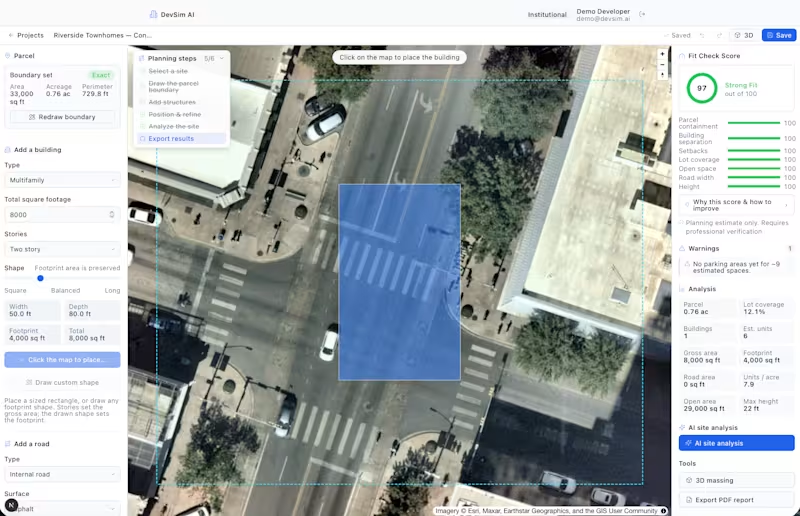
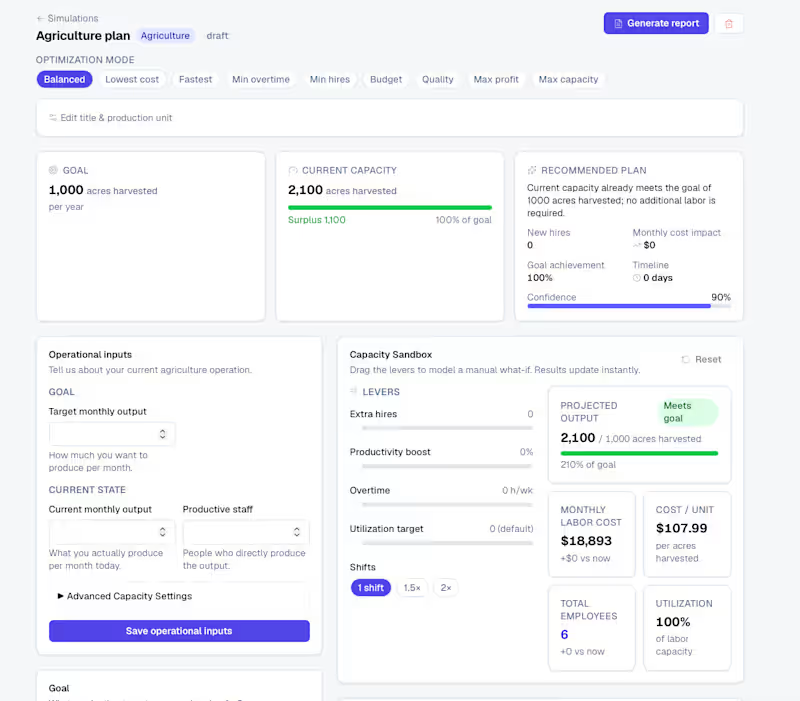
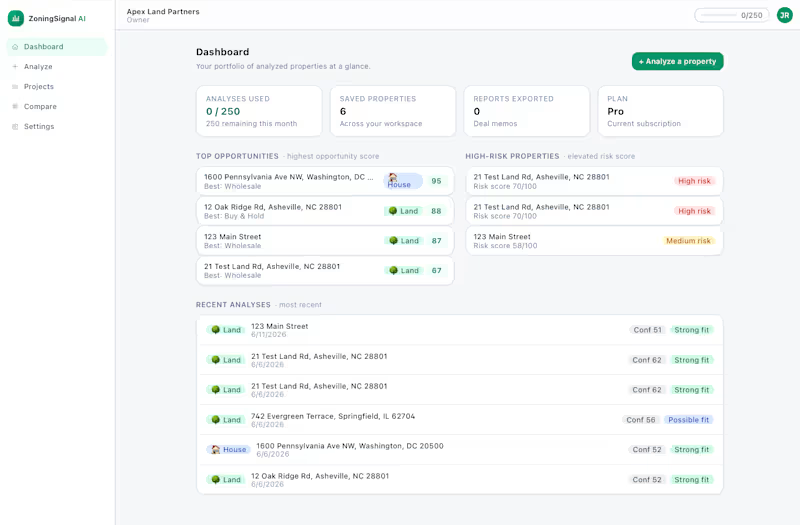
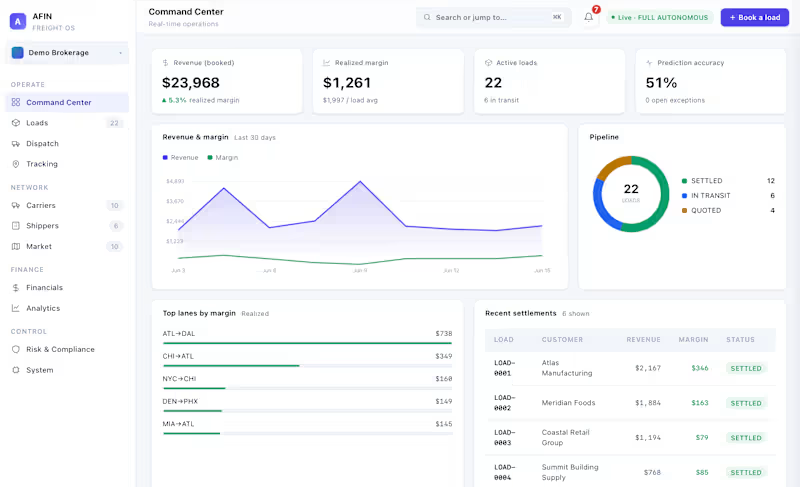
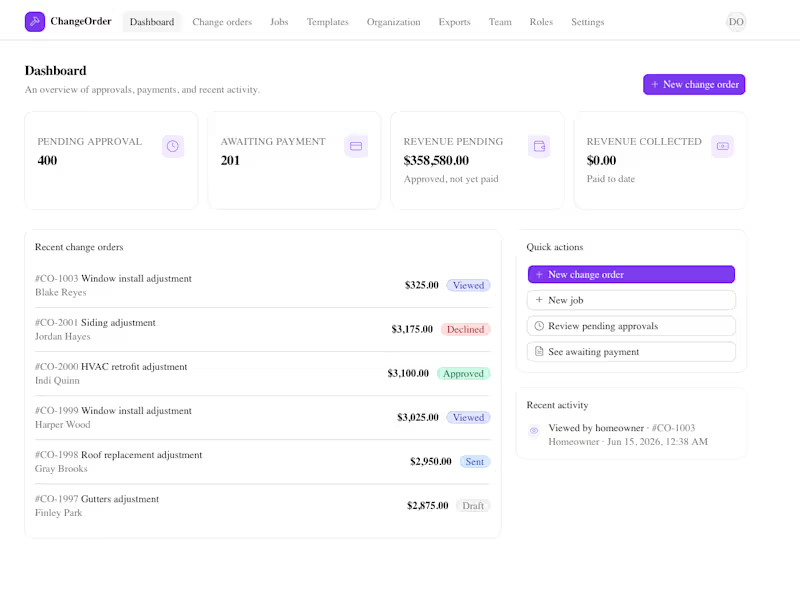
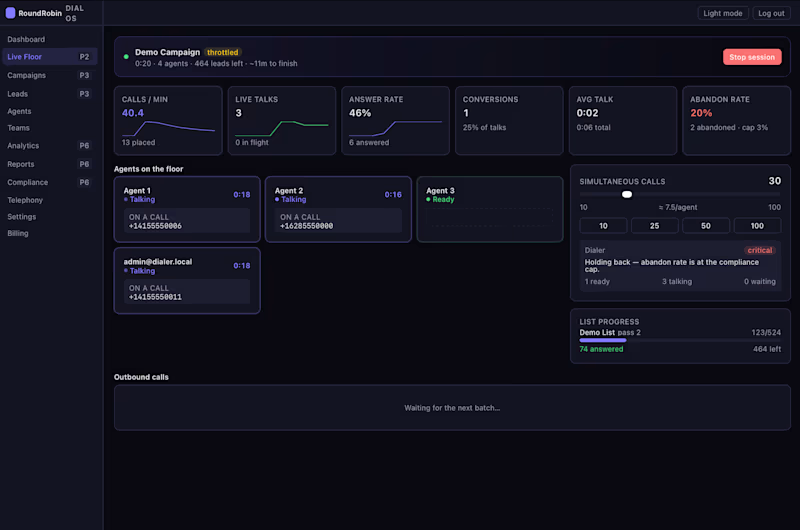
Projects using Anthropic in BaltimoreProjects using Anthropic in BaltimoreMarketTwin AI lets teams test a product idea, pricing, brand name, ad hook, landing-page copy, audience, or launch strategy inside an AI-generated market. It combines a market-intelligence layer (trend, competitor, review, and ad signals plus demographic and economic context) with audience segments and synthetic consumer personas, then runs agent-based simulations that produce purchase intent, objections, trust, price-fit, and market-readiness scores. Pricing and messaging labs, scenario comparison, confidence and assumptions tracking, and a calibration engine that compares simulations to real launch results round it out. Results feed a launch-strategy generator and exportable reports. The platform is explicit that results are directional decision support, not guaranteed predictions. AID is a runnable, offline skeleton of an autonomous drone roof-inspection platform organized as nine coordinated engines bound by a master orchestrator. A mission flows through a fixed pipeline — mission planning, spatial reconstruction, flight execution, computer-vision damage detection, uncertainty and coverage validation, risk and insurance analysis, and reporting — advancing a seven-state mission machine. Several engines are genuine computation: mission planning uses 2D computational geometry to infer roof planes and generate coverage flight paths, coverage is geometrically measured rather than assumed, spatial mapping reconstructs a 3-D digital twin from camera poses, damage runs through a classical computer-vision detector, and risk and insurance produces real construction-cost bands (P10/P50/P90), RCV/ACV depreciation, and claim-eligibility scoring. An orchestrator enforces integrity rules — no orphan data, an uncertainty gate that blocks reporting and triggers re-inspection, and a safety override. It ships a REST API, a SQLite-backed mission store, a fleet scheduler, multi-format report rendering, a Gym-style RL environment, and an operations console UI. Crew Tracker is a two-sided workflow with separate portals over one backend. On the internal side, offices post jobs, review crew applications, invite eligible crews matched by trade and zip coverage, compare bids, and award work. Awarding a job automatically creates a payout record with a 3% referral fee. Crews apply and get verified, set trades and service areas, view invited and eligible jobs, submit bids, confirm schedules, upload categorized job photos, and track earnings. Internal users can export a supplement package of job photos and summary data. A user creates a deal and enters business, property, owner, or asset information. The system verifies business identity, runs modular data-source adapters across entity, legal, lien, reputation, regulatory, property, and market records, and analyzes uploaded documents. It produces normalized evidence records, a red-flag engine output with severity and confidence, an overall risk and confidence score, a diligence request list, an AI investment memo, and an exportable PDF report. It is positioned as a first-pass analyst, not a replacement for lawyers or accountants. DevSim AI lets users search a parcel, load satellite imagery, and design conceptual development layouts with accurately scaled 2D buildings, roads, driveways, parking, and green space. Buildings are generated from square footage and floor configuration, and a shape slider and rotation preserve area while changing proportions. Manual setback rules produce a buildable-area overlay and human-readable warnings, and a Fit Check Score plus an analysis dashboard report parcel usage, density, and coverage live. An optional 3D massing mode extrudes the same 2D plan, and projects support versioning, export, and an AI assistant. It is a multi-tenant SaaS with tiered plans. CapacityPilot is a labor capacity simulator. A user picks an industry, sets a production goal, and models their workforce and constraints; the app returns current capacity, the goal gap, an optimized hiring, overtime, and productivity plan, bottlenecks, and a cost forecast. A real-time Capacity Sandbox lets users adjust inputs live, a six-agent AI Operational Council reviews the plan, and industry playbooks compare it to best practice. Results compile into an executive report that can be exported to PDF or shared via a revocable link. Deterministic engines do the math, and the AI is guarded so it never invents numbers. ZoningSignal AI analyzes a land parcel or house to recommend the best investment strategy, why it wins, how confident the system is, and what to do next. Users pick Land or House, enter an address, and the system pulls zoning, parcel, permit, market, and risk data through a modular provider layer, then scores strategies like wholesale, subdivide, build-to-sell, flip, BRRRR, and buy-and-hold. A risk detector flags deal-breakers, an AI report explains the ranking in plain English with confidence and cited data categories, and a permit/entitlement pathway lists likely approvals and required professionals. Users save and compare analyses and export PDF deal memos, with subscription plans and usage limits. AFIN models the freight economy as a continuously evolving, event-driven graph of loads, carriers, lanes, shippers, and shipments. A set of specialized engines handle load acquisition, market intelligence, carrier intelligence, pricing and margin optimization, negotiation, dispatch, tracking, risk and compliance, and financial settlement. A Master Control orchestration layer governs which engine acts and resolves conflicts under a fixed hierarchy of safety over financial accuracy over optimization over speed, with graduated autonomy from manual to fully autonomous. The system boots through a defined activation sequence, proves the flow with an end-to-end demo that carries a load from acquisition through settlement, and handles fraud-detection, disruption self-healing, and global risk-override scenarios. State is durable via SQLite, and external services sit behind adapter interfaces with offline mocks so the core runs fully offline on deterministic formulas. The Change Order Generator lets contractors create, price, send, approve, export, and track professional change orders from the field in under a minute. It uses company-approved templates and pricing, supports photos and field descriptions, and sends change orders to homeowners for approval and signature. Approved orders generate clean PDFs and are saved as records for CRM and file keeping. Users can track viewed, approved, declined, and revised change orders. RoundRobin Dial OS places high-volume parallel outbound calls to opted-in leads and instantly routes every live, human-answered call to an available agent. Dial volume is a computed value — the minimum of human capacity, campaign ceilings, answer-probability budget, routing capacity, abandonment budget, provider limits, and compliance gating — never a raw admin input. Managers get a live sales-floor control tower and admins a command center for teams, campaigns, numbers, compliance, and analytics. It is compliance-aware by design with consent tracking, opt-out management, call-window rules, and audit trails.